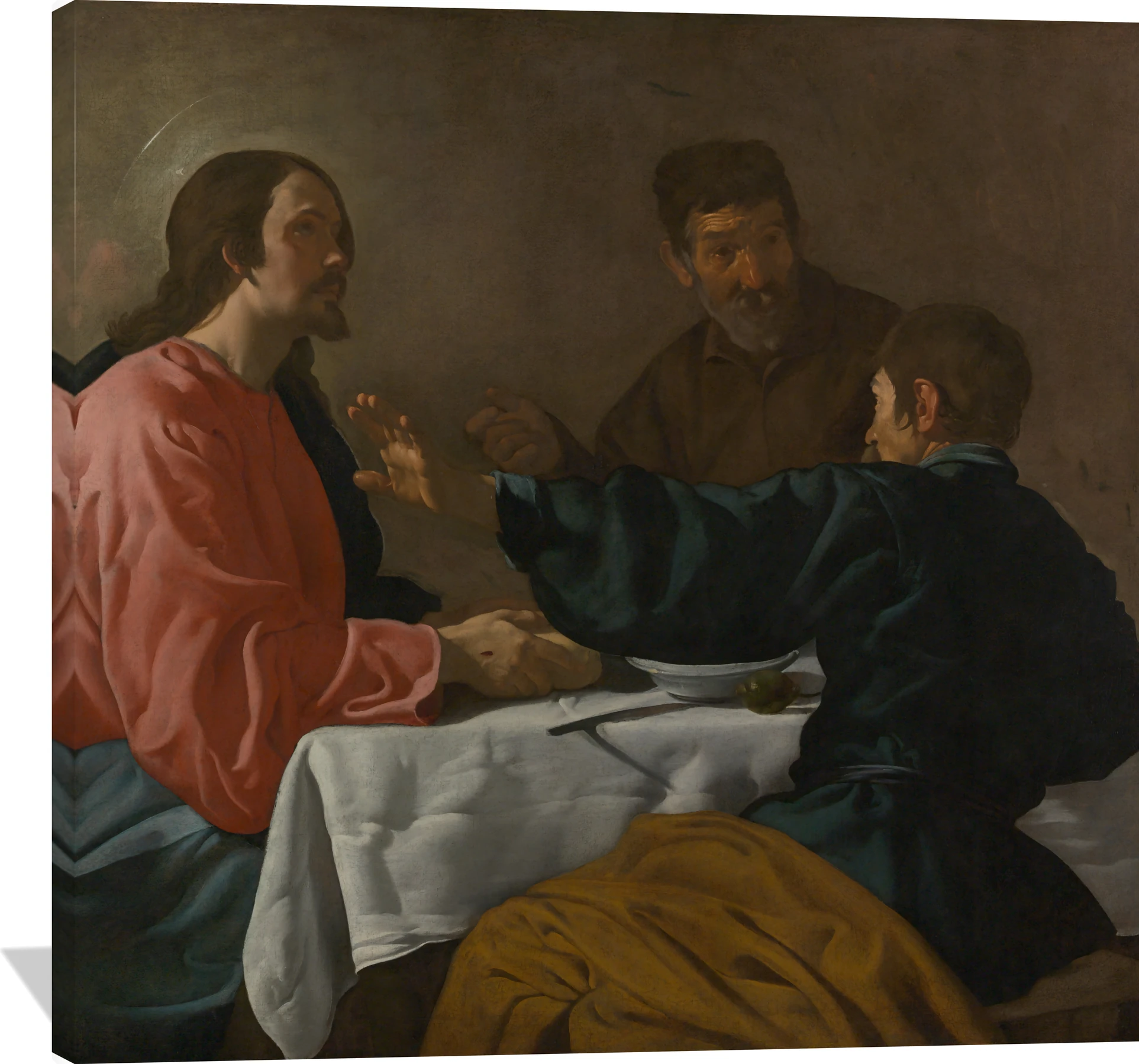
The Velázquez The Supper at Emmaus canvas captures a moment of divine revelation with masterful restraint and emotional depth. Warm earth tones, deep teal, and soft rose hues emerge from the shadows, highlighting the quiet tension and wonder shared around a simple table. The composition’s balanced light and intimate realism make it a timeless centerpiece for contemplation.
This museum-quality canvas print brings the luminous artistry of Diego Rodríguez de Silva y Velázquez (Spanish, Seville 1599–1660 Madrid) into your home. Ideal for a living room, study, or entryway, it invites reflection and conversation through its serene yet powerful presence.
Diego Rodríguez de Silva y Velázquez (1599–1660) stands among the most influential painters of the Spanish Golden Age. Born in Seville and later appointed court painter to King Philip IV in Madrid, he developed a masterful command of naturalism and expressive realism that shaped the evolution of Western art.
Artistic Style
Velázquez is celebrated for his nuanced handling of light, subtle color harmonies, and fluid brushwork. His approach balanced precision with atmospheric softness, allowing figures to emerge with striking lifelike presence. This refined naturalism, combined with an increasingly loose and confident technique, became a defining hallmark of his mature work.
Subjects and Themes
His paintings span court portraiture, scenes of daily life, historical narratives, and religious compositions. Velázquez’s portraits of the Spanish royal family, jesters, and courtiers remain among the most psychologically insightful in art history. Works such as Las Meninas and The Surrender of Breda exemplify his remarkable ability to blend realism, depth, and narrative complexity.
Legacy and Significance
A central figure of the Baroque era, Velázquez left a profound impact on generations of artists, from Goya to the Impressionists. His confident, expressive brushwork and his innovative exploration of visual perception continue to influence painters today. Revered for his mastery of the portrait and his pioneering approach to composition, he stands as a cornerstone of European art and a defining voice in the history of realism.