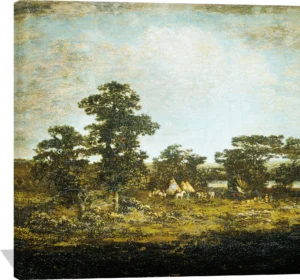

The Bartholomeus Breenbergh The Preaching of John the Baptist canvas captures a sweeping biblical scene set amid sunlit ruins and rolling hills. Breenbergh’s masterful use of warm earth tones, soft blues, and verdant greens draws the eye across a lively gathering of figures, balancing drama and serenity in perfect harmony. The horizontal composition and luminous sky evoke both grandeur and contemplation.
This museum-quality wall art brings timeless storytelling and classical elegance to any space. Ideal for a living room, study, or entryway, this canvas print invites reflection and conversation while celebrating the refined artistry of a 17th‑century Dutch master.
Bartholomeus Breenbergh (1598–1657), a Dutch painter born in Deventer and later active in Amsterdam, was a distinguished figure of the early Dutch Golden Age whose work helped shape the classical landscape tradition. Influenced by his extended stay in Rome during the 1620s, he became associated with the circle of Northern artists known as the Bentvueghels, absorbing the sunlit atmospheres, ancient ruins, and dramatic terrains of Italy that would define his mature style.
Artistic Style and Subjects
Breenbergh is celebrated for his luminous, Italianate landscapes, in which carefully balanced compositions frame sweeping vistas, rugged hillsides, and quiet pastoral settings. His scenes often include small, elegantly rendered figures set within grand natural environments, a hallmark of his refined approach to landscape painting. These figures frequently enact biblical or mythological narratives, integrating storytelling into the broader visual harmony of nature.
Notable Contributions
Breenbergh played a formative role in establishing the classical landscape genre in the Netherlands. His disciplined sense of structure, mastery of light, and ability to merge Northern precision with Mediterranean warmth set a standard that influenced contemporaries and later generations. His work reflects a deep engagement with the Roman Campagna, yet transformed through a distinctly Dutch sensibility. This blending of observation and idealization made him a key contributor to the development of the Italianate landscape.
Cultural Significance
As one of the earliest Dutch artists to synthesize Italian classical motifs with northern naturalism, Breenbergh helped introduce a new visual vocabulary to Dutch art. His paintings offered viewers a poetic vision of distant lands during a period when international travel was rare, enriching the cultural imagination of the Dutch Republic. His legacy endures in the clarity of his compositions and the serene grandeur that characterizes his most admired works.