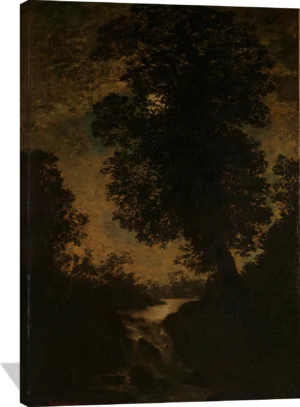
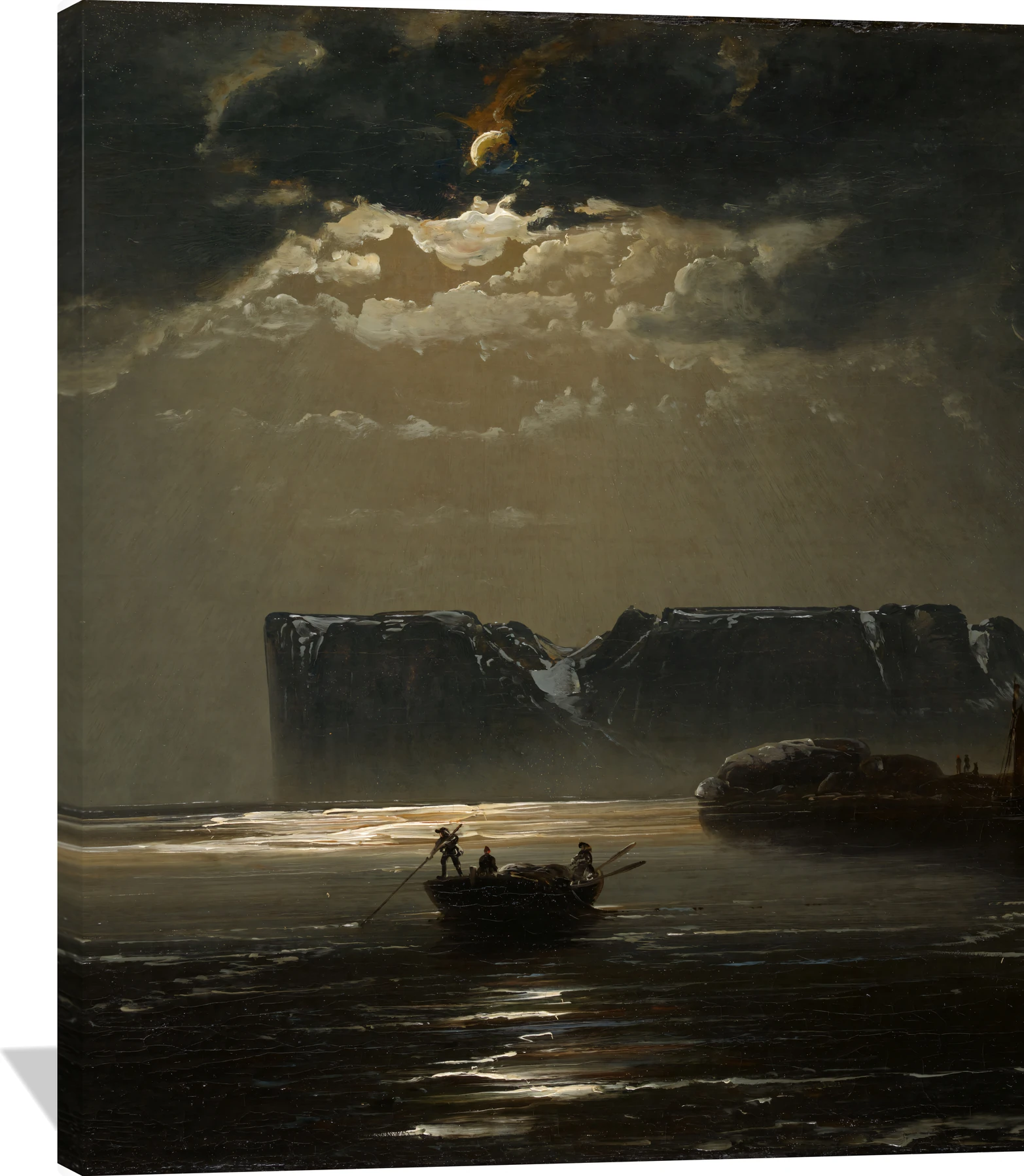
The Peder Balke The North Cape by Moonlight canvas captures the haunting beauty of Norway’s northern coast under a silvery lunar glow. Deep charcoal, muted gold, and icy blue tones evoke a serene yet dramatic atmosphere as moonlight breaks through clouds to illuminate rugged cliffs and still waters. Balke’s masterful play of light and shadow lends a sense of mystery and awe to this nocturnal seascape.
This premium wall art brings timeless Nordic elegance to any interior. Ideal for a living room, study, or entryway, this canvas print invites quiet reflection and admiration for nature’s sublime power and tranquility.
Peder Balke (1804–1887), born on Helgøya in Nes and later active in Oslo, was a pioneering Norwegian painter celebrated for his atmospheric and highly expressive interpretations of the Nordic landscape. His work stands at the crossroads of Romanticism and a proto-modern sensibility, marked by bold abstraction, dramatic contrasts, and a visionary approach to natural forms.
Artistic Style
Balke’s paintings are defined by sweeping tonal gradients, stark light effects, and simplified compositions that push beyond traditional Romantic landscape painting. His technique often involved thin, translucent layers of paint, creating a luminous, almost spectral quality. These visual elements allowed him to capture not just the appearance of a place, but its emotional and spiritual resonance.
Subjects and Themes
Inspired by firsthand travels along the Norwegian coast, Balke portrayed remote cliffs, storm-lashed seas, Arctic horizons, and dramatic geological formations. Works such as North Cape demonstrate his fascination with the sublime power of nature. Rather than providing detailed realism, he emphasized mood, atmosphere, and the tension between fragility and grandeur in the northern landscape.
Legacy and Significance
Balke’s visionary minimalism and innovative brushwork were ahead of their time, contributing to his reputation today as a distinctly modern voice within nineteenth-century Scandinavian art. His commitment to capturing the spirit of Norway’s coastal wilderness has left a lasting imprint on the country’s artistic identity. As renewed scholarly attention has shown, Balke stands as a key figure whose distinctive approach bridges Romantic tradition and the emergence of more experimental, expressive landscape painting.