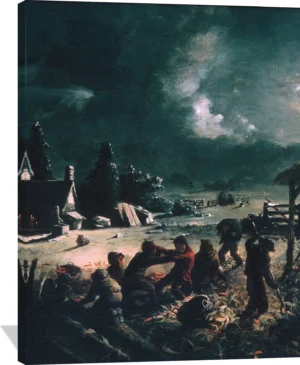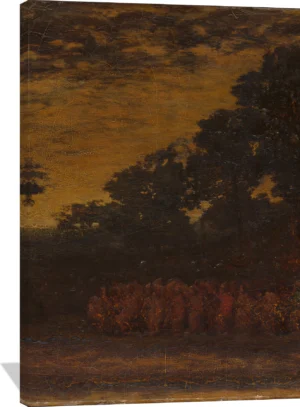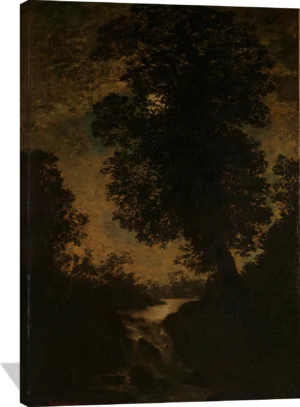
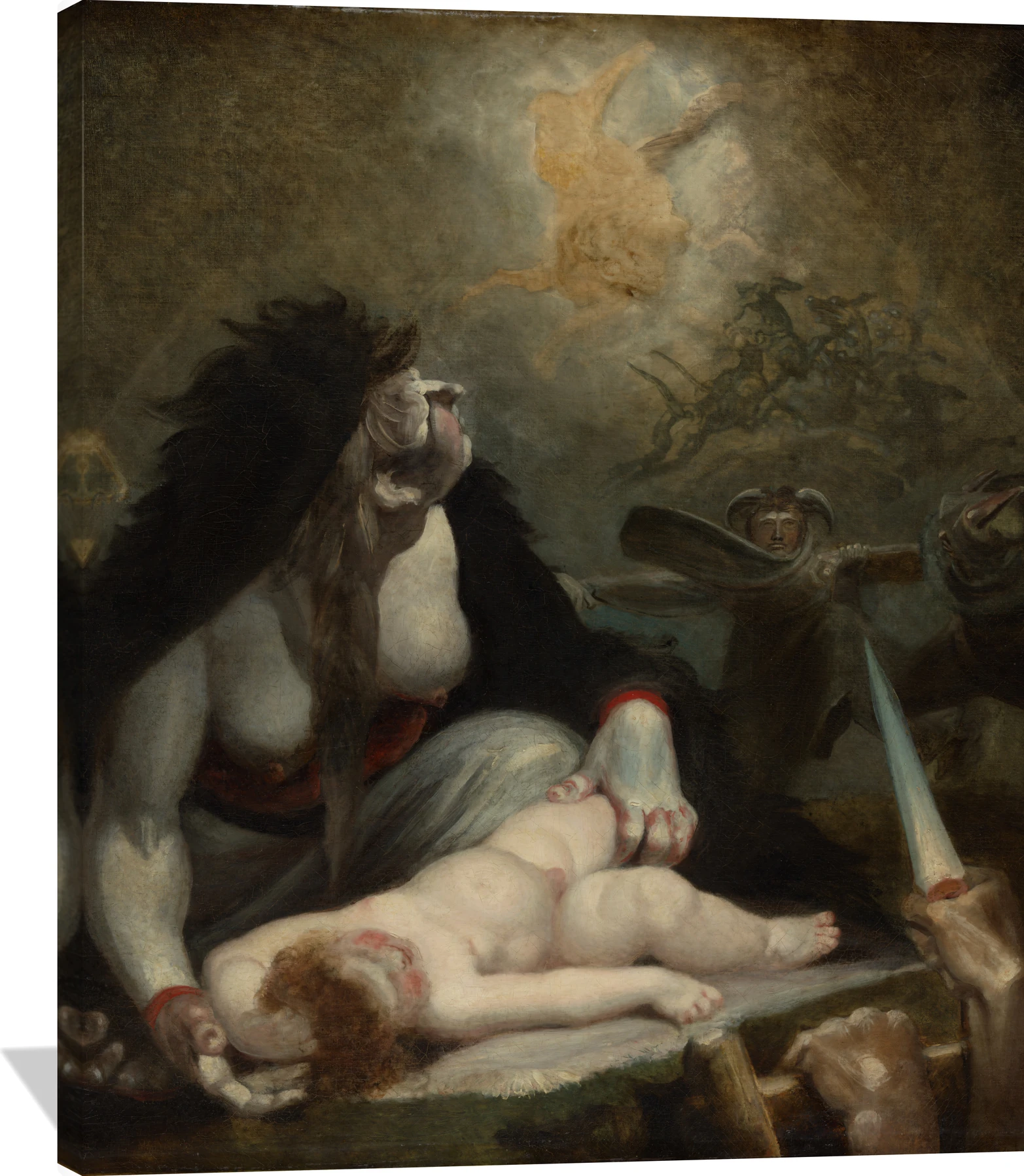
The Henry Fuseli The Night-Hag Visiting Lapland Witches canvas captures the artist’s mastery of the supernatural and the sublime. In this haunting composition, shadowy figures emerge from a stormy, otherworldly glow of deep browns, muted greens, and spectral golds. The dramatic contrasts and fluid brushwork evoke an atmosphere of mystery and awe, characteristic of Fuseli’s visionary Romantic style.
This museum-quality wall art brings a striking narrative presence to any space—perfect for a study, library, or modern living room seeking a bold, thought-provoking centerpiece. A canvas print of this work invites timeless intrigue and artistic depth into your collection.
Henry Fuseli (1741–1825) was a Swiss-born painter who rose to prominence in London, celebrated for his dramatic imagination and psychologically charged visions. Trained initially in theology before turning to art, Fuseli developed a distinctive style that merged classical learning with bold emotional intensity, making him a defining figure of early Romanticism.
Artistic Style
Fuseli’s work is instantly recognizable for its elongated forms, theatrical lighting, and powerful sense of movement. His paintings embrace the uncanny, often exploring themes of dreams, myth, and the supernatural. With sweeping gestures and sharply contrasting shadows, he crafted scenes that feel suspended between reality and fantasy, a hallmark of his mature style.
Notable Contributions
Among Fuseli’s most influential creations is the iconic The Nightmare, a work that embodies his fascination with the human psyche and its hidden terrors. His interpretations of Shakespeare, Milton, and Norse mythology expanded the expressive possibilities of narrative painting, and his dynamic compositions inspired a generation of British artists. As a teacher at the Royal Academy, he became known for his bold ideas and for promoting imaginative freedom in art.
Subjects and Significance
Fuseli gravitated toward heroic, mystical, and nocturnal subjects, depicting gods, spirits, and legendary figures with heightened emotion. His imagery often confronts the tension between beauty and horror, offering a window into the inner landscape of the mind. This approach positioned him as a pivotal voice in the transition from Enlightenment rationality to Romantic exploration.
Today, Henry Fuseli is remembered as an innovator whose dramatic vision and fearless imagination reshaped the boundaries of narrative art. His work continues to resonate for its psychological depth and its compelling blend of myth, mystery, and emotion.