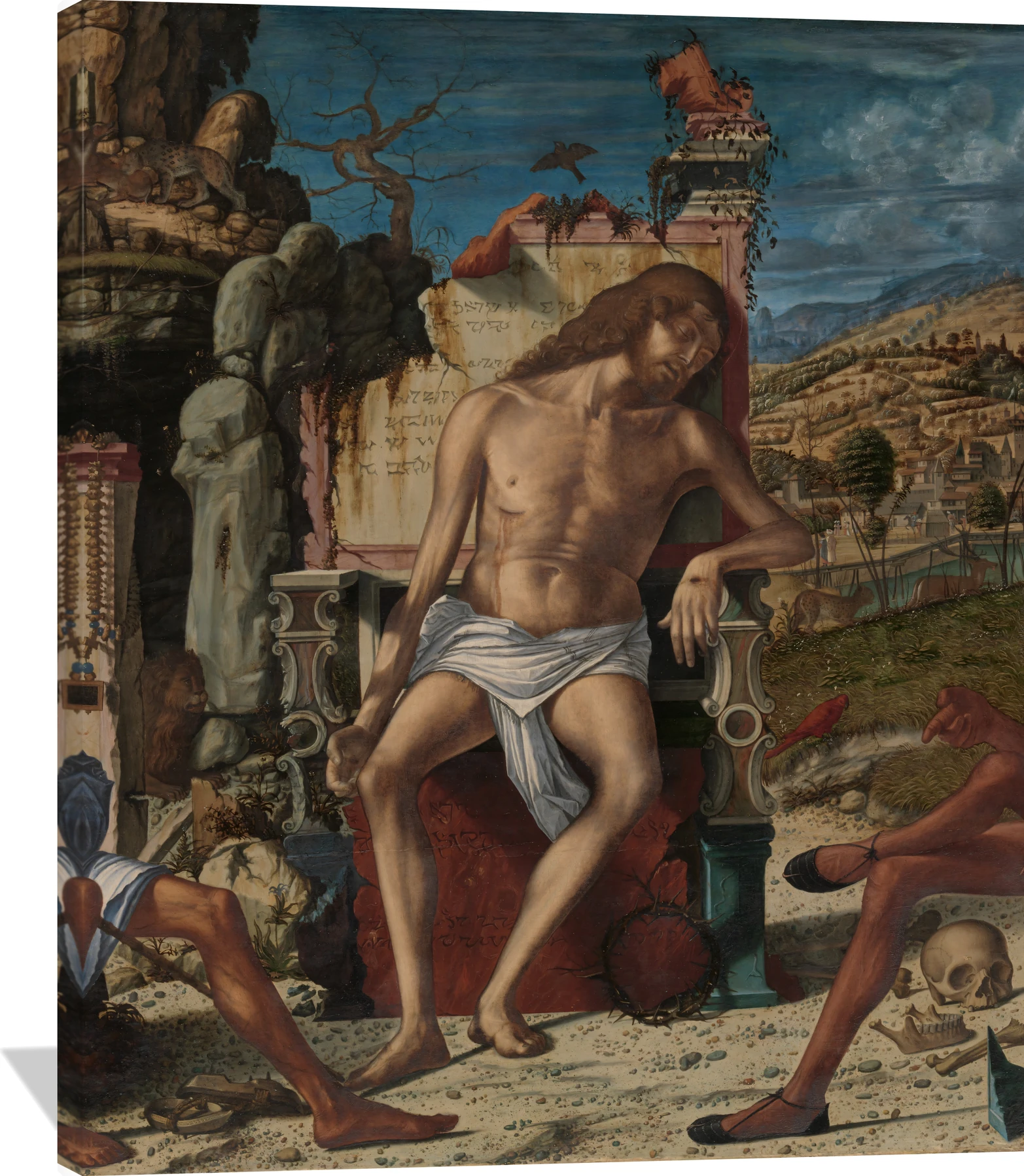
The Vittore Carpaccio The Meditation on the Passion canvas captures a moment of profound stillness and reflection. Rendered in rich earth tones, deep blues, and muted greens, this Renaissance masterpiece evokes both spiritual contemplation and human emotion. The finely detailed figures and luminous landscape create a timeless composition that draws the viewer inward.
Perfect as a statement piece for a living room, study, or entryway, this premium canvas print brings classical elegance and depth to any interior. The The Meditation on the Passion wall art embodies the serene beauty and technical mastery of Carpaccio’s Venetian artistry, offering a window into the meditative heart of the Renaissance.
Vittore Carpaccio (1460/66?–1525/26), a Venetian master of the late Renaissance, is celebrated for his narrative brilliance and luminous visual storytelling. Active during a period of cultural expansion and artistic innovation in Venice, he developed a distinctive style that blended devotional themes with meticulously observed details of everyday life.
Artistic Style and Approach
Carpaccio’s paintings are marked by radiant color, crisp linearity, and an almost theatrical sense of staging. His ability to merge sacred subjects with vivid architectural settings and atmospheric landscapes gives his compositions a striking clarity. He is particularly admired for infusing complex scenes with a serene, poetic mood, making even the most elaborate narratives feel accessible and human.
Notable Works and Subjects
Best known for his large-scale narrative cycles created for Venetian confraternities, Carpaccio excelled at visual storytelling. Works such as St. Ursula Cycle reveal his gift for orchestrating multiple figures and architectural vistas into cohesive, emotionally resonant scenes. His subjects ranged from religious legend to contemporary Venetian life, offering a window into the city’s people, customs, and urban splendor.
Legacy and Significance
Carpaccio holds a significant place in the history of Venetian art for his ability to balance narrative detail with a sense of lyrical stillness. His work reflects the cultural richness of Renaissance Venice, capturing both its spiritual life and its worldly sophistication. Today he is recognized as a key precursor to later Venetian masters, admired for his clarity of vision and his distinctive narrative imagination.