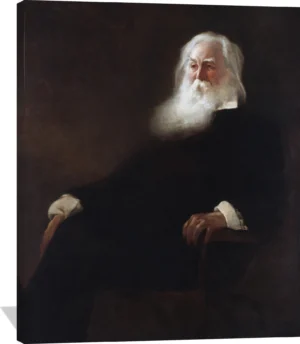

The François Joseph Navez The Massacre of the Innocents canvas captures a moment of profound emotion and classical beauty. Navez’s mastery of Neoclassical form is evident in the tender gestures, luminous skin tones, and rich drapery of ochre, emerald, and violet hues. The composition’s balanced light and shadow evoke both tragedy and grace, drawing the viewer into its timeless narrative.
This museum-quality canvas print brings depth and drama to any refined interior. Ideal for a living room, study, or entryway, it invites contemplation and admiration—an exquisite piece of wall art that honors the enduring power of human expression and historical storytelling.
François Joseph Navez (1787–1869), born in Charleroi and active primarily in Brussels, was a prominent Belgian painter whose refined Neoclassical vision left a significant mark on 19th‑century European art. A student of the celebrated Jacques‑Louis David, Navez absorbed the clarity, compositional balance, and moral gravitas central to the Neoclassical tradition, yet he infused these principles with a personal warmth that distinguished his work from that of his contemporaries.
Artistic Style and Approach
Navez is best known for his elegant synthesis of Neoclassical precision with a poetic sensitivity to human expression. His portraits display luminous clarity, controlled draftsmanship, and a quiet psychological depth, while his historical and religious compositions reveal an instinct for narrative restraint and harmonious structure. His palette, typically soft and meticulously modulated, underscores the serene atmosphere characteristic of his mature style.
Notable Contributions
As one of Belgium’s leading painters of the early to mid‑19th century, Navez played a pivotal role in shaping the visual identity of a young nation. His tenure as director of the Académie Royale des Beaux‑Arts in Brussels helped define academic standards, influencing a generation of Belgian artists. Though rooted in Neoclassicism, his work subtly reflects the shifting aesthetics of the period, offering a bridge between the austerity of David and the emerging Romantic sensibility. His portraits of civic figures, religious scenes, and refined domestic subjects remain touchstones of Belgian academic painting.
Subjects and Significance
Navez’s oeuvre spans dignified official portraits, tender family studies, and contemplative religious imagery. He excelled at capturing the individuality of sitters while maintaining the timeless composure associated with classical art. His ability to imbue ordinary moments with noble restraint and emotional clarity gives his paintings enduring appeal. Works such as The Holy Family or his celebrated society portraits highlight his sensitivity to gesture, subtle emotion, and the harmonious interplay of light and form.
Today, François Joseph Navez is regarded as a central figure in Belgian Neoclassicism, valued for his artistic discipline, his influential role in academic training, and his distinctive fusion of classical ideals with human warmth. His paintings continue to resonate for their quiet elegance, refined craftsmanship, and lasting cultural significance.