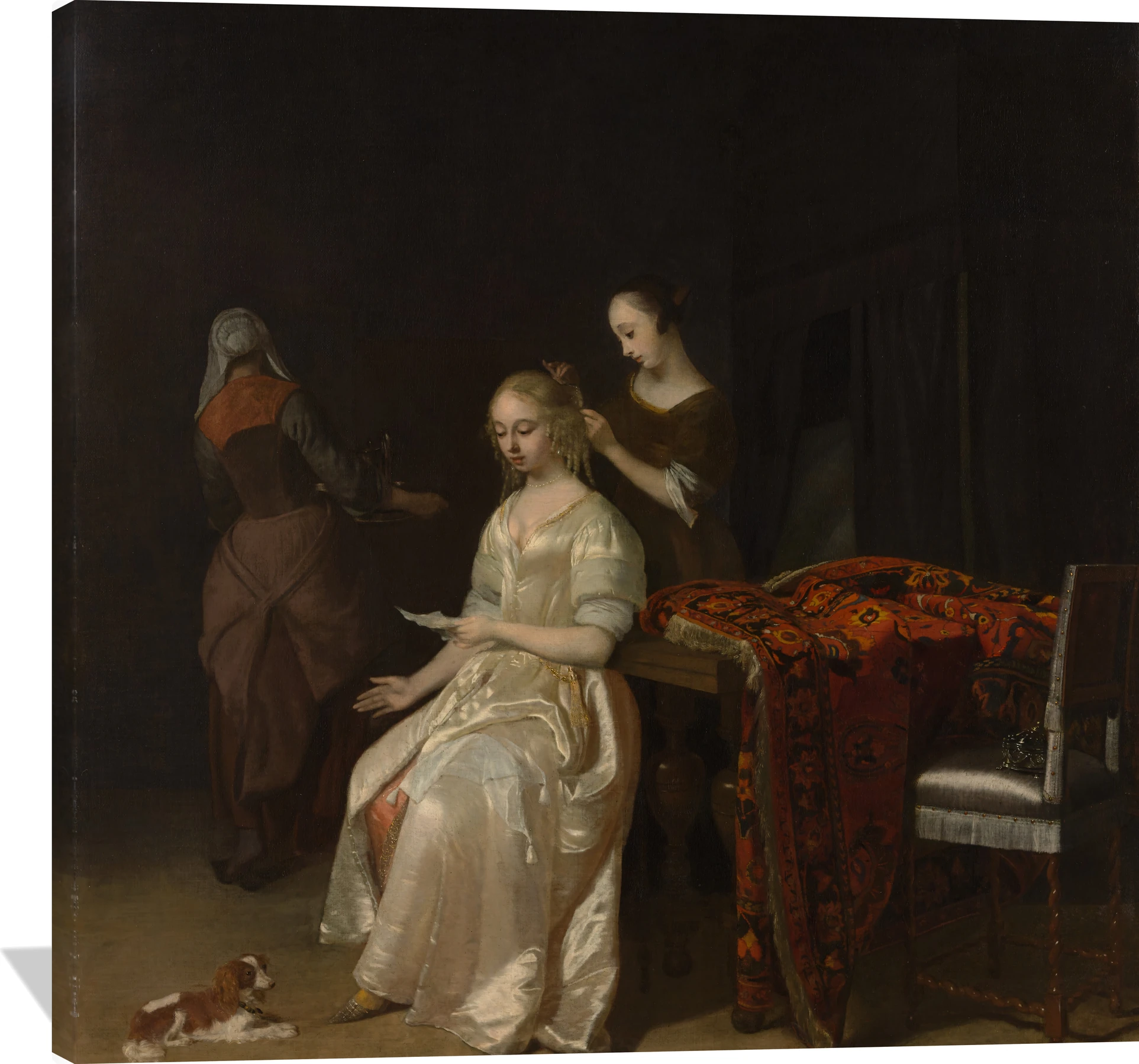
The Jacob Ochtervelt The Love Letter canvas captures a tender, intimate moment bathed in soft light and quiet anticipation. Ochtervelt’s masterful use of warm browns, ivory tones, deep reds, and golden highlights draws the eye to the seated woman in satin, her letter poised delicately in hand. The surrounding stillness and subtle play of texture evoke the refined grace of 17th-century Dutch interiors.
This elegant wall art brings timeless sophistication to any living room, study, or entryway. A fine canvas print that celebrates human emotion and classical beauty, it invites reflection and warmth into modern spaces while honoring the artistry of the Dutch Golden Age.
Jacob Ochtervelt (1634–1682), a Dutch Golden Age painter born in Rotterdam and later active in Amsterdam, is celebrated for his refined genre scenes that capture the elegance and intimate rituals of seventeenth‑century urban life.
Artistic Style
Ochtervelt is known for his polished, luminous surfaces and his exceptional command of light. Influenced by contemporaries such as Gerard Ter Borch and Pieter de Hooch, he developed a distinctive manner marked by quiet sophistication, balanced compositions, and a gentle atmospheric clarity. His paintings often feature subtle tonal harmonies that accentuate textures of satin, velvet, and polished interiors, creating a sense of understated luxury.
Subjects and Themes
Ochtervelt excelled in portraying scenes of polite society, focusing on encounters between well‑dressed figures in serene domestic spaces. Many of his works depict moments of courteous exchange musical instruction, gift giving, or refined conversation infused with social nuance and emotional restraint. He is particularly admired for his so‑called “entrance hall” compositions, in which elegantly dressed women receive visitors or engage with figures across a threshold. These works, including pieces such as The Oyster Meal and Lady and Gentleman in an Interior, highlight the contrasts between public and private realms and subtly explore class distinctions.
Historical Significance
Operating during the height of Dutch prosperity, Ochtervelt contributed to a rich visual record of civic refinement and domestic culture. While less widely reproduced than some of his contemporaries, his paintings hold a significant place within Golden Age genre painting for their combination of narrative intimacy and visual opulence. His ability to convey social etiquette through gesture, costume, and space gives modern viewers insight into the ideals and rhythms of seventeenth‑century life.
Distinctive Qualities
Ochtervelt’s work is distinguished by his elegant figural modeling and his talent for rendering luxurious materials with meticulous detail. His quiet scenes convey a sense of poised stillness, inviting contemplation rather than spectacle. Collectors and historians value his paintings for their refined elegance and their masterful use of light, qualities that continue to define his legacy within Dutch art.