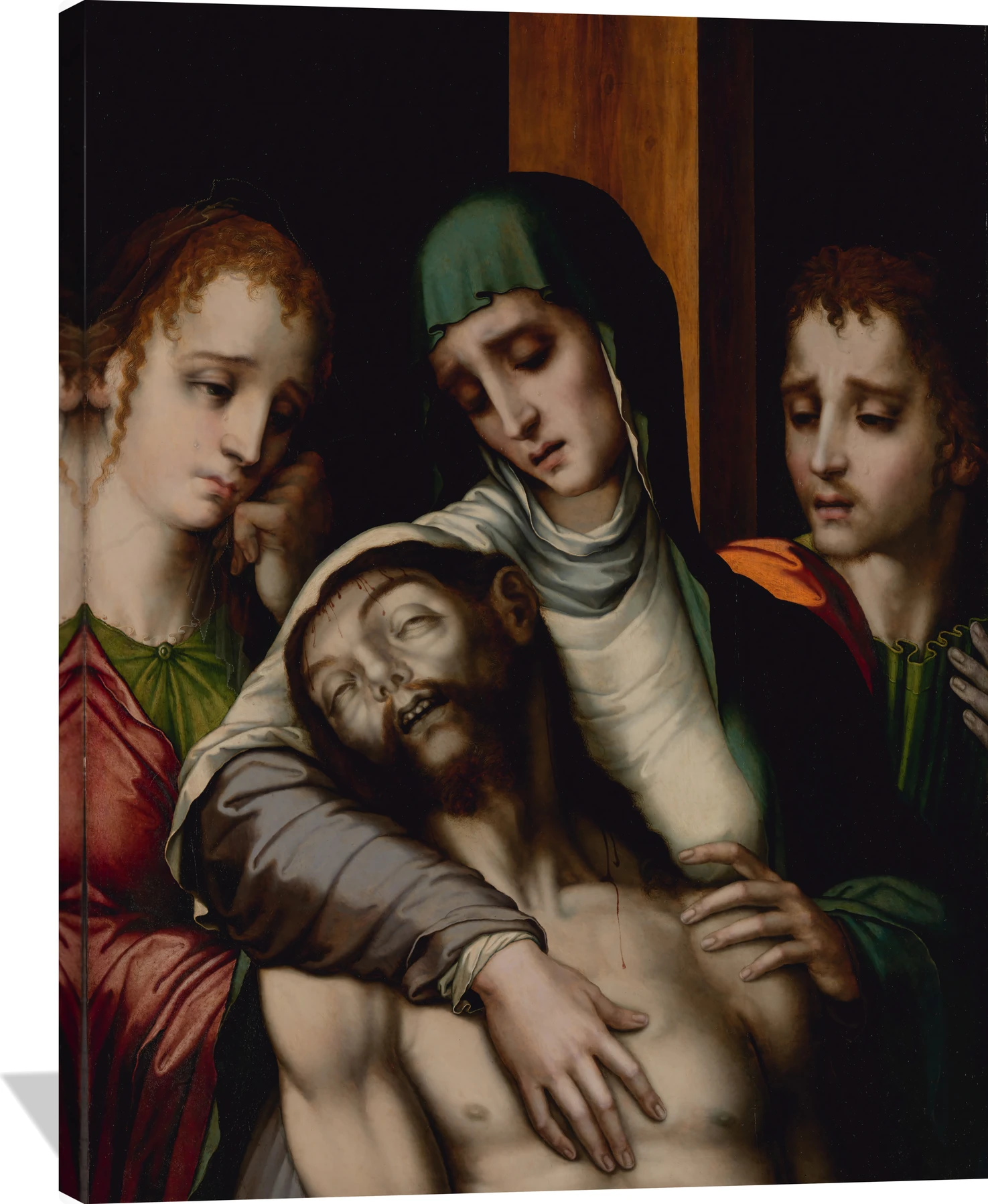
The Luis de Morales The Lamentation canvas captures a moment of profound emotion and spiritual depth. Rendered in rich tones of deep brown, muted green, soft ivory, and crimson, Morales’s masterful composition draws the viewer into an intimate portrayal of sorrow and devotion. The delicate interplay of light and shadow enhances the figures’ serene expressions, creating an atmosphere of quiet reverence.
This exquisite wall art brings Renaissance grace and contemplative beauty to any interior. Ideal for a living room, study, or entryway, this premium canvas print invites reflection and adds timeless sophistication to your space.
Luis de Morales (1510/11–1586) was a Spanish Renaissance painter whose devotional works made him one of the most revered artistic figures of 16th‑century Extremadura. Often called “El Divino” for the intensely spiritual character of his paintings, Morales created images that were prized for their emotional depth, delicate detail, and refined craftsmanship.
Artistic Style
Morales’s work is distinguished by its fusion of Iberian religious tradition with the influence of Italian Mannerism. His paintings often feature elongated figures, porcelain-like skin tones, and exquisitely rendered facial expressions. Gentle modeling and luminous surfaces give his compositions a serene, meditative quality, while subtle chiaroscuro enhances their intimate, devotional atmosphere.
Subjects and Themes
Best known for his deeply moving portrayals of the Virgin and Christ, Morales frequently revisited themes such as the Pietà, the Ecce Homo, and the Madonna and Child. His figures appear contemplative and sorrowful, inviting viewers into quiet reflection. These emotionally charged works were intended for private devotion as well as ecclesiastical settings, reflecting the spiritual sensibilities of Counter‑Reformation Spain.
Legacy and Significance
Active primarily in Plasencia and the surrounding region, Morales became one of the leading painters of sacred imagery in 16th‑century Spain. His meticulous technique and introspective mood set him apart from many of his contemporaries, securing his reputation as a master of devotional art. Today, he is recognized for his ability to combine technical precision with profound emotional resonance, a hallmark that continues to define his enduring legacy.