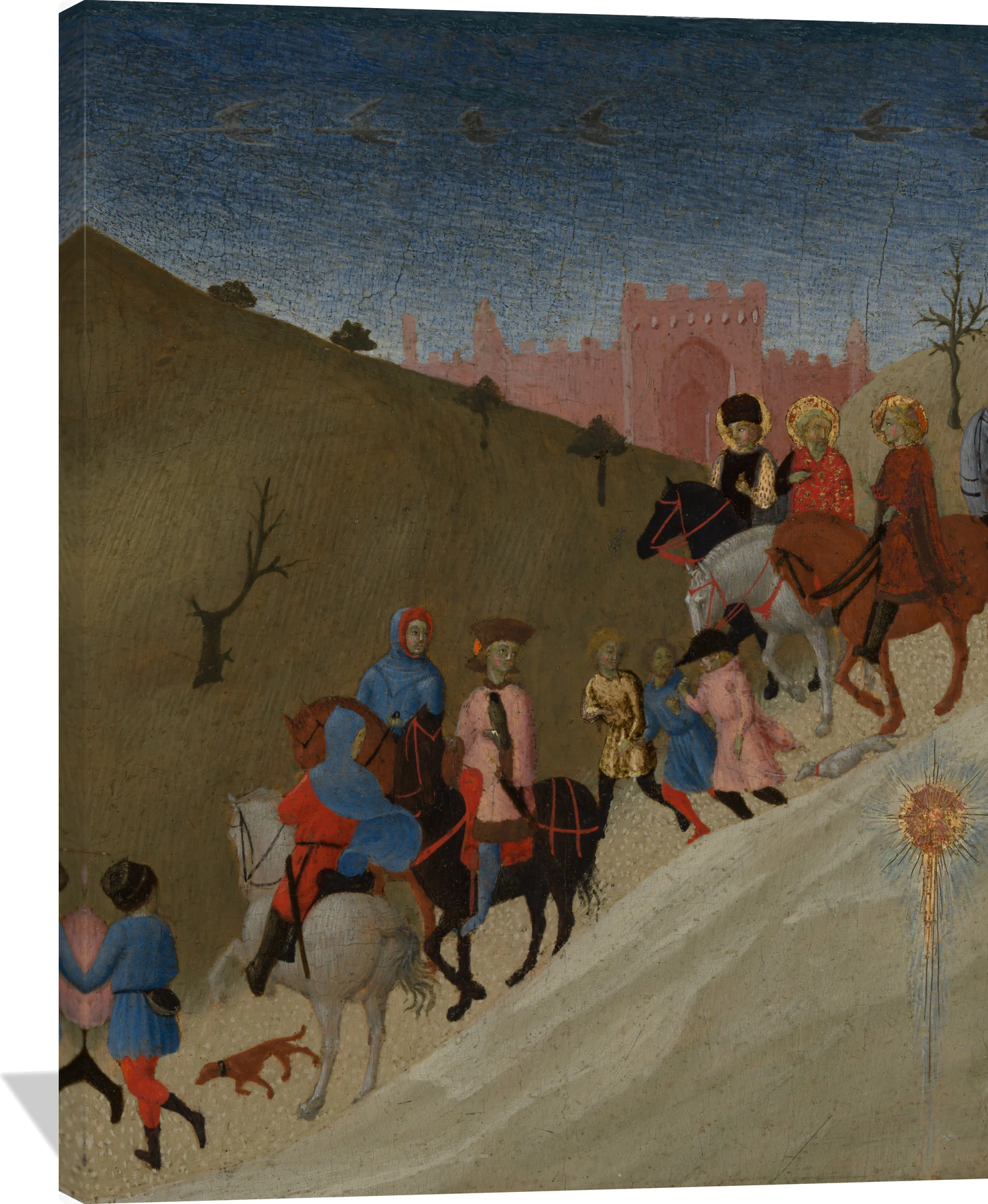
The Sassetta (Stefano di Giovanni) The Journey of the Magi canvas captures a serene medieval procession through rolling hills under a twilight sky. With its soft golds, muted greens, rose tones, and deep blues, this masterwork from the early Italian Renaissance radiates quiet devotion and timeless grace. The detailed figures and gentle landscape evoke a sense of movement and spiritual wonder.
This exquisite canvas print brings a touch of historic elegance to any space. Ideal for a living room, study, or entryway, it invites reflection and conversation while celebrating the refined artistry of Siena’s golden age. A true statement piece for lovers of classical wall art.
Sassetta (Stefano di Giovanni), active in Siena during the early fifteenth century, stands as one of the defining painters of the Sienese School. Working between Siena and Cortona from around 1400 until his death in 1450, he helped guide Gothic elegance into the emerging language of the Renaissance while preserving the region’s lyrical spirituality.
Artistic Style
Sassetta’s style blends the shimmering delicacy of the late Gothic with the new Renaissance interest in naturalism. His panels are distinguished by soft, expressive figures, refined color harmonies, and an atmosphere that appears both earthly and otherworldly. Architectural settings and landscapes often unfold like poetic stages, revealing a meticulous attention to detail and a gentle, contemplative rhythm.
Subjects and Themes
Devotional narratives dominate Sassetta’s oeuvre, including scenes from the lives of saints, episodes from the life of Christ, and richly imagined altarpieces such as the famed Sansepolcro Altarpiece. His works present sacred stories with clarity and emotional warmth, inviting viewers into moments of quiet revelation. Angels, mystics, and serene holy figures populate his compositions, contributing to their enduring sense of spiritual intimacy.
Legacy and Significance
Regarded as a pivotal figure in early fifteenth‑century Siena, Sassetta bridged tradition and innovation. His ability to merge Gothic refinement with the evolving concerns of perspective, space, and human expression helped shape the trajectory of Sienese painting. Today, he is celebrated for his distinctive poetic vision and for artworks that capture both the elegance of medieval Siena and the dawn of Renaissance sensibilities.