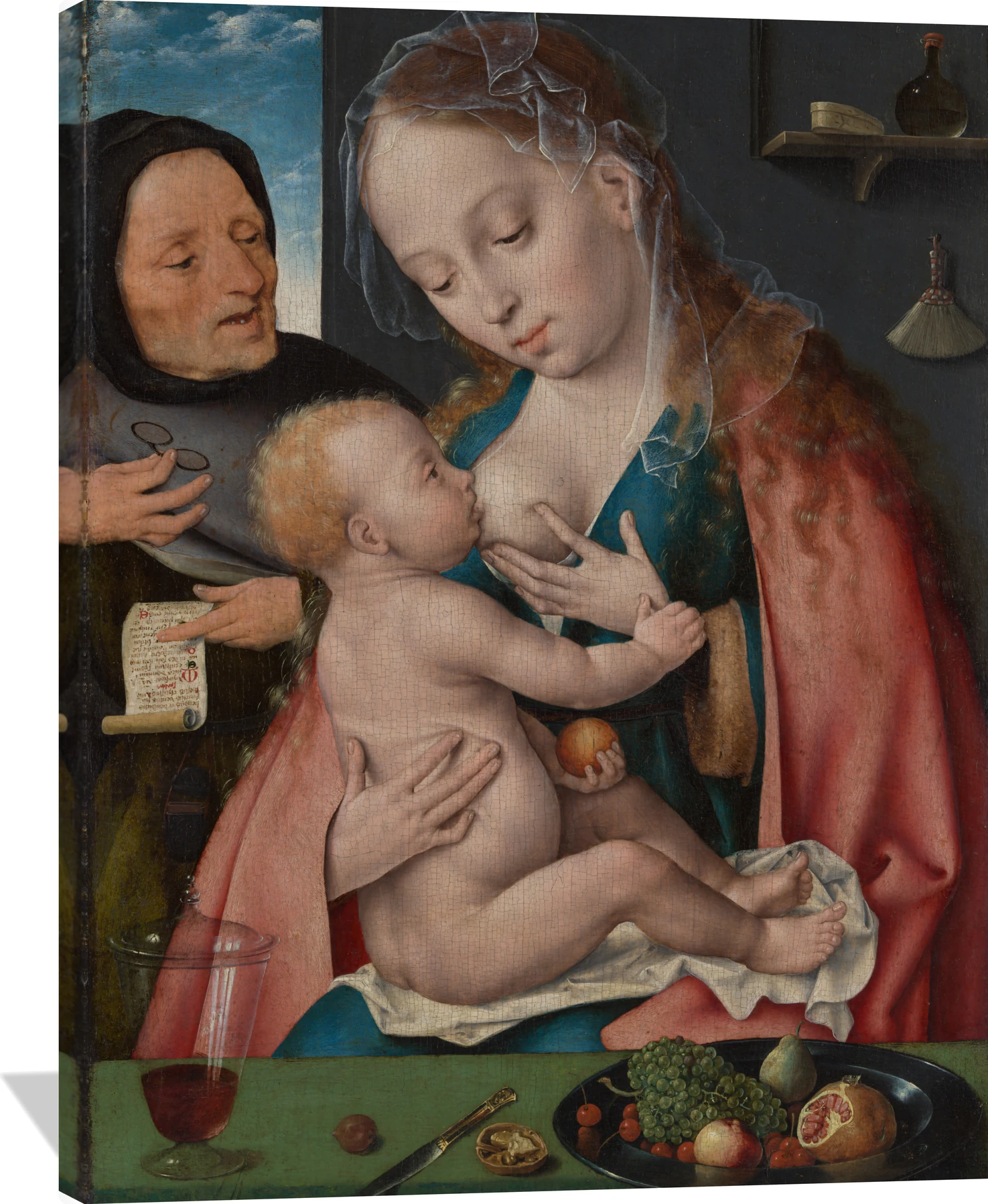
The Joos van Cleve The Holy Family canvas captures a serene moment of maternal devotion rendered in luminous tones of crimson, ivory, and deep green. The Netherlandish master’s refined brushwork and soft modeling bring warmth and intimacy to this sacred scene, balancing divine tenderness with human realism.
This exquisite wall art evokes quiet grace and timeless beauty, making it a striking focal point for a living room, study, or entryway. A museum-quality The Holy Family canvas print brings Joos van Cleve’s Renaissance harmony and detail into your home, inviting reflection and calm through its radiant composition.
Joos van Cleve (ca. 1485–1540/41) was a leading Netherlandish painter whose refined technique and expressive detail made him one of the most sought‑after artists of the early sixteenth century. Active primarily in Antwerp, he became known for blending the precision of Northern Renaissance painting with the emerging softness and compositional harmony of Italian influences.
Artistic Style
Van Cleve mastered luminous color, delicate modeling, and meticulous surface detail, creating works that feel both intimate and richly layered. His paintings often reveal a subtle emotional depth, marked by gentle expressions and sophisticated handling of light. This ability to merge technical finesse with a warm human presence is a defining hallmark of his style.
Subjects and Themes
His oeuvre includes devotional scenes, portraits of nobility, and tender representations of the Virgin and Child. Van Cleve’s religious compositions, including numerous variations of the Madonna and Child, are celebrated for their serene spirituality and richly textured settings. His portraits display remarkable sensitivity, capturing individuality through careful attention to gesture, costume, and physiognomy.
Notable Contributions
As a prominent figure of the Antwerp school, van Cleve helped shape the city’s growing artistic reputation during a period of brisk cultural exchange. He was among the first Netherlandish painters to integrate Italian Renaissance ideas into local tradition, contributing to a more cosmopolitan visual language. His workshop was highly productive, and its influence extended across Northern Europe. His ability to combine Flemish clarity with the softness and balance of Italian design became a signature that inspired many contemporaries.
Cultural Significance
Joos van Cleve stands today as a key representative of early sixteenth‑century Northern art, exemplifying a moment when regional craftsmanship met broader European innovation. His paintings continue to be valued for their technical refinement and their harmonious blend of realism and gentle idealization. Collectors and historians alike regard his work as a vital link between medieval tradition and the evolving aesthetics of the Renaissance.