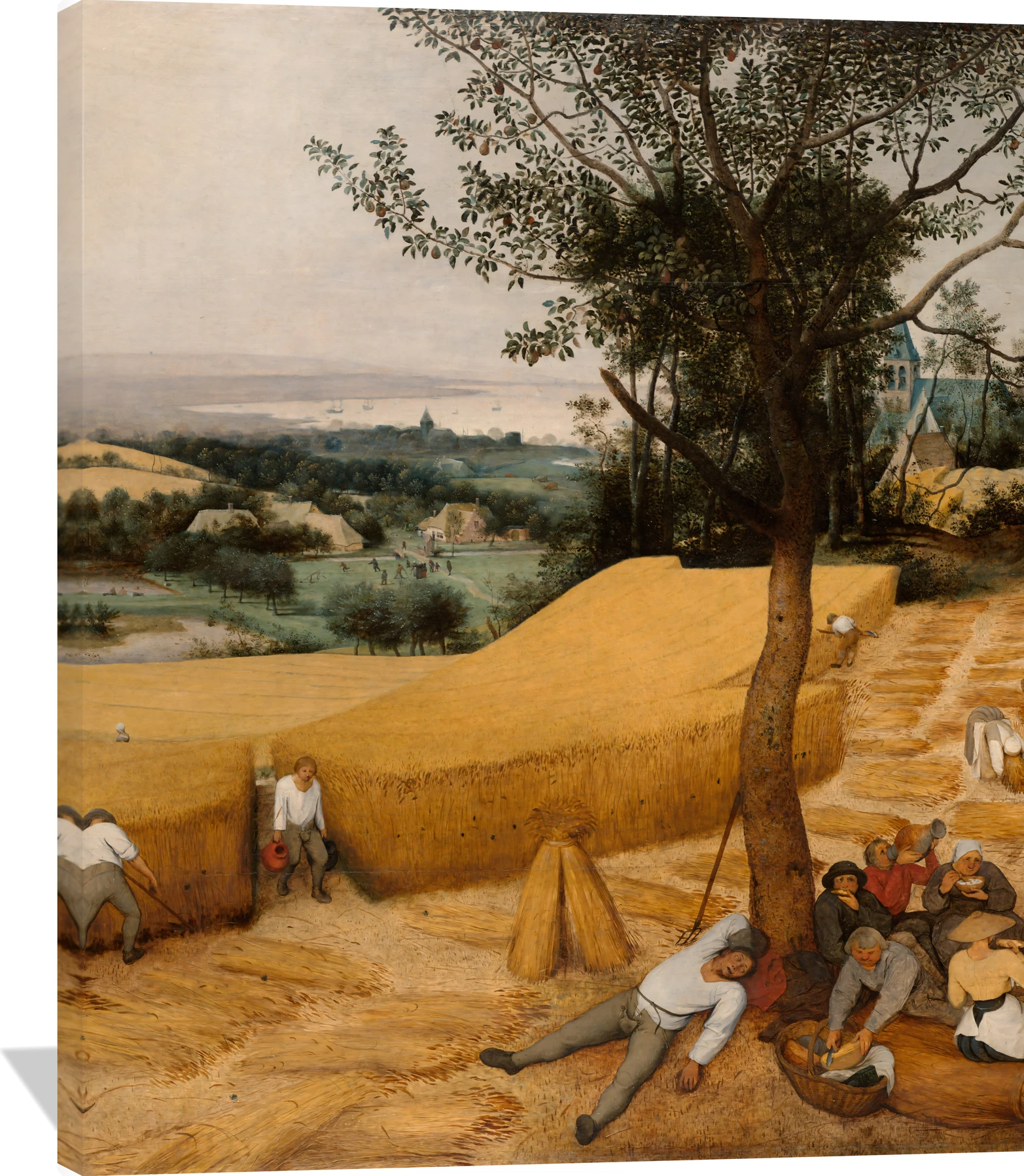
Pieter Bruegel the Elder’s The Harvesters canvas captures the golden rhythm of rural life in the 16th century. Bathed in warm ochres, muted greens, and soft sky blues, this masterful landscape invites the viewer into a serene moment of labor and rest beneath a summer sun. The balanced composition and gentle realism make it a timeless celebration of nature’s abundance.
This museum-quality canvas print brings depth and warmth to any living room, study, or entryway. A classic choice for art lovers, The Harvesters enriches modern interiors with historical charm and quiet sophistication, offering a daily reminder of life’s simple, enduring beauty.
Pieter Bruegel the Elder (Netherlandish, Breda (?) ca. 1525–1569 Brussels) stands as one of the most influential painters of the Northern Renaissance, celebrated for his vivid portrayals of peasant life, moral allegories, and sweeping landscapes that observe humanity with both humor and insight.
Artistic Style and Approach
Bruegel’s work is distinguished by its meticulous detail, earthy realism, and an extraordinary ability to weave narrative depth into bustling scenes. His compositions often combine panoramic vistas with intimate human moments, achieving a balance between the universal and the everyday. A master of visual storytelling, he employed a grounded, naturalistic palette and a keen sense of rhythm within densely populated scenes, crafting works that invite prolonged contemplation.
Subjects and Themes
Best known as a painter of peasant life, Bruegel captured rural festivities, labors, and customs with unmatched authenticity. His genre scenes, such as The Peasant Wedding and The Harvesters, reveal his fascination with ordinary people and underscore their role in the broader human experience. He also tackled moral and religious subjects through inventive allegory, seen in works like The Triumph of Death and The Tower of Babel, where symbolism, satire, and social commentary intertwine.
Cultural and Historical Significance
Bruegel’s paintings are a vital window into 16th‑century life, reflecting the social, political, and spiritual climate of the Low Countries. His ability to fuse humanist thought with vernacular themes positioned him as a pivotal figure in Northern European art. Through his sharply observed depictions and layered meanings, he influenced generations of artists, including his own family workshop, and left a legacy that continues to shape how viewers understand the everyday world in art.
Pieter Bruegel the Elder remains celebrated for his innovative narrative vision and his deeply human perspective, qualities that make his work both historically significant and enduringly captivating.