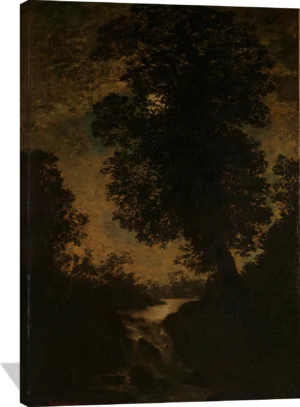
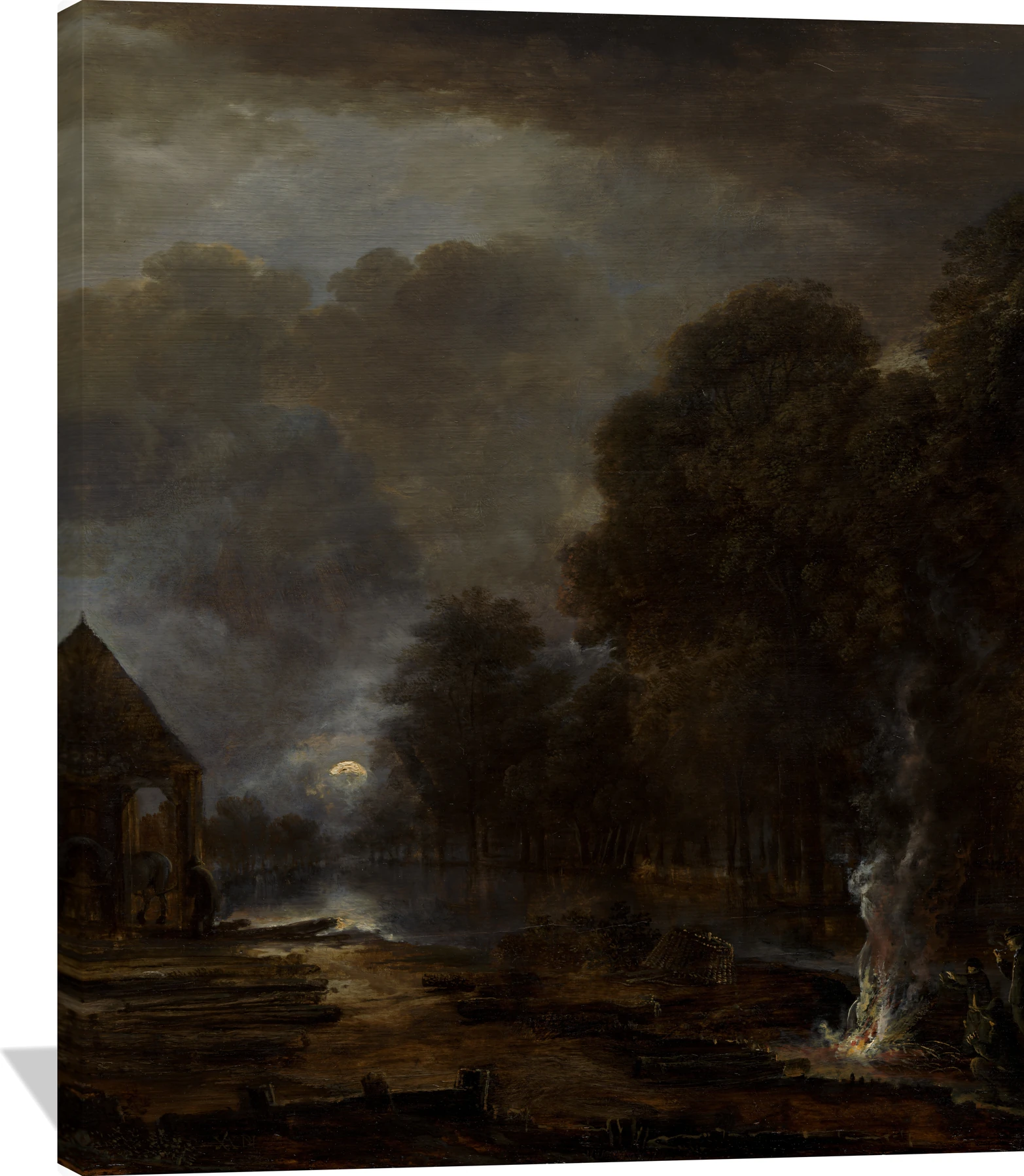
The Aert van der Neer The Farrier canvas captures a tranquil nocturnal scene illuminated by moonlight and firelight. Deep browns, muted blues, and soft golden tones create a masterful interplay of shadow and glow, drawing the eye to the quiet labor of figures beside a rustic forge. Van der Neer’s signature treatment of light evokes calm reflection and timeless craftsmanship.
This exquisite wall art brings a sense of depth and serenity to any space. Ideal for a study, living room, or entryway, this canvas print invites viewers into a world where nature, work, and evening stillness harmonize in perfect balance.
Aert van der Neer (Gorinchem 1603/4–1677 Amsterdam) is celebrated as one of the Dutch Golden Age’s most evocative landscape painters, renowned for his masterful handling of light and atmosphere.
Artistic Style and Technique
Van der Neer’s work is distinguished by its serene tonal harmonies and an exceptional command of nocturnal illumination. His moonlit scenes and winter landscapes reveal a poetic sensitivity to nature, often characterized by silvery reflections, soft gradations, and a masterful balance between shadow and glow. His ability to render the subtleties of dusk, dawn, and night made him a defining figure in the development of Dutch tonal landscape painting, a movement rooted in refined naturalism and controlled emotional depth.
Notable Subjects
While Van der Neer sometimes depicted riverside towns and rural expanses, he is best known for atmospheric evening views, tranquil canals, frozen waterways bustling with skaters, and expansive lowland vistas. These compositions frequently include reflective water surfaces and delicately illuminated skies, hallmarks that contribute to the quiet drama and contemplative mood of his scenes. His winter landscapes in particular became widely admired for their crisp clarity and nuanced depiction of seasonal light.
Cultural and Historical Significance
Active during the height of the Dutch Golden Age, Van der Neer participated in a cultural moment that celebrated everyday life, the natural world, and the subtle beauty of the local environment. Though he worked alongside more commercially successful contemporaries, his paintings gained enduring appreciation for their distinctive atmospheric effects and their contribution to the evolving Dutch landscape tradition. Today, his oeuvre is recognized for its exquisite nocturnes and its poetic treatment of light, marking him as a significant contributor to the era’s artistic innovations.