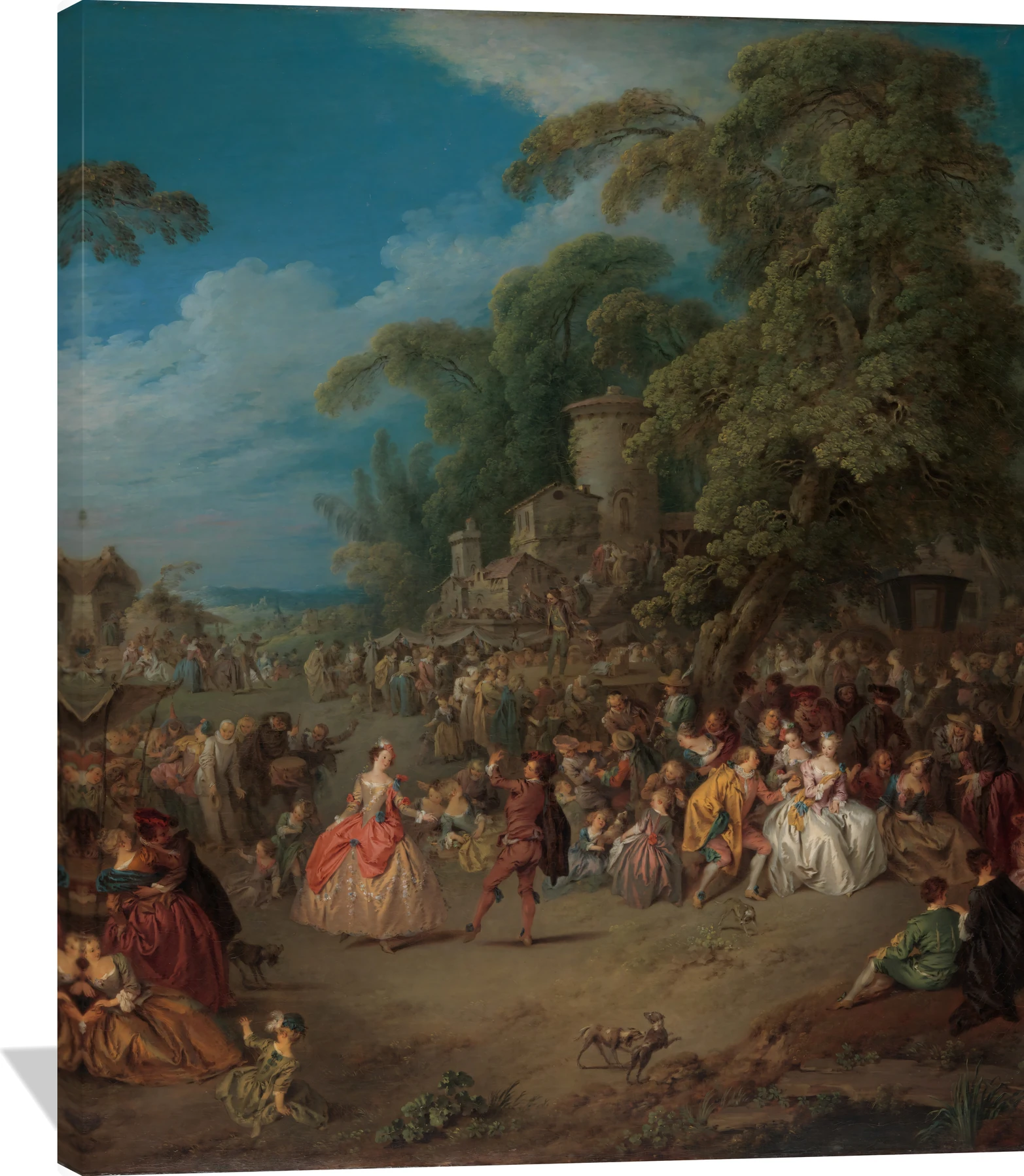
The Jean-Baptiste Joseph Pater The Fair at Bezons canvas captures the lively charm of an 18th-century French festival, where elegantly dressed figures mingle beneath sweeping trees and a radiant blue sky. Soft tones of rose, gold, green, and sky blue create a harmonious balance between nature and celebration, evoking a sense of refined joy and timeless festivity.
This exquisite wall art brings a touch of Rococo elegance to any interior. Perfect for a living room, study, or entryway, this masterful canvas print invites viewers to linger in its graceful movement and luminous atmosphere, transforming your space with the beauty of Pater’s Parisian artistry.
Jean-Baptiste Joseph Pater (French, Valenciennes 1695–1736 Paris) was a distinguished Rococo painter celebrated for his elegant fête galante scenes and refined mastery of light, color, and movement. As the only recorded pupil of Jean‑Antoine Watteau, Pater absorbed the poetic charm of his mentor’s style while developing a voice marked by a livelier rhythm and a keen eye for atmospheric nuance.
Artistic Style and Themes
Pater’s work is characterized by delicate brushwork, harmonious palettes, and an effortless sense of grace. His compositions often depict aristocratic leisure, theatrical gatherings, and pastoral revelry, rendered with a soft luminosity that heightens their dreamlike mood. While closely aligned with the Rococo tradition, his paintings stand out for their animated figures and subtly choreographed arrangements.
Notable Contributions
As a prominent practitioner of the fête galante, Pater helped shape the genre’s enduring visual language. His scenes blend elegance and spontaneity, offering a refined interpretation of courtly pleasure that resonated deeply with eighteenth‑century patrons. Pater’s ability to capture fleeting gestures and intimate social exchanges solidified his reputation within the French artistic community.
Cultural Significance
Pater’s oeuvre reflects the cultural vibrancy of early eighteenth‑century France, a period defined by artistic experimentation and the celebration of refined leisure. His paintings provide insight into the tastes and ideals of the era, serving as both aesthetic achievements and historical documents. Today, Pater is recognized as a key figure in the Rococo movement, valued for his contribution to the poetic, light‑filled sensibility that defines the style. His distinctive blend of elegance and vitality ensures his continued relevance within the history of European art.