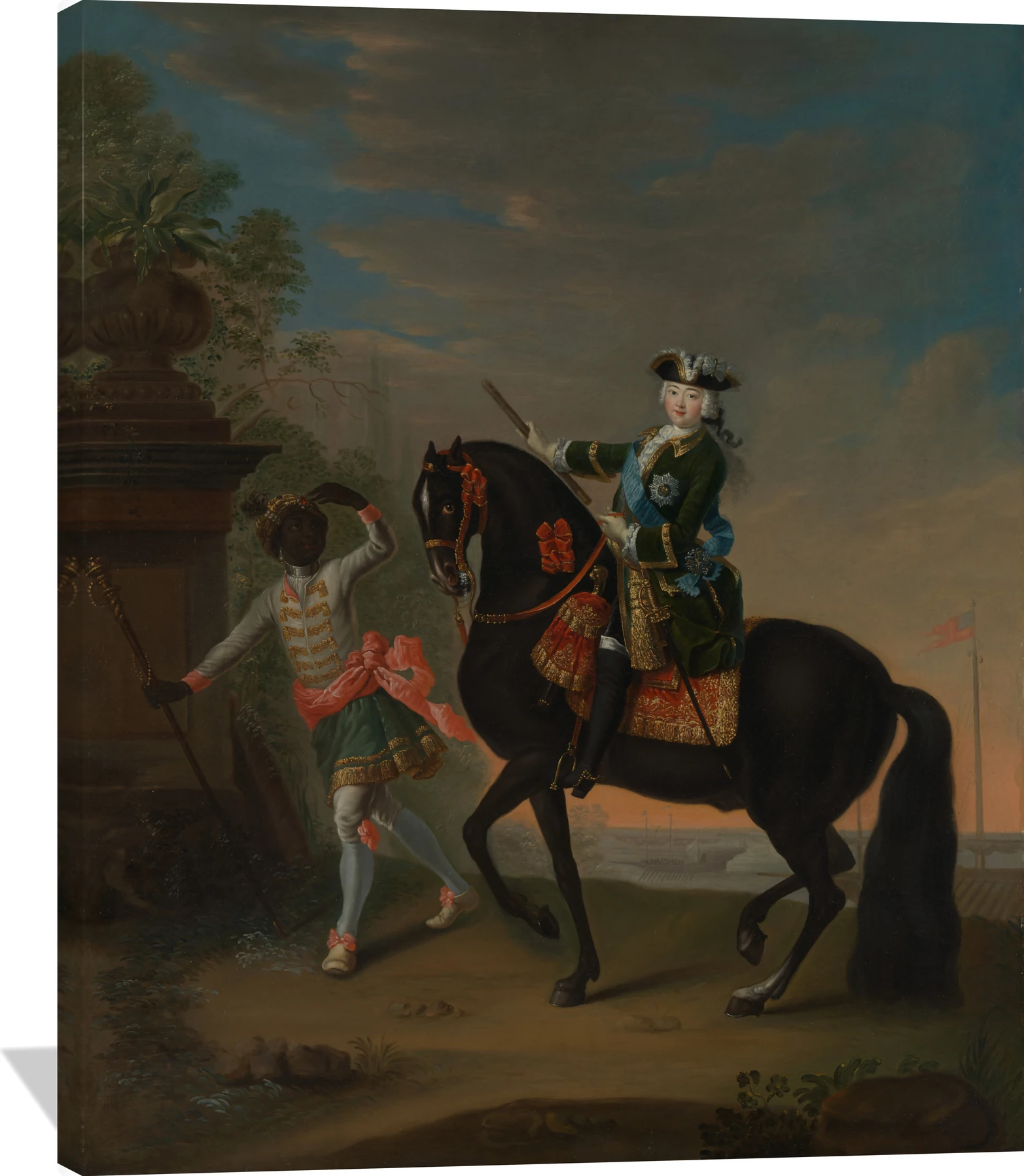
The Georg Christoph Grooth The Empress Elizabeth of Russia (1709–1762) on Horseback, Attended by a Page canvas captures regal splendor and equestrian grace in exquisite detail. Bathed in soft golden light, the Empress commands attention atop a powerful black steed, attended by a richly dressed page. Deep emerald greens, warm golds, and muted blues evoke the grandeur of 18th‑century court life and the calm dignity of imperial portraiture.
This museum‑quality wall art brings timeless elegance to any space, from a refined study to a sophisticated living room. A canvas print that celebrates nobility, artistry, and the enduring allure of classical mastery.
Georg Christoph Grooth (German, 1716–1749) was a distinguished painter and court artist whose refined portraiture helped shape the visual language of mid‑18th‑century Russia. Trained in the artistic traditions of the German Baroque, he became best known for his service at the Imperial Court in St. Petersburg, where his elegant style and acute observational skill earned him a lasting place in European art history.
Artistic Style and Approach
Grooth’s work is characterized by a graceful blend of Baroque richness and emerging Rococo delicacy. His portraits display a harmonious balance of realism and theatrical poise, capturing sitters with a natural luminosity and finely rendered textures. Through careful attention to costume, gesture, and expression, he conveyed both the dignity and individuality of his subjects.
Notable Subjects and Contributions
Best recognized for his influential portraits of the Russian imperial family, including the celebrated depiction of Empress Elizabeth Petrovna, Grooth helped define the official visual identity of the court during a period of expanding cultural ambition. His artworks often presented royalty and aristocracy in ways that communicated power, refinement, and the cosmopolitan aspirations of the empire. These portraits, including works such as Portrait of Empress Elizabeth, reveal his command of sumptuous detail and his sensitivity to the atmosphere of courtly life.
Cultural and Historical Significance
Grooth’s career reflects the broader artistic exchange between Central Europe and Russia in the 18th century. Invited for his talent and professionalism, he became a vital contributor to the modernization of Russian portraiture. His ability to merge Western European techniques with the evolving tastes of the Russian elite made him a key figure in the cultural refinement of the imperial court.
Although his life was brief, Georg Christoph Grooth left a remarkably enduring legacy. His portraits continue to be admired for their elegance, technical finesse, and insightful characterization, offering a vivid window into the sophisticated world of imperial Russia.