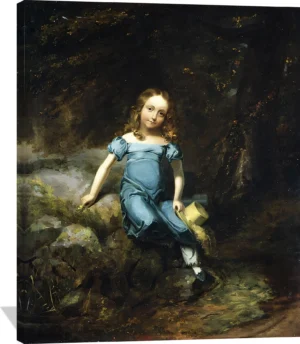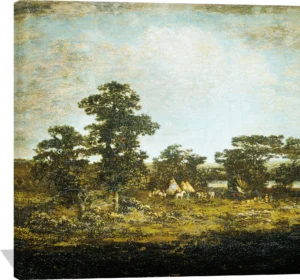
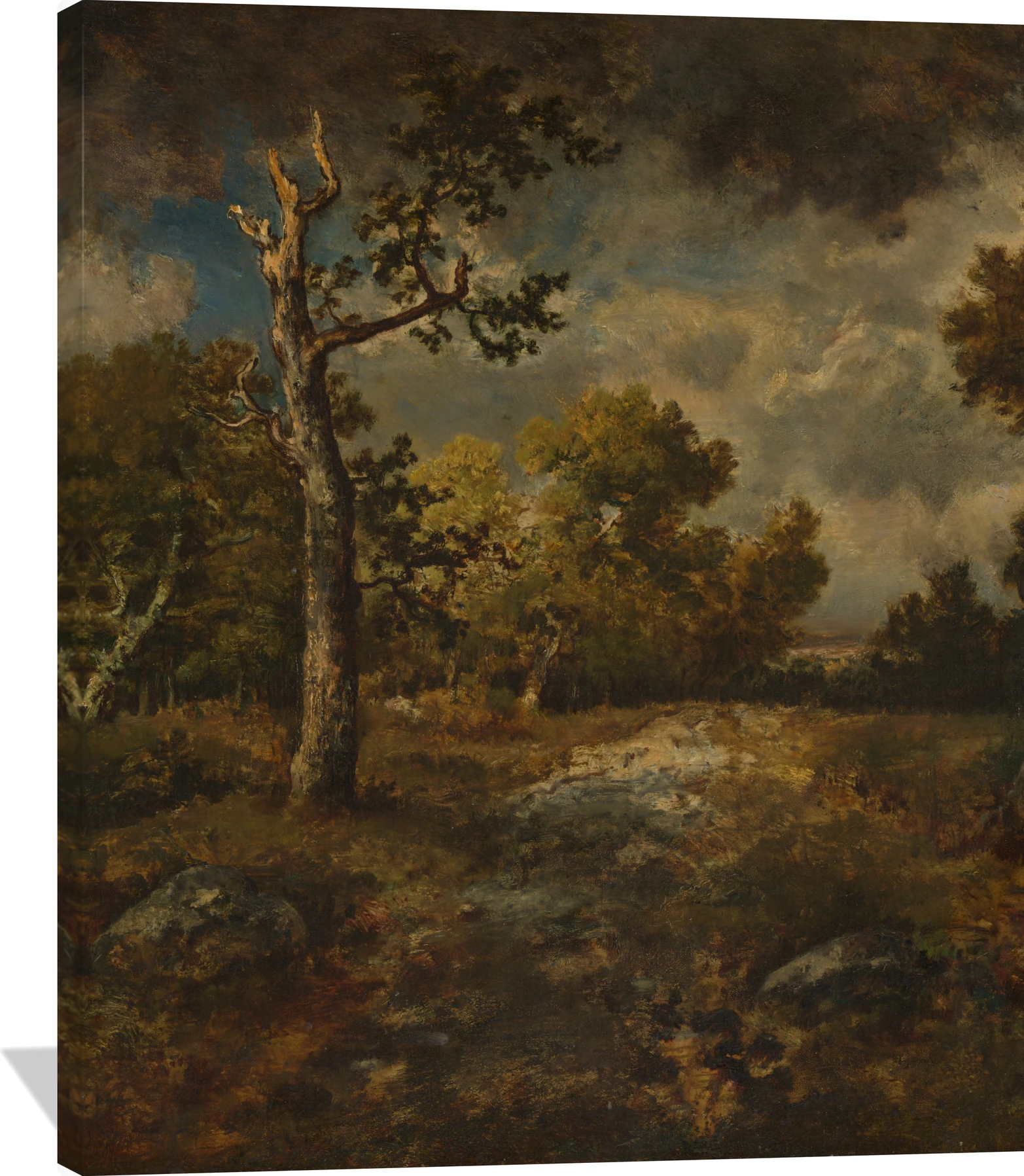
The Narcisse-Virgile Diaz de la Peña The Edge of the Woods canvas captures the tranquil drama of nature at dusk, where golden light filters through dense trees and a solitary path leads into shadowed mystery. Rich tones of deep green, amber, and earthy brown blend with soft grays and hints of blue, evoking the timeless beauty of the French forest landscape.
This museum-quality wall art brings warmth and depth to any space, from a refined living room to a quiet study or entryway. A canvas print of The Edge of the Woods invites reflection and serenity, celebrating the poetic harmony between light, land, and sky that defines Diaz de la Peña’s romantic vision.
Narcisse-Virgile Diaz de la Peña (1808–1876) was a French painter of the Romantic era and a celebrated member of the Barbizon School. Born in Bordeaux and later active in the Forest of Fontainebleau, he became known for his atmospheric landscapes and richly colored canvases that blended natural observation with poetic imagination.
Artistic Style
Diaz de la Peña’s work is distinguished by its glowing palettes, fluid brushwork, and evocative handling of light. His landscapes often hover between realism and fantasy, capturing the forest’s shifting moods while heightening them with luminous, almost dreamlike color. His style embodies the expressive, romantic spirit of mid‑nineteenth‑century French painting and stands apart for its sensual surface textures and vibrant tonal contrasts.
Subjects and Themes
Although best known for his forest scenes, Diaz frequently painted woodland clearings, moss-covered rocks, sunlit glades, and dramatic tree formations. These settings often include small human figures or mythic touches that enhance the sense of narrative mystery. He also produced a number of orientalizing and figural works, but it was his atmospheric depictions of Fontainebleau that secured his reputation.
Legacy and Significance
A central figure among the Barbizon painters, Diaz influenced younger artists, including the Impressionists, through his bold color and spontaneous handling of paint. His ability to transform familiar natural environments into radiant, emotionally charged visions has made his work enduringly admired. Today, Diaz de la Peña is recognized for his role in shaping modern landscape painting and for his contribution to the rise of plein‑air practice. His paintings remain sought after for their striking luminosity and their ability to transport viewers into richly imagined natural worlds.