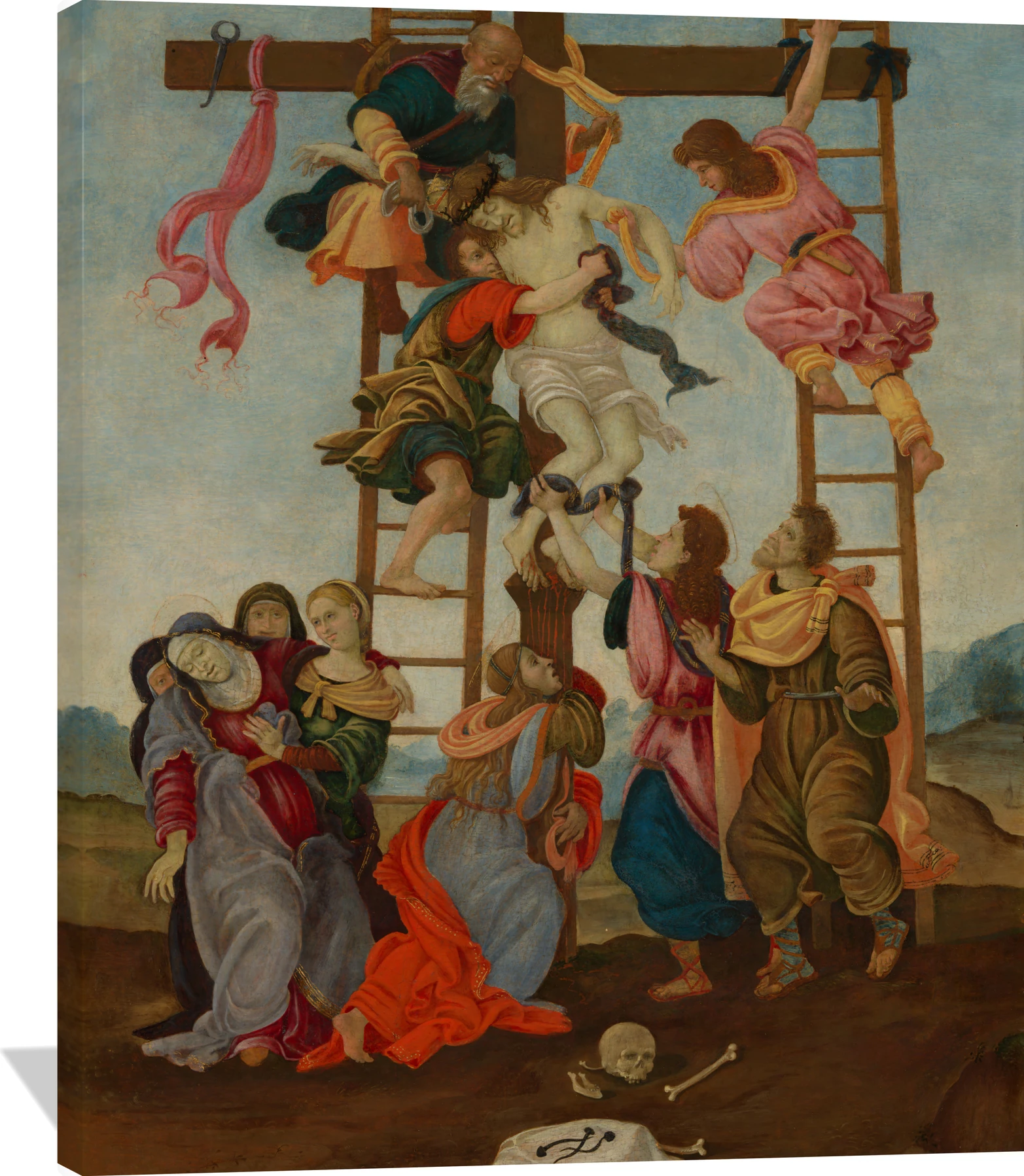
The Filippino Lippi The Descent from the Cross canvas captures a moment of profound emotion and devotion through masterful Renaissance composition. Soft earth tones, radiant reds, and serene blues draw the eye upward along the vertical scene, where figures tenderly lower Christ from the cross under a luminous sky. Lippi’s delicate balance of movement and stillness evokes both sorrow and grace.
This museum-quality canvas print brings timeless artistry to your space, infusing a sense of reverence and history into a living room, study, or entryway. A striking centerpiece for admirers of Italian Renaissance wall art and sacred storytelling.
Filippino Lippi (Prato ca. 1457–1504 Florence) was a pivotal figure of the Florentine Renaissance, celebrated for his refined draftsmanship, elegant compositions, and emotionally resonant devotional imagery. Trained in the workshop of Sandro Botticelli and son of the painter Fra Filippo Lippi, he inherited and transformed a rich artistic legacy, blending lyrical grace with a growing interest in psychological depth.
Artistic Style
Lippi’s work is distinguished by fluid, expressive lines, luminous color, and a sophisticated interplay of architecture and landscape. His paintings reveal a delicate balance between Botticelli’s poetic linearity and the emerging naturalism of late fifteenth‑century Florence. Known for his inventive approach to narrative detail, he often infused sacred scenes with subtle human gestures and layered symbolism, creating imagery that feels both intimate and profound.
Subjects and Themes
Renowned for altarpieces, fresco cycles, and refined panel paintings, Lippi focused primarily on religious subjects such as the Madonna and Child, saints, and scenes from the lives of biblical and early Christian figures. Works like The Vision of St. Bernard and The Adoration of the Magi demonstrate his ability to weave spiritual drama with atmospheric depth, while his portraits reveal a keen sensitivity to individuality and presence.
Legacy and Significance
Lippi’s contributions to the Renaissance lie in his synthesis of elegance and emotional immediacy. His architecture-rich compositions, complex spatial settings, and subtle characterization influenced a generation of Florentine painters. Today he is regarded as a bridge between the poetic ideals of early Renaissance art and the heightened realism that followed, his legacy marked by a distinctive blend of grace and expressive intensity that continues to captivate scholars and collectors alike.