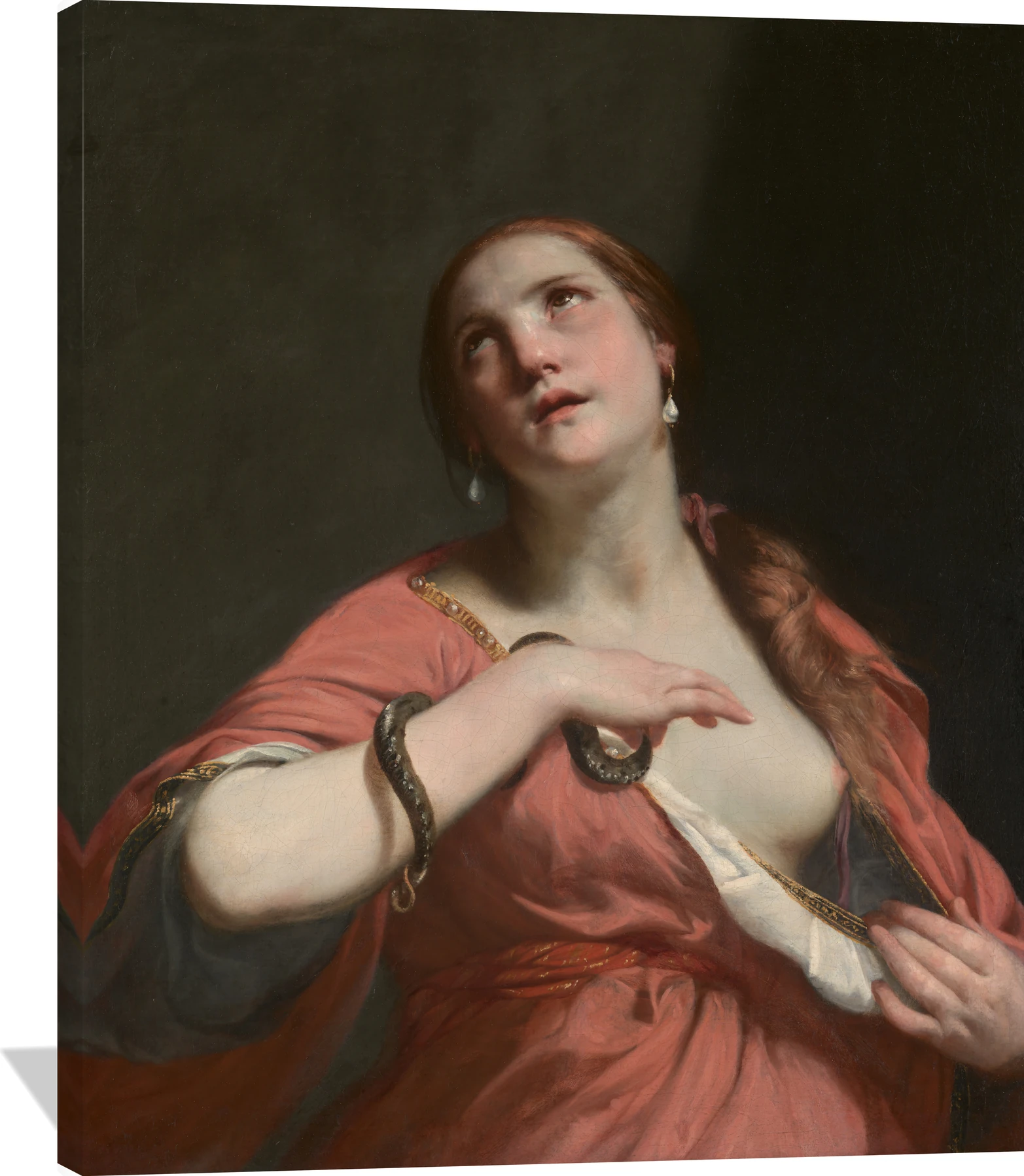
The Guido Cagnacci The Death of Cleopatra canvas captures the dramatic final moment of Egypt’s legendary queen with exquisite Baroque intensity. Rich tones of crimson, ivory, and deep shadow draw the eye to Cleopatra’s serene yet resolute expression, while the artist’s masterful use of light evokes both vulnerability and strength. This vertical composition radiates emotional depth and timeless elegance.
Perfect as a statement piece for a living room, study, or entryway, this fine art canvas print brings classical sophistication to modern interiors. Cagnacci’s Italian mastery (1601–1663) transforms history into a poignant visual experience that commands attention and inspires reflection.
Guido Cagnacci (1601–1663) was an Italian Baroque painter from Santarcangelo di Romagna whose dramatic, sensual, and psychologically charged works earned him a distinct place among seventeenth‑century artists.
Artistic Style
Cagnacci is celebrated for a refined yet boldly expressive style that merges the emotional intensity of the Baroque with an unusually intimate approach to the human figure. His compositions often feature luminous skin tones, rich chiaroscuro, and theatrical staging that heightens both drama and immediacy. He displayed a remarkable ability to render texture and gesture, creating scenes that feel vividly alive.
Subjects and Themes
Best known for his depictions of saints, allegories, and repentant heroines, Cagnacci frequently explored themes of virtue, temptation, and transformation. Works such as Death of Cleopatra and Martha Rebuking Mary exemplify his interest in emotional complexity and narrative tension. His figures, often portrayed with striking naturalism, embody both vulnerability and strength, making his storytelling particularly compelling.
Legacy and Significance
Cagnacci’s daring treatment of the female figure and his ability to convey deep psychological nuance set him apart from his contemporaries. After working in various Italian courts, he eventually moved to Vienna, where he continued to refine his dramatic visual language. Today, he is recognized for his unmistakably personal interpretation of Baroque aesthetics and his contribution to the evolving representation of human emotion. His work remains valued for its technical mastery, magnetic theatricality, and its powerful expression of **Baroque sensuality**.