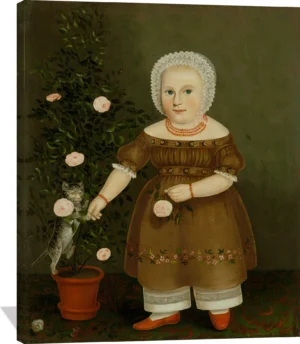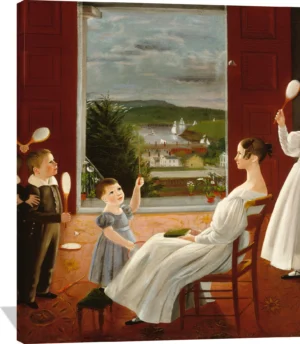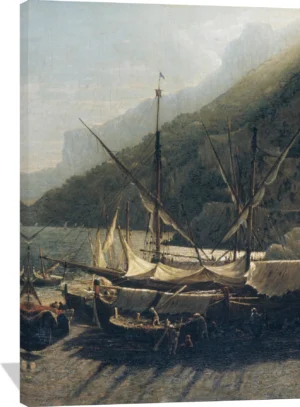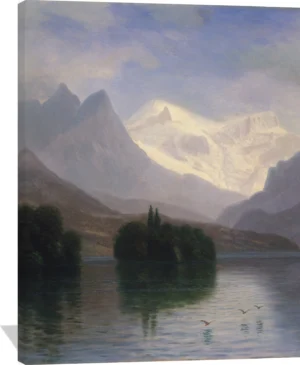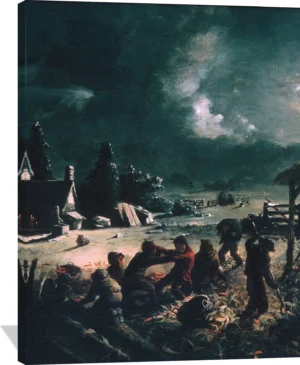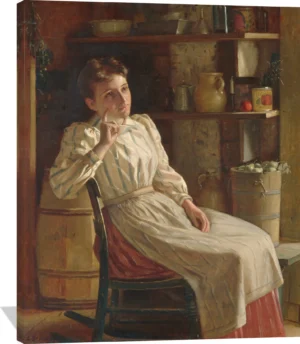
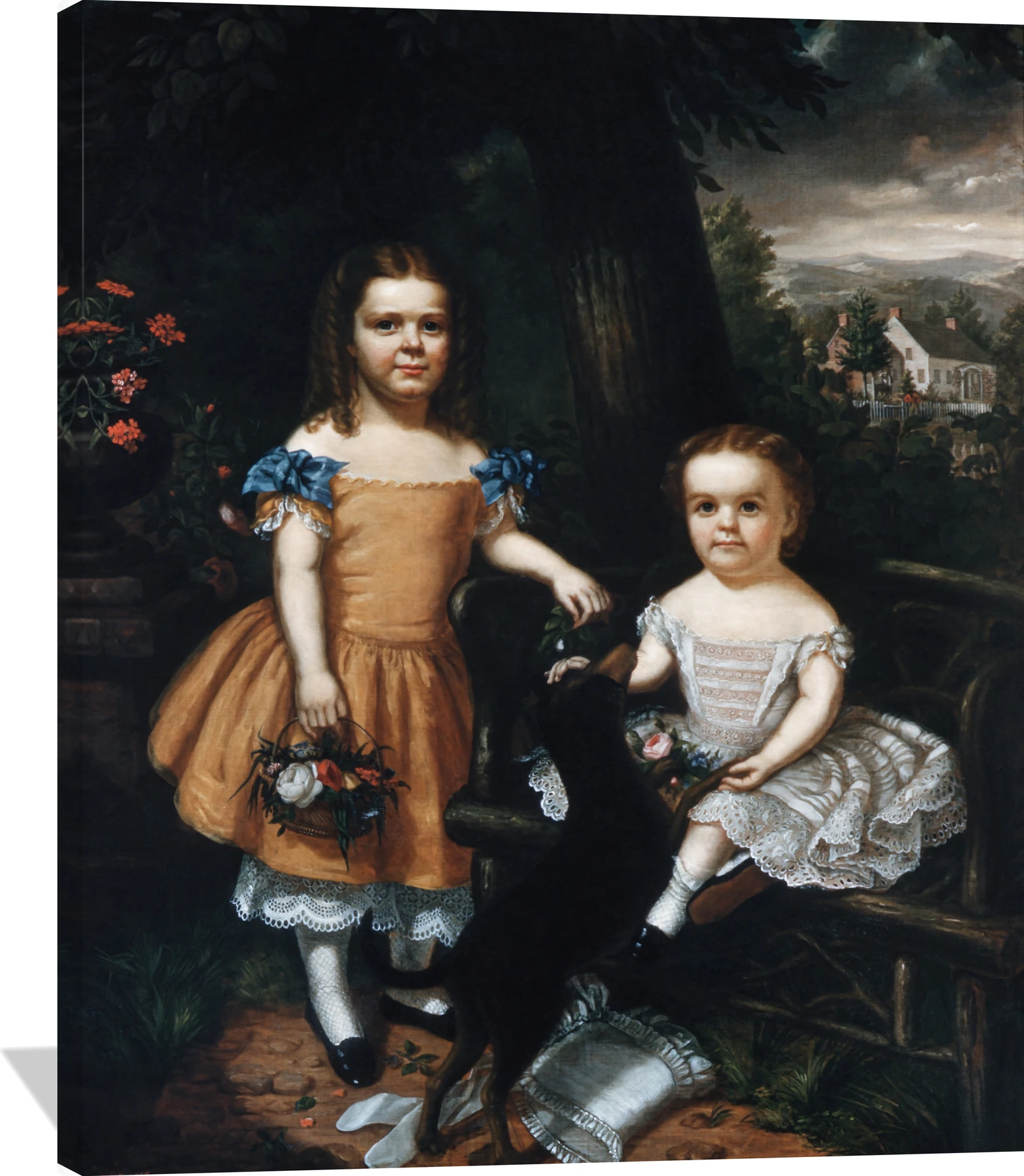
The Theodore E. Pine The Daughters of Daniel T. MacFarlan canvas captures a tender 19th-century portrait of childhood grace and innocence. Two young sisters, dressed in warm amber and soft ivory tones, stand in a lush garden beneath deep green foliage, their calm expressions illuminated by gentle light. The scene’s rich browns, greens, and soft blues evoke timeless serenity and familial warmth.
This exquisite wall art brings a sense of classic refinement to any space—ideal for a traditional living room, elegant study, or welcoming entryway. A canvas print that celebrates both artistry and heritage, it offers a glimpse into a bygone era with enduring charm.
Theodore E. Pine (1827–1905) was a nineteenth‑century American painter recognized for his quietly expressive landscape work and his sensitivity to the natural world. Active during a period when the United States was rapidly expanding and redefining its artistic identity, Pine contributed to the era’s growing appreciation for the poetic potential of the American landscape.
Artistic Style
Pine’s paintings are characterized by measured compositions, gentle luminosity, and an emphasis on atmosphere over spectacle. His approach often echoed the broader aesthetic of mid‑century American landscape painting, balancing realism with a subtle romantic inflection. He favored a restrained, observational style that highlighted the harmony between light, land, and seasonal change.
Typical Subjects
Pine frequently depicted forests, riverbanks, pastoral terrain, and the quiet rural settings that defined much of everyday American life in his time. These scenes were rendered with careful attention to detail, yet they maintained a contemplative quality that invited prolonged viewing. His ability to capture stillness and natural clarity is one of the defining characteristics of his work.
Notable Contributions
Though not as widely known as some of his contemporaries, Pine contributed meaningfully to the visual record of nineteenth‑century America. His art provides insight into how artists outside major urban centers interpreted the changing landscape and emerging national aesthetic. The understated refinement of his paintings reflects a dedication to craft and a commitment to portraying the environment with honesty and grace.
Cultural Significance
Pine’s legacy rests in the quiet authenticity of his vision. His work aligns with a generation of artists who helped define the nation’s early artistic identity by turning their attention to the natural surroundings that shaped American life. Today, his paintings endure as evocative reminders of a landscape observed with patience, care, and a deep appreciation for the world as it was. His ability to distill the essence of place stands as his most enduring and distinctive contribution to American art.