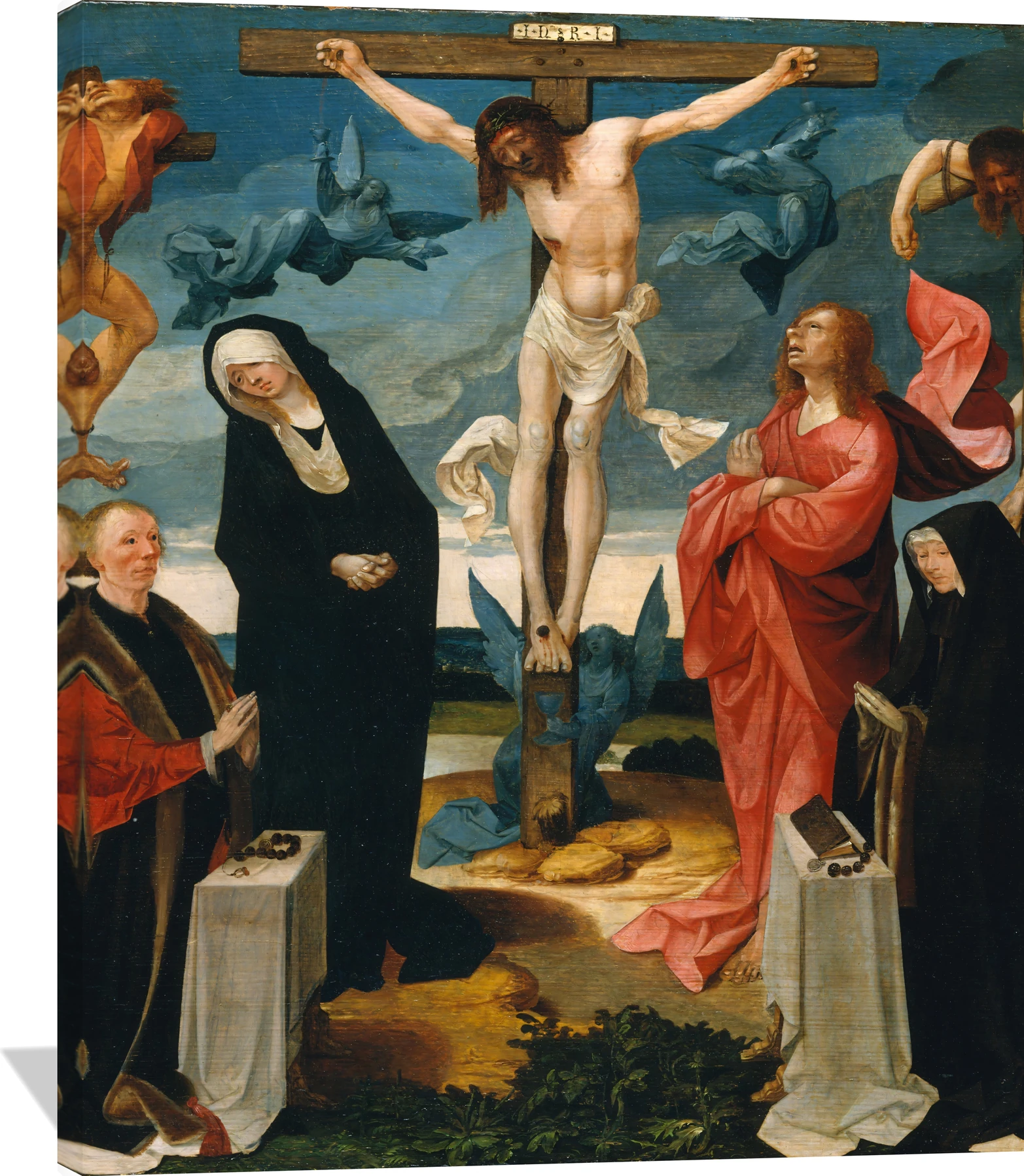
The Cornelis Engebrechtsz The Crucifixion with Donors and Saints Peter and Margaret of Antioch canvas captures a moment of profound devotion and human emotion. Rendered in rich tones of crimson, gold, deep green, and sky blue, this Netherlandish masterpiece from the early Renaissance reveals an intricate interplay of light and reverence. The balanced composition and luminous detail evoke both drama and serenity.
This museum-quality canvas print brings timeless spirituality and artistic depth to any setting. Ideal for a living room, study, or entryway, it invites reflection and admiration through its masterful storytelling and enduring elegance. A striking choice for collectors of classic religious wall art.
Cornelis Engebrechtsz (Netherlandish, ca. 1460/62–1527) was a pioneering early Renaissance painter whose workshop helped shape the artistic identity of Leiden. His work reflects a transitional moment in Northern European art, blending late medieval devotional intensity with the emerging naturalism and narrative clarity of the early sixteenth century.
Artistic Style
Engebrechtsz is known for his expressive use of color, sculptural figures, and carefully structured compositions. His paintings often feature rich emotional detail and a warm tonal palette, characteristics that set him apart from many contemporaries in the northern Netherlands. He skillfully combined traditional religious iconography with a heightened sense of realism, creating works that feel both intimate and formally assured.
Subjects and Themes
His oeuvre centers on sacred narratives, including altarpieces, passion scenes, and devotional panels. Engebrechtsz’s ability to convey human emotion particularly in scenes of lamentation, prayer, and contemplation became a hallmark of his practice. He frequently explored themes of salvation, virtue, and spiritual reflection, inviting viewers into a contemplative visual experience.
Legacy and Significance
As one of the earliest documented painters active in Leiden, Engebrechtsz played a defining role in establishing the city’s artistic reputation. His workshop trained a new generation of painters and influenced the region’s shift toward the more naturalistic tendencies that would later flourish in Dutch art. Today, he is recognized for his foundational contribution to Leiden’s Renaissance painting and for his distinctive blend of devotional depth and emergent realism. His surviving works, including major altarpieces such as the triptych of the Lamentation of Christ, continue to demonstrate the sophistication and emotional resonance that characterized his artistic vision.