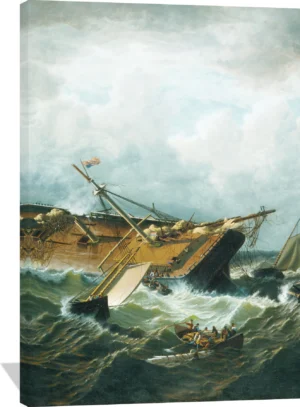
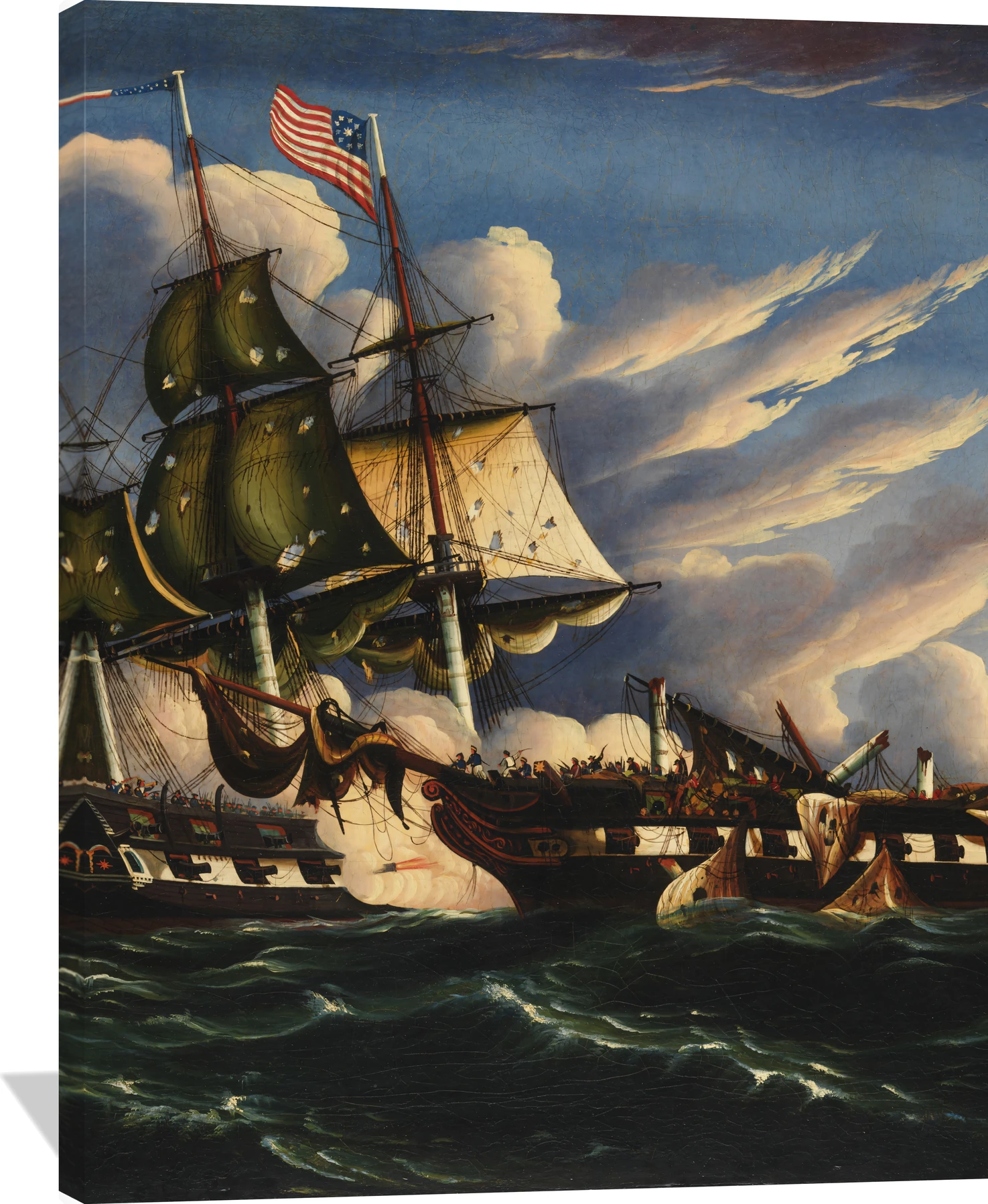
The Thomas Chambers The Constitution and the Guerriere canvas captures a dramatic naval encounter beneath sweeping clouds and turbulent seas. Rich tones of deep blue, emerald green, and warm gold bring the scene to life, while the bold composition and luminous sky convey both motion and majesty. Chambers’ distinctive maritime style transforms this historic moment into a timeless statement piece.
This premium canvas print adds a sense of power and heritage to any space—ideal for a study, living room, or entryway. The The Constitution and the Guerriere wall art invites viewers to experience the grandeur of 19th-century seafaring through a master’s vivid imagination.
Thomas Chambers (1808–after 1866) was an English-born American painter celebrated for his vibrant, imaginative interpretations of the American landscape and seascape. Working largely along the Eastern Seaboard, he developed a distinctive approach that blended folk aesthetics with a bold, theatrical sense of drama.
Artistic Style
Chambers is best known for his expressive color choices, simplified forms, and emphatic compositions. His paintings often feature striking contrasts, rhythmic cloud formations, and sweeping vistas that prioritize emotional impact over strict realism. This approach positioned him as a pioneering figure in American folk art, with a visual language that remains instantly recognizable.
Notable Subjects
Maritime scenes were central to Chambers’s oeuvre, including bustling harbors, coastal views, and dynamic naval encounters such as Storm-Tossed Frigate and Warship in Distress. He also produced spirited interpretations of popular tourist destinations and river landscapes, capturing the American environment with a sense of spectacle and vitality.
Cultural Significance
Though underappreciated during his lifetime, Chambers is now acknowledged as a key contributor to nineteenth‑century American art. His work bridges the gap between formal landscape traditions and vernacular creativity, offering a visually rich record of the era’s coastal and urban energy. Today, collectors and historians regard his paintings as expressive documents of American visual culture and as testament to his boldly individual style.