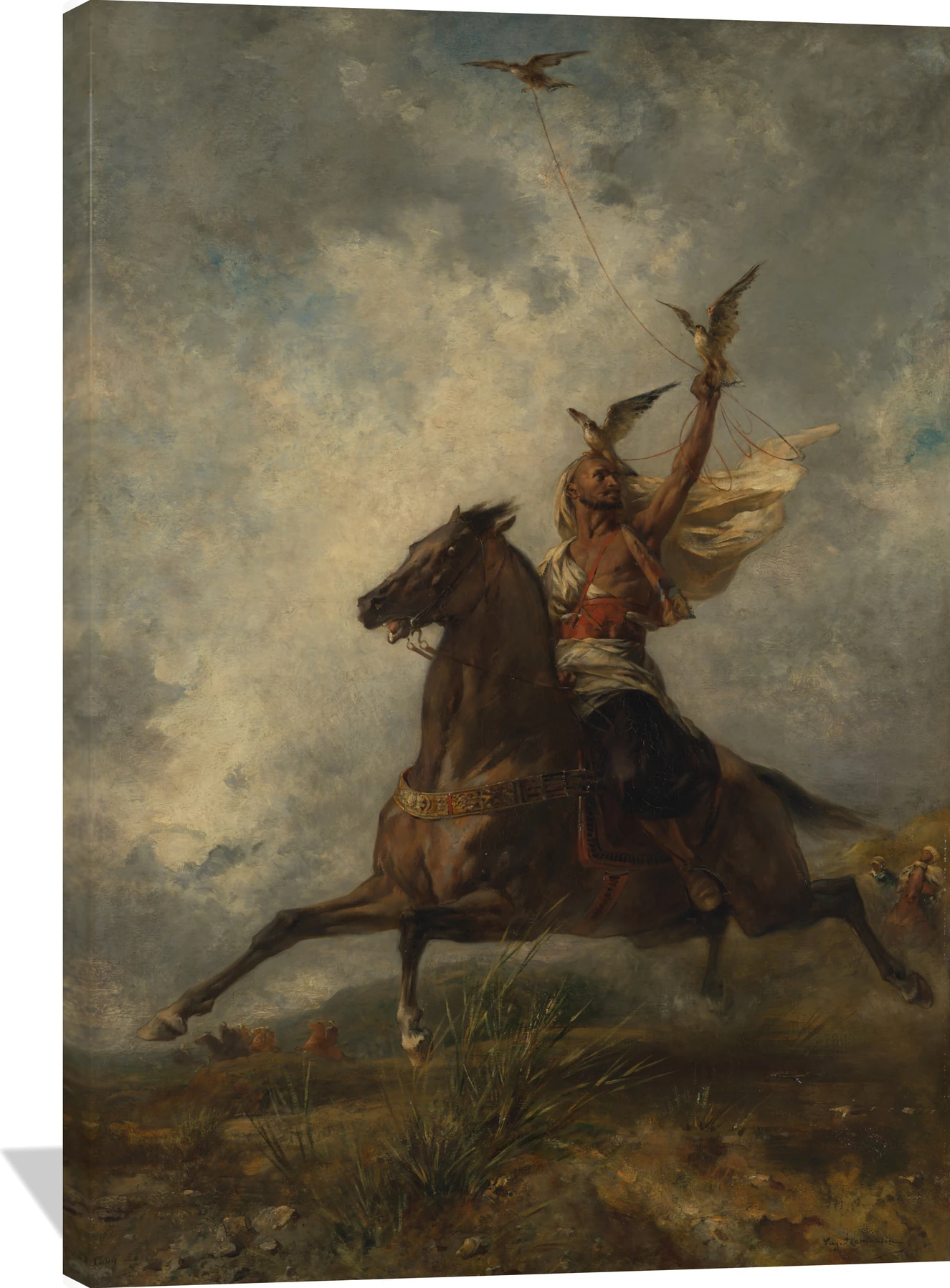
The Eugène Fromentin The Arab Falconer canvas captures the thrilling energy of a horseman in motion beneath a sweeping desert sky. With earthy browns, golden ochres, and soft blue-grays, Fromentin’s masterful brushwork evokes both power and grace, celebrating the harmony between rider, horse, and falcon. The dynamic composition and luminous atmosphere make this wall art a striking focal point for any refined interior.
This premium canvas print brings 19th-century French Orientalist elegance into your home. Ideal for a living room, study, or entryway, The Arab Falconer adds a sense of movement, adventure, and timeless artistry to your space.
Eugène Fromentin (1820–1876) was a French painter and writer whose elegant, atmospheric scenes of North Africa helped shape European understanding of the region in the 19th century. Born in La Rochelle and active during the height of Orientalist interest, he became known for his refined depictions of desert landscapes, nomadic life, and equestrian subjects.
Artistic Style
Fromentin’s style blends academic precision with a luminous, poetic handling of light. His works often feature expansive skies, sweeping terrains, and carefully observed gestures that convey both immediacy and quiet drama. A gifted colorist, he used warm tonal harmonies to evoke the sensory richness of the Algerian environment.
Typical Subjects
Traveling extensively in Algeria, Fromentin captured scenes of tribal gatherings, mounted horsemen, and daily life in remote villages. His imagery reflects a deep respect for the cultures he portrayed, emphasizing authenticity over spectacle. Paintings such as Couriers of the Desert and Arab Falconer exemplify his ability to combine narrative intensity with painterly subtlety.
Significance
As both a painter and an accomplished author, Fromentin offered a rare dual perspective on the landscapes and societies he encountered. His writings, particularly his travel accounts, enriched the understanding of his visual work and positioned him as a thoughtful interpreter of the Maghreb. Within the broader Orientalist movement, his contribution stands out for its sensitivity, technical finesse, and commitment to observation.
Today, Fromentin is celebrated for his distinctive blend of artistry and insight, a legacy that continues to influence how audiences appreciate the intersection of European art and North African subjects. His work remains a touchstone for those drawn to the poetic grandeur of 19th‑century Orientalist painting and the expressive depth of a truly visionary traveler-artist.