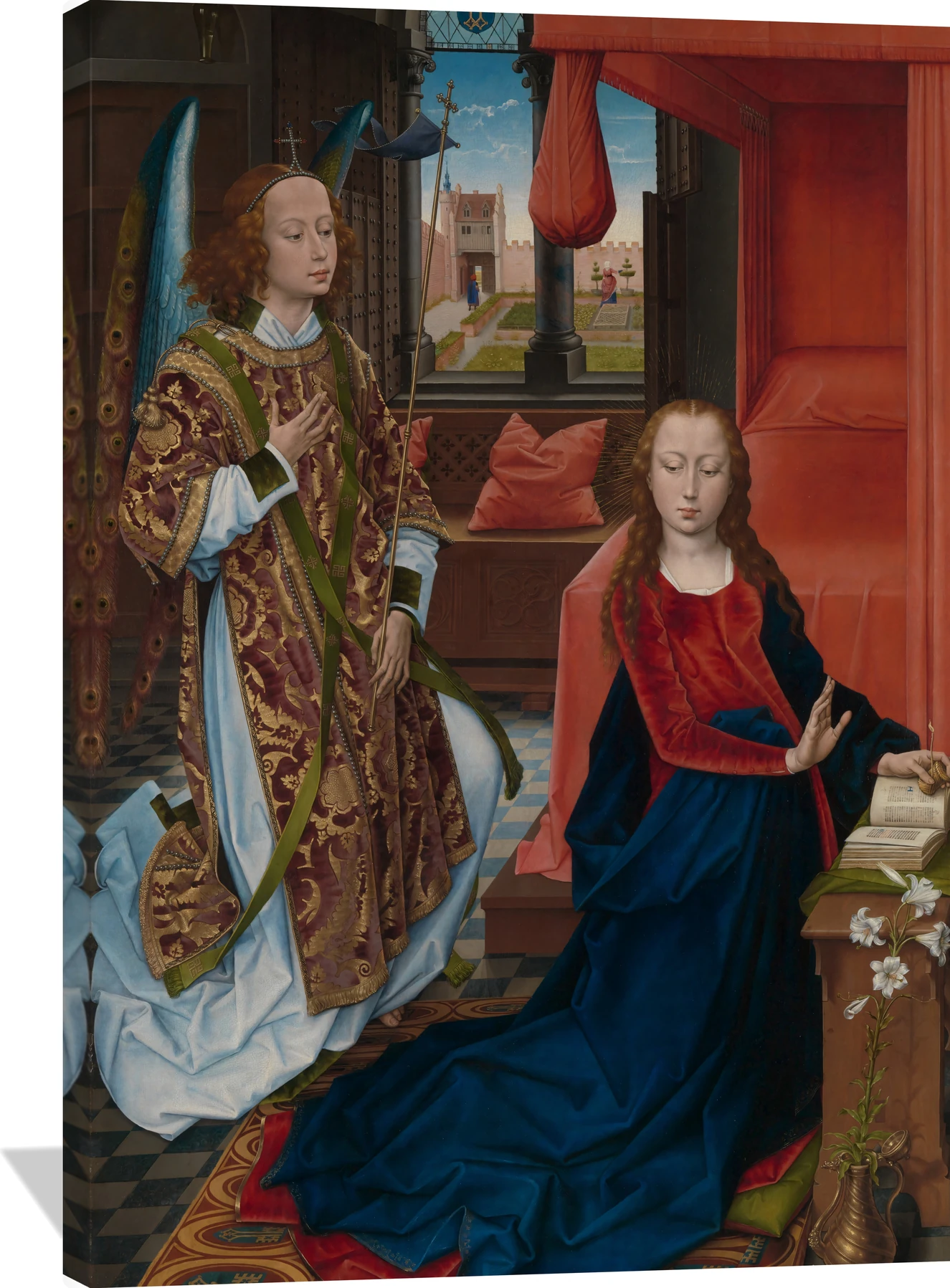
The Hans Memling The Annunciation canvas captures a moment of divine serenity through exquisite detail and luminous color. Rendered in rich reds, deep blues, and warm golds, this masterpiece reflects Memling’s refined Netherlandish precision and tranquil spirituality. The angel’s intricate robes and the Virgin’s calm grace unfold within a softly lit interior, opening to a serene courtyard beyond.
This museum-quality canvas print brings timeless elegance to any space—perfect for a living room, study, or entryway seeking a touch of sacred harmony. The balanced composition and jewel-like tones make The Annunciation a captivating focal point that enhances both classical and contemporary interiors.
Hans Memling (Seligenstadt, Netherlandish; active by 1465–died 1494 Bruges) was one of the most influential painters of the Northern Renaissance, celebrated for his serene compositions, luminous color, and exceptional technical precision. Working primarily in Bruges, he helped define the city’s artistic identity during its height as a cultural and commercial center.
Artistic Style
Memling’s work is distinguished by its refined detail, harmonious balance, and a gentle emotional clarity that made his portraits and devotional paintings highly sought after. His mastery of oil glazing techniques produced soft transitions of light and texture, giving his figures a lifelike presence while maintaining a sense of spiritual calm. The subtlety of his facial modeling and his meticulous rendering of fabrics, jewels, and landscape backgrounds reflect the hallmark qualities of the Flemish Primitives.
Notable Subjects and Contributions
He is best known for his portraits, altarpieces, and religious narratives, including works such as The Donne Triptych and The Mystic Marriage of St. Catherine. Memling’s portraits present sitters with remarkable psychological nuance, set against serene landscapes or richly detailed interiors. His multi-panel altarpieces introduced clear narrative sequencing and balanced spatial organization, influencing painters across Northern Europe.
Cultural and Historical Significance
Memling’s legacy rests on his ability to merge devotional intensity with elegant realism. His workshop helped shape Bruges into a leading artistic hub, and his innovations in composition and portraiture resonated far beyond his lifetime. Today, his paintings remain admired for their purity of vision, technical brilliance, and enduring human warmth.