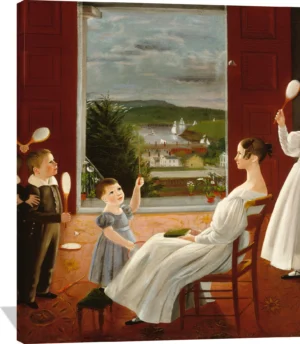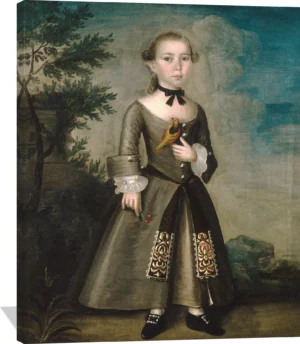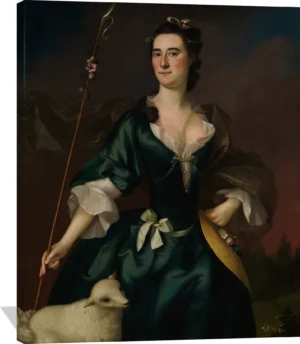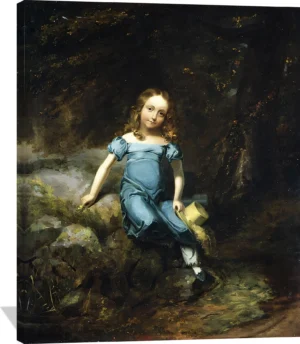
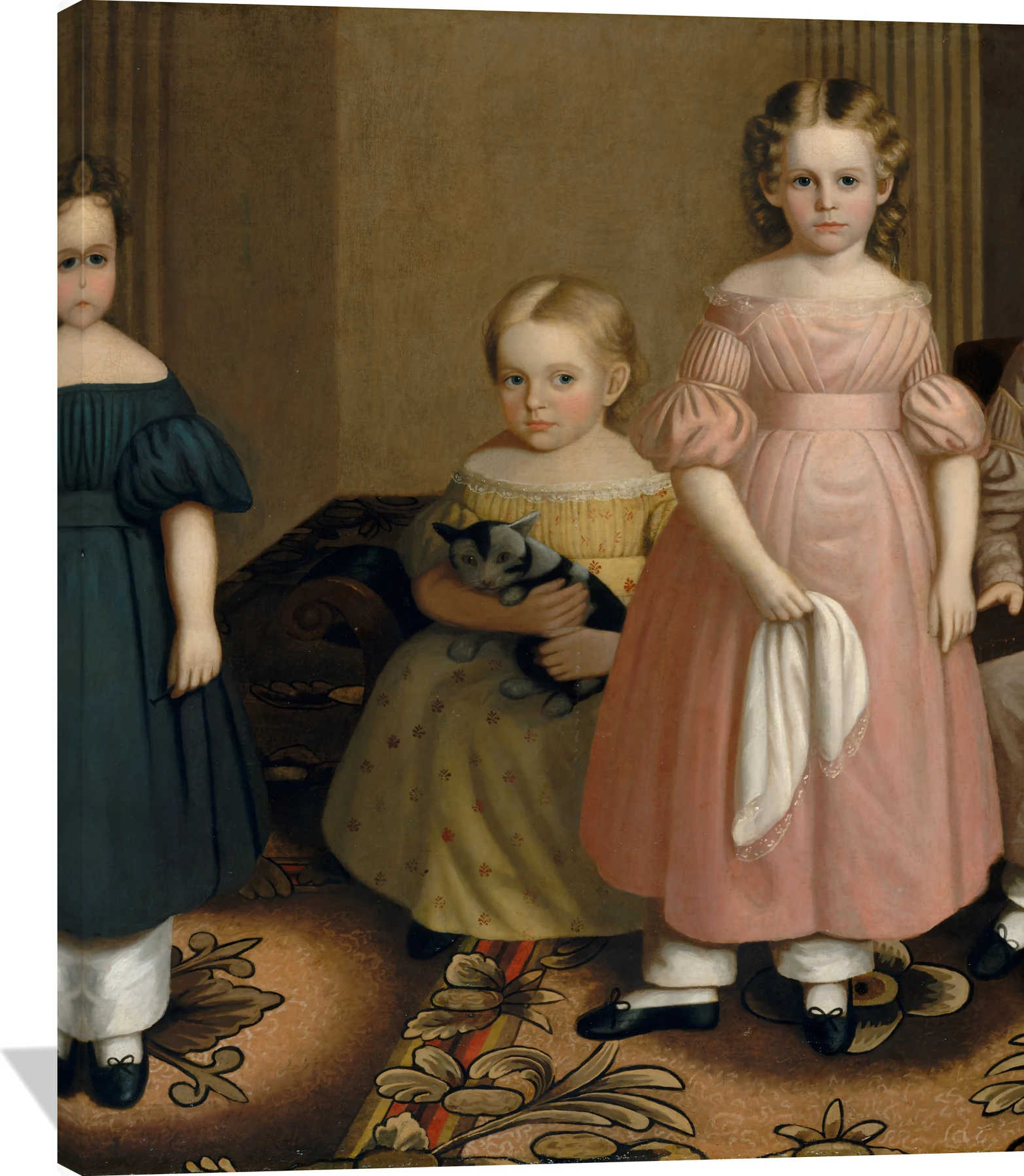
The Oliver Tarbell Eddy The Alling Children canvas captures a tender moment of childhood grace and quiet formality. Four young figures, dressed in soft tones of rose, cream, and slate blue, stand poised within a warmly lit interior. The artist’s refined brushwork and balanced composition evoke both innocence and timeless elegance, making this piece a captivating focal point for any space.
This classic portrait’s muted palette and serene mood lend sophistication to a living room, study, or entryway. A premium canvas print of The Alling Children brings 19th-century charm and enduring artistry into your home with understated beauty.
Oliver Tarbell Eddy (1799–1868) was an American engraver and portrait artist recognized for his precise draftsmanship and early contributions to 19th‑century American print culture. Working during a period when the young nation sought its visual identity, Eddy helped shape the emerging aesthetic of American portraiture through his meticulous technique and refined sense of character.
Artistic Style
Eddy’s work is distinguished by its clarity, finesse, and quiet emotional depth. Trained as an engraver, he carried the discipline of that craft into his painted portraits, creating compositions noted for their crisp detail and careful modeling. His sitters appear thoughtfully rendered, with an attention to facial expression and posture that reflects his interest in capturing individual personality rather than mere likeness.
Notable Contributions
Eddy produced some of the earliest American mezzotints and engravings, contributing significantly to the visual communication of his era. His printed works circulated widely, supporting the public’s access to imagery at a time before widespread photography. Beyond printmaking, his painted portraits of local statesmen, merchants, and families formed a meaningful part of the mid‑Atlantic cultural record. His ability to transition between engraving and portrait painting marked him as a versatile figure in early American art.
Subjects and Themes
Eddy favored dignified, direct portrayals of his sitters, often using simple backdrops that emphasized the face and hands. The result is a body of work centered on civility, aspiration, and the emerging American identity. His engravings similarly focused on clarity and legibility, underscoring his commitment to craftsmanship and communication.
Cultural Significance
As one of the early professional engravers working in the United States, Eddy helped establish standards for printed imagery that would influence American visual culture for decades. His portraits remain valued today for their historical insight and refined execution, reflecting the character of a nation in formation and the artistry of an individual dedicated to precision and expressive restraint.