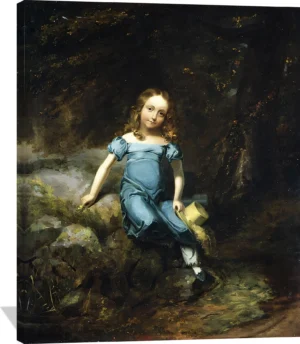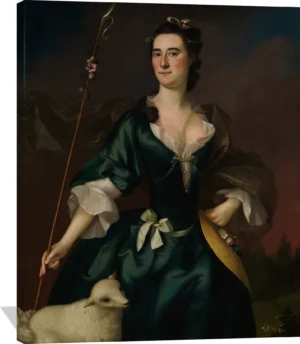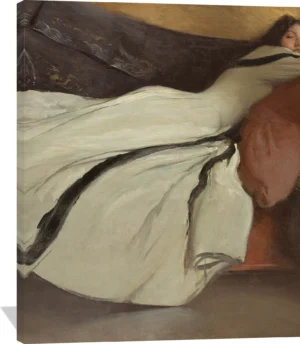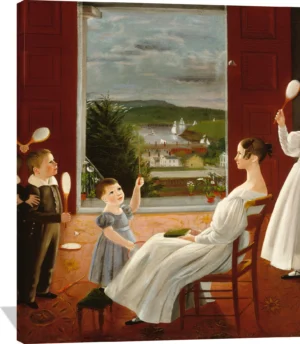
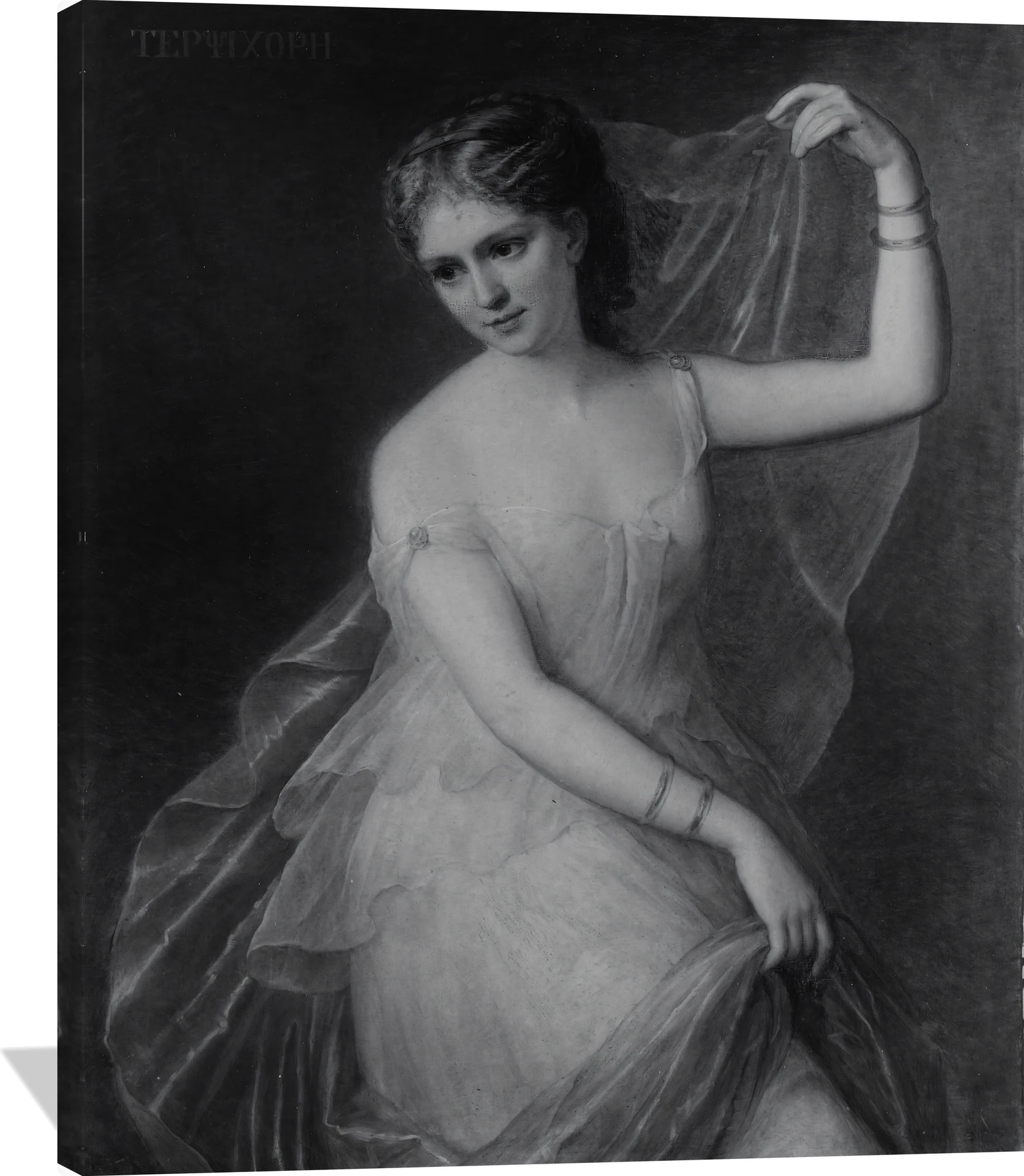
The Joseph Fagnani Terpsichore canvas captures the grace and poise of the muse of dance in a luminous neoclassical style. Soft ivory tones, gentle grays, and warm highlights create a serene balance, while the figure’s flowing drapery and delicate expression evoke timeless beauty and movement. The vertical composition and refined chiaroscuro lend an air of quiet sophistication.
This exquisite Terpsichore wall art brings a touch of classical elegance to any interior. Ideal for a living room, study, or entryway, it offers a harmonious blend of artistry and tranquility—an inspired choice for collectors who appreciate refined historical portraiture.
Joseph Fagnani (1819–1873) was an American painter celebrated for his refined portraiture and his ability to merge American sensibilities with the European academic refinement he absorbed during his studies in Rome. His work is distinguished by graceful modeling, rich color harmonies, and a polished realism that reflects the influence of the Italian masters he admired.
Artistic Style
Fagnani’s paintings reveal a dedication to classical technique, emphasizing balanced compositions, subtle chiaroscuro, and a keen attentiveness to character. His portraits often convey a quiet dignity, capturing the psychological presence of his sitters through poised expressions and meticulous handling of light and texture.
Notable Subjects
Although best known for his portraiture, including his well-regarded depiction of Henry Wadsworth Longfellow, Fagnani also produced refined genre scenes that highlight intimate moments of everyday life. Works such as La Bella Sorrentina exemplify his sensitivity to mood and atmosphere, showcasing figures rendered with both warmth and precision.
Cultural Significance
Fagnani contributed to a pivotal moment in 19th‑century American art, when many artists sought training abroad to elevate their craft. His ability to blend American narrative clarity with the sophistication of Roman academic practice made him a distinctive figure of his era. Today, his paintings remain valued for their technical finesse and their role in shaping a more internationally informed American artistic identity.