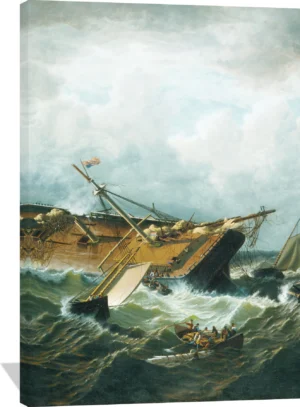
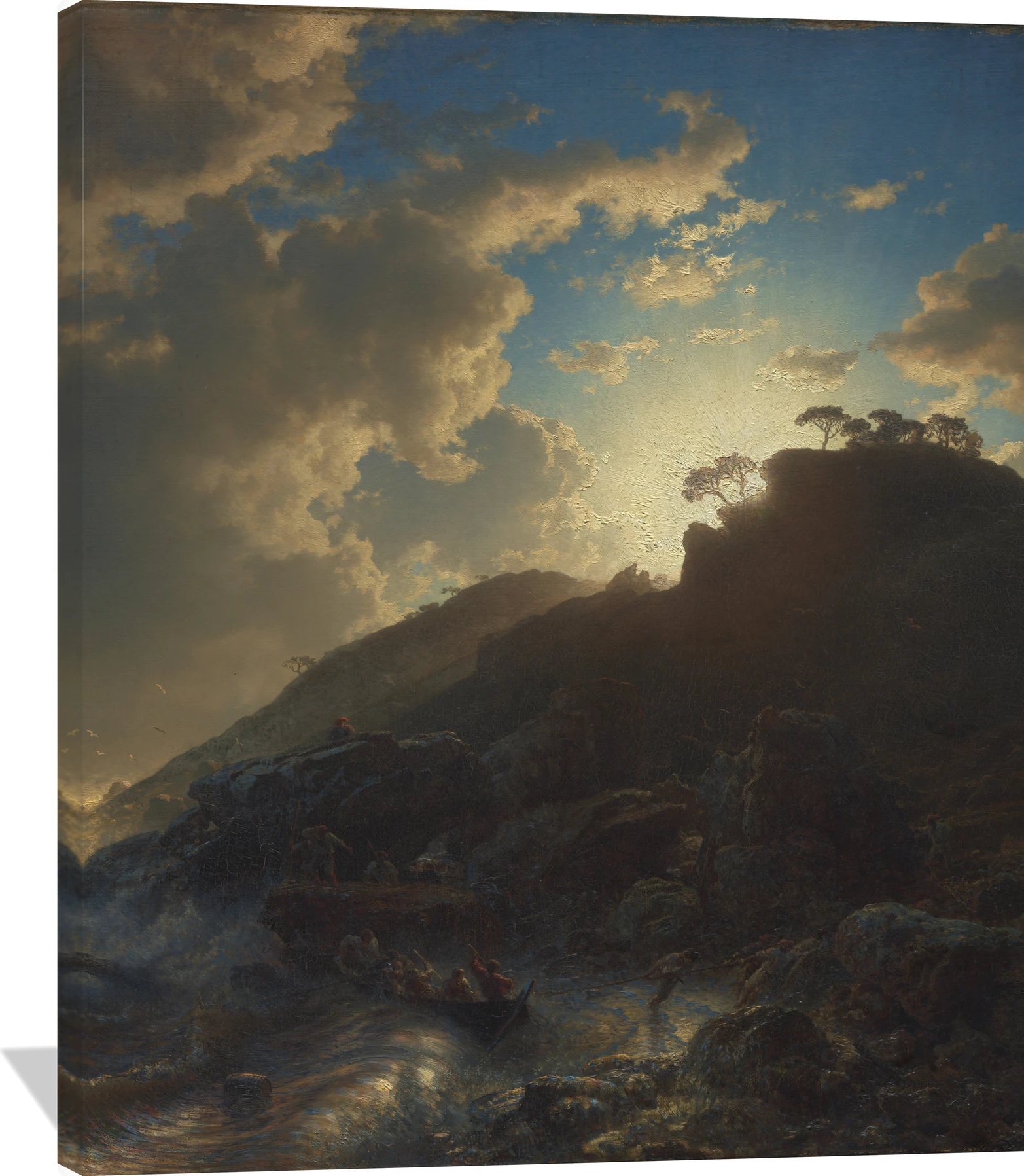
The Andreas Achenbach Sunset after a Storm on the Coast of Sicily canvas captures the dramatic calm that follows nature’s fury. Bathed in golden light breaking through storm clouds, the scene reveals rugged cliffs, churning waves, and a glowing horizon that evokes both power and serenity. Deep blues, warm ambers, and earthy browns create a striking contrast that draws the eye and stirs emotion.
This museum-quality wall art brings timeless Romantic intensity to any living room, study, or entryway. Achenbach’s masterful interplay of light and shadow makes this canvas print a captivating focal point for collectors and admirers of seascape grandeur.
Andreas Achenbach (German, Kassel 1815–1910 Düsseldorf) was a leading figure of the German Romantic and early Realist traditions, celebrated for his powerful landscapes and maritime scenes that helped define 19th‑century European painting.
Artistic Vision and Style
Achenbach became renowned for his meticulous observation of nature and his ability to translate atmospheric drama onto canvas. His work blends the emotional resonance of Romanticism with a grounded, naturalistic precision, creating compositions where light, weather, and terrain feel vividly alive. Whether capturing turbulent seas, storm-laden skies, or serene countryside vistas, he brought a commanding sense of realism shaped by deep technical mastery.
Notable Contributions
Considered a central force in the Düsseldorf School, Achenbach elevated landscape painting within German art, influencing generations of students and contemporaries. His seascapes in particular set new standards for the genre, reflecting both the beauty and ferocity of nature. Through carefully rendered detail and dynamic compositions, he helped shift landscape art toward a more observational, modern sensibility, securing his position as a pioneer of naturalistic landscape painting.
Subjects and Themes
Achenbach’s oeuvre ranges from dramatic coastal storms and bustling harbors to tranquil rivers, forested hillsides, and European rural life. He often depicted human presence as small yet harmonious within the vastness of nature, underscoring the Romantic fascination with the sublime. His paintings convey both grandeur and intimacy, inviting viewers into scenes shaped by shifting weather, luminous horizons, and meticulous textural depth.
Cultural and Historical Significance
Throughout his long career, Achenbach became one of Germany’s most respected landscape painters, contributing to the international reputation of Düsseldorf as a major artistic center. His work bridged eras rooted in Romantic ideals yet moving decisively toward Realism marking him as a key figure in 19th‑century European art. Today, his paintings endure as exemplars of the period’s evolving relationship with nature, valued for their emotional force and exceptional craftsmanship.