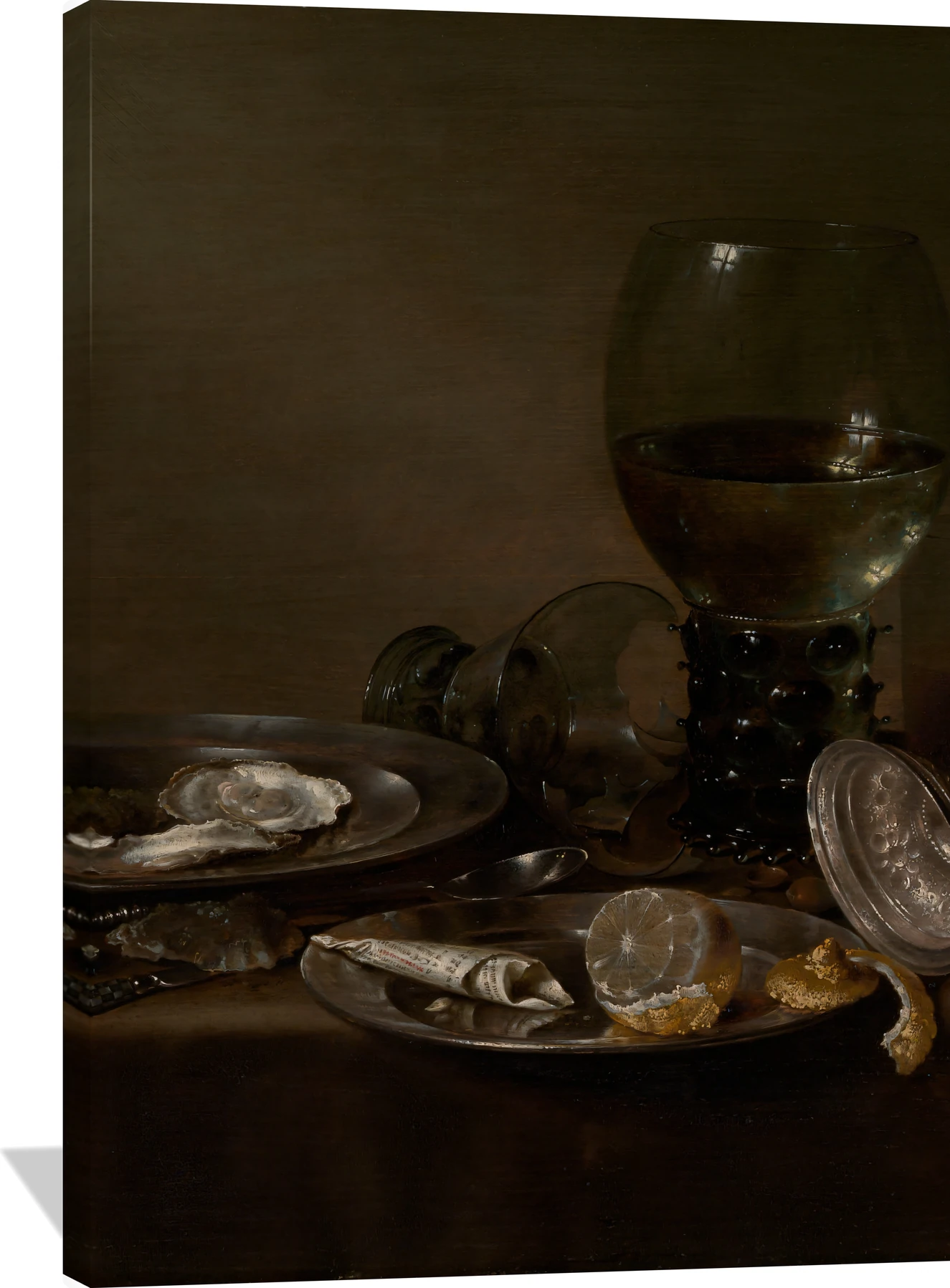
The Willem Claesz Heda Still Life with Oysters, a Silver Tazza, and Glassware canvas captures the quiet opulence of the Dutch Golden Age. Subtle tones of bronze, pewter, silver, and deep olive create a luminous balance between light and shadow, evoking a sense of timeless refinement. Each reflective surface and delicate oyster shell is rendered with masterful precision, inviting contemplation and calm.
This elegant wall art brings understated luxury to any setting—perfect for a sophisticated living room, dining space, or study. A canvas print that celebrates texture, restraint, and the enduring beauty of still life, it transforms everyday objects into a serene visual symphony.
Willem Claesz Heda (1594–1680), a Dutch painter active in Haarlem, is celebrated as one of the foremost masters of the Golden Age still-life tradition. Renowned for his meticulously arranged table settings, he elevated the genre through a subtle balance of realism, restraint, and atmospheric nuance.
Artistic Style and Technique
Heda is best known for his monochromatic banquet and breakfast pieces, where muted palettes of silvery greys, soft golds, and cool greens create a unified, contemplative mood. His refined handling of light allowed him to render reflective surfaces pewter plates, glass vessels, and polished metal with exceptional clarity. This mastery of texture and luminosity became a defining hallmark of his work and secured his place as a leading figure within the Haarlem still-life movement.
Typical Subjects and Themes
Heda’s compositions often feature carefully placed objects such as overturned goblets, half-peeled lemons, crusty bread, and delicate tableware. These familiar items, rendered with striking precision, invite viewers to contemplate themes of abundance, transience, and the quiet beauty of everyday life. His controlled yet dynamic arrangements, sometimes incorporating subtle disruptions like a tipped cup or a folded napkin, lend his scenes an understated elegance.
Cultural Significance
As a key contributor to the development of Dutch still-life painting, Heda helped define a genre that balanced visual pleasure with moral reflection. His work reflects both the prosperity and the introspective spirit of the Dutch Republic, offering a window into the material culture and values of his time. Today, he is recognized for his masterful realism and for shaping the tonal still-life tradition that influenced generations of artists.