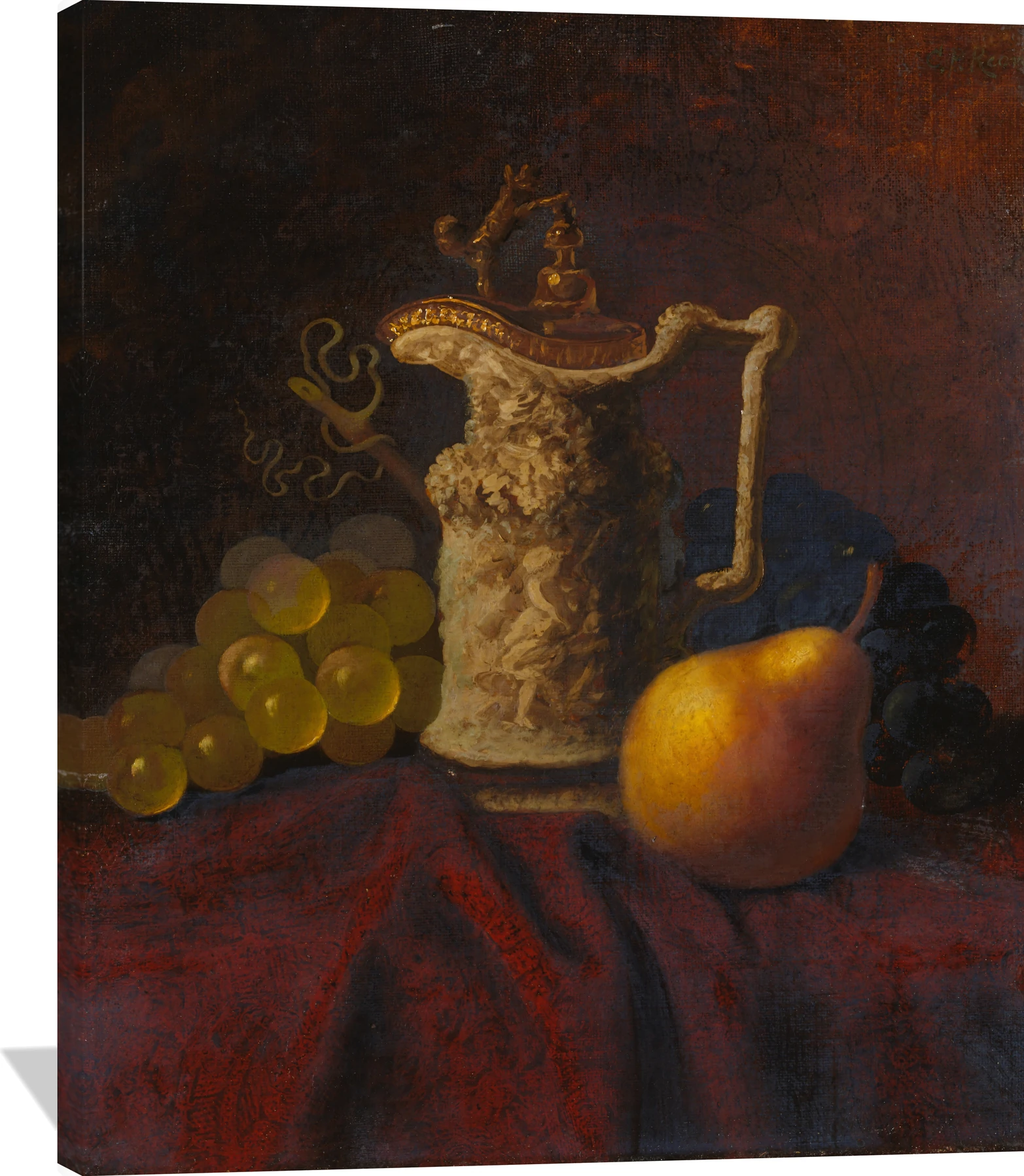
The Carducius Plantagenet Ream Still Life with Ewer and Fruit canvas captures timeless elegance through masterful composition and warm, moody tones. A richly textured ewer stands amid clusters of golden grapes and a ripe pear, illuminated by soft light against a deep burgundy backdrop. The interplay of gold, amber, and shadow evokes quiet sophistication and classical artistry.
This exquisite Still Life with Ewer and Fruit canvas print brings a sense of refinement to any space—perfect for a living room, study, or entryway. Ream’s 19th-century precision and depth make this wall art a striking focal point that enhances both traditional and modern interiors.
Carducius Plantagenet Ream (1838–1917) was an American painter celebrated for his lush, meticulously rendered still lifes. Renowned for his ability to transform humble subjects into scenes of richness and vitality, he became one of the most sought‑after still-life artists of the late nineteenth century.
Artistic Style
Ream’s work is distinguished by its refined realism, luminous color, and remarkable attention to surface texture. He often employed a carefully controlled light source that heightened the natural sheen of fruit and glassware, allowing ordinary objects to take on a sense of quiet drama. His compositions combine precision with warmth, creating images that feel both studied and inviting.
Typical Subjects
Best known for his portrayals of grapes, peaches, apples, and plums, Ream frequently arranged fruit on tabletops, in baskets, or spilling from decorative vessels. Many of his paintings evoke the abundance of American agriculture, presenting ripe produce with a tactile immediacy. Works such as Still Life with Grapes exemplify his ability to capture translucency, while his tabletop arrangements highlight subtle variations in color and form.
Notable Contributions
Ream was part of a generation of American artists who elevated the still-life genre, bringing it greater visibility in galleries and private collections. His commitment to realism and his mastery of composition helped define the period’s taste for sumptuous, approachable imagery. His paintings were widely collected during his lifetime, reflecting a growing appreciation for still-life artistry in the United States.
Cultural Significance
Today, Ream’s work offers a vivid window into American visual culture at the turn of the century. His paintings preserve the era’s fascination with domestic abundance and artisanal craftsmanship. Admired for their harmonious balance and finely rendered detail, his still lifes remain enduring examples of the genre’s richness and the expressive potential found in everyday subjects.