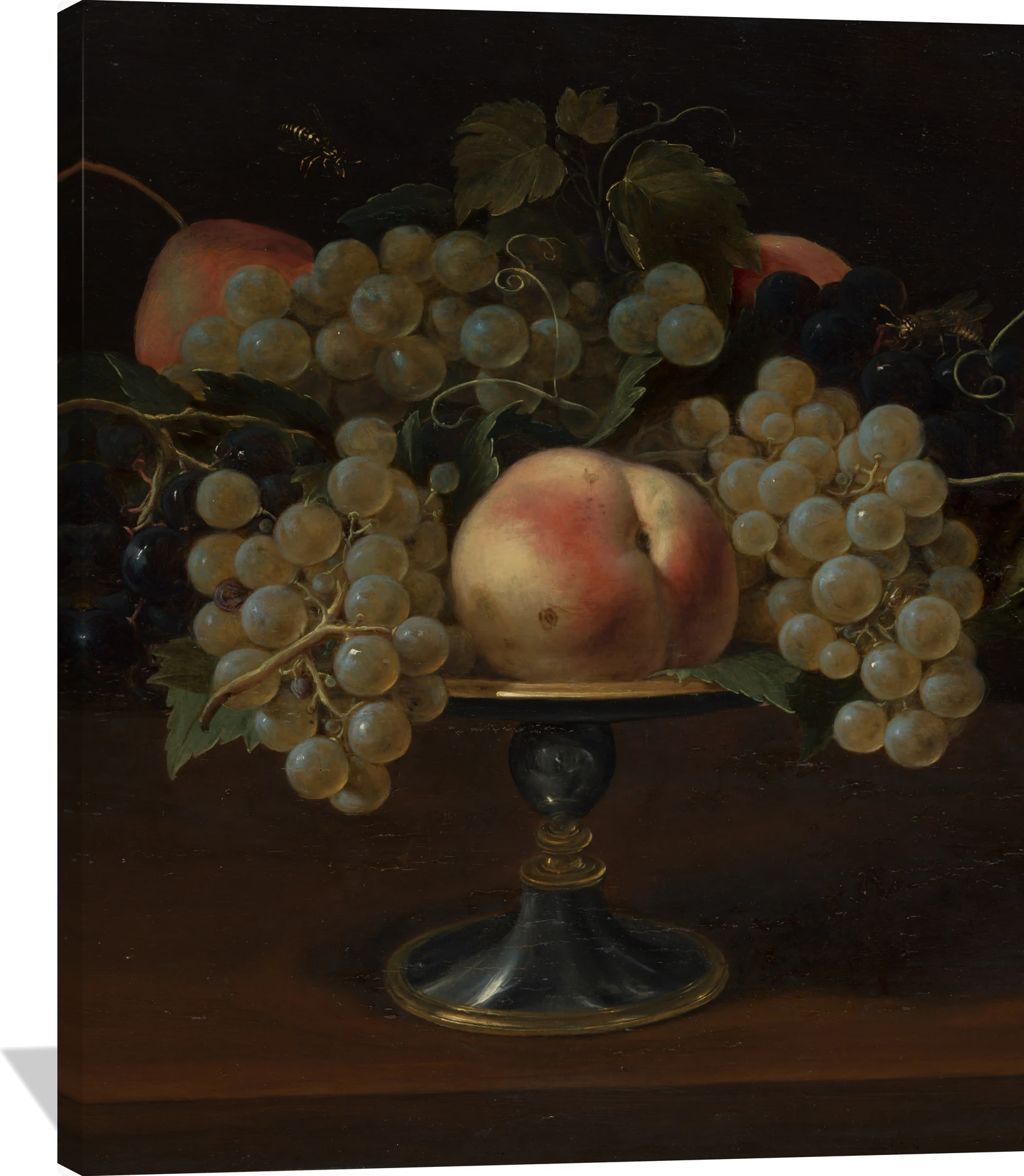
The Panfilo Nuvolone Still Life of Grapes and Peaches canvas captures the quiet elegance of 17th-century Italian artistry. Luminous clusters of pale and dark grapes surround a velvety peach, arranged on a refined pedestal against a deep, shadowed background. Warm tones of gold, blush, and green emerge from the darkness, creating a timeless balance of richness and restraint.
This exquisite wall art brings a sense of classical sophistication to any interior—perfect for a living room, dining area, or study. A canvas print that evokes both serenity and opulence, it celebrates Nuvolone’s mastery of light and texture, transforming everyday fruit into a moment of enduring beauty.
Panfilo Nuvolone (Cremona, ca. 1578/1581–Milan, 1651) was an influential Italian painter whose work bridged the late Mannerist tradition and the emerging naturalism of the early Baroque. Active primarily in Lombardy, he helped shape the visual language of the region during a moment of profound artistic transition.
Artistic Style and Approach
Nuvolone’s paintings are distinguished by their refined draftsmanship, balanced compositions, and a gentle interplay of light that softens the emotional tone of his subjects. While deeply rooted in the Mannerist elegance of his early training, he gradually embraced a more naturalistic sensibility, bringing clarity and warmth to religious narratives. His palette often favors harmonious, muted tones, creating a contemplative atmosphere that became a hallmark of his work.
Subjects and Contributions
Devotional imagery formed the core of Nuvolone’s production. He excelled in intimate portrayals of sacred figures, altarpieces, and serene domestic interpretations of biblical scenes. Works such as The Mystic Marriage of Saint Catherine exemplify his ability to convey both spiritual depth and visual grace. His approach influenced a generation of Lombard painters, including his own sons, shaping a family dynasty that contributed significantly to Milan’s artistic identity.
Cultural and Historical Significance
Working during a pivotal era in Northern Italy, Nuvolone’s career reflects the shift from ornate, elongated forms toward a more grounded and emotionally resonant style. His paintings, widely commissioned for churches and private devotion, served the Counter-Reformation’s call for accessible and engaging sacred imagery. Today, he is recognized for his role in advancing a distinctly Lombard interpretation of early Baroque naturalism and for his place at the foundation of a notable artistic lineage that left a lasting imprint on the region.