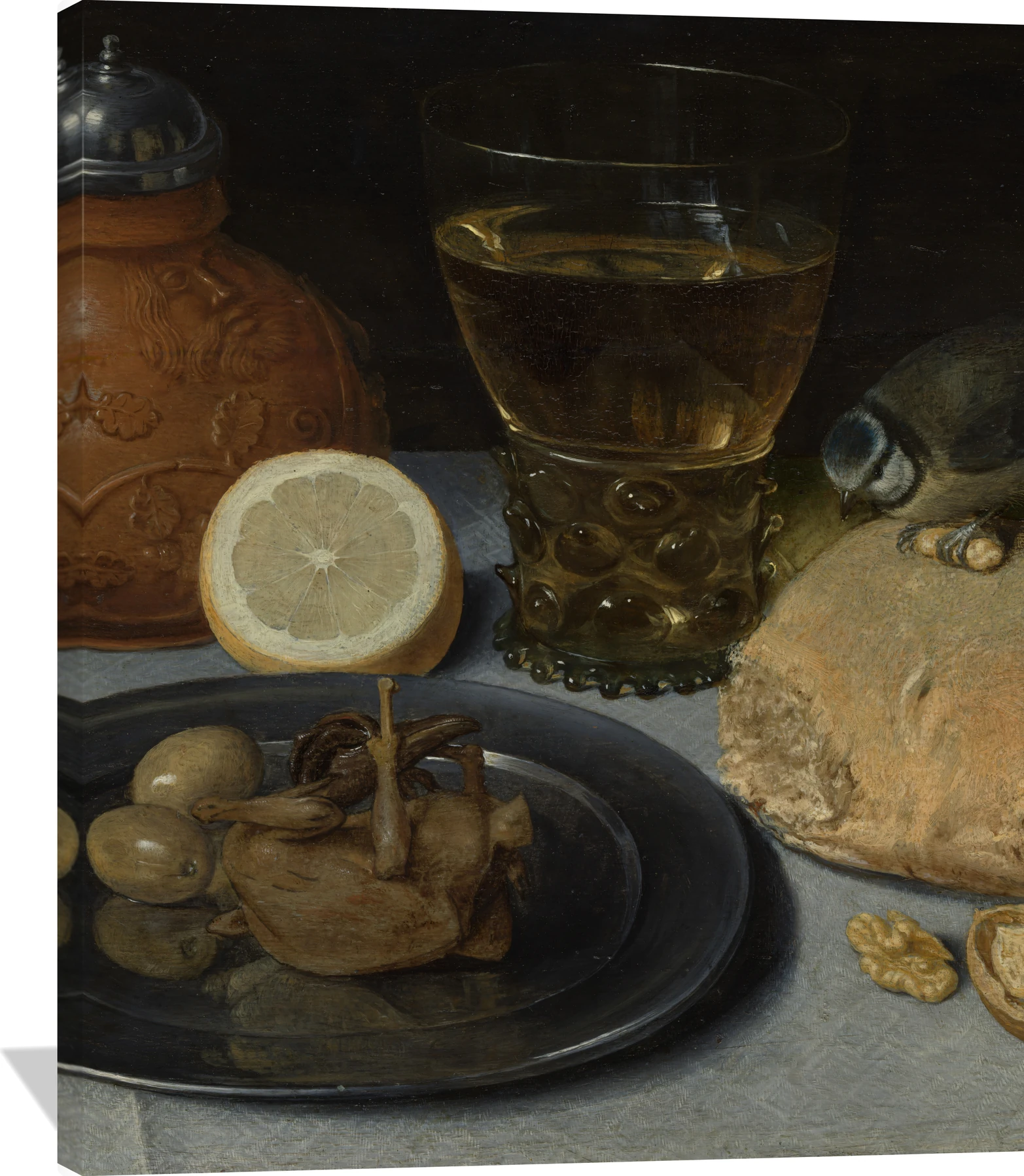
The Georg Flegel Still Life canvas captures the quiet elegance of 17th-century domestic life with exquisite realism. A delicate arrangement of bread, fruit, and a small bird is rendered in warm ochres, deep browns, and soft grays, illuminated by subtle light that enhances every texture and reflection. The composition’s calm balance and refined detail evoke both abundance and contemplation.
This museum-quality canvas print brings timeless sophistication to any setting—ideal for a study, dining room, or refined entryway. Flegel’s mastery of still life invites viewers to pause and appreciate the beauty in simplicity, making this wall art a graceful statement of classic taste.
Georg Flegel (1566–1638) was a German painter born in Olomouc and active primarily in Frankfurt, celebrated as one of the earliest specialists in the independent still-life genre. His work helped define the foundations of Northern European still-life painting during the late Renaissance and early Baroque periods.
Artistic Style and Subjects
Flegel is best known for his meticulously composed arrangements of food, tableware, flowers, and household objects. His still lifes are marked by precise naturalistic detail, atmospheric lighting, and carefully balanced compositions that reveal both technical mastery and quiet emotional depth. He often infused everyday items with symbolic resonance, creating subtle narratives centered on abundance, transience, and domestic ritual.
Notable Contributions
Recognized as a pioneer of the standalone still-life painting, Flegel advanced the genre beyond decorative accompaniment to religious or narrative scenes. His works display an exceptional command of texture and reflection, from the sheen of metal vessels to the translucence of fruit and glass. These qualities made him a significant influence on subsequent generations of German and Dutch still-life painters.
Cultural and Historical Significance
Working in Frankfurt during a period of artistic and cultural exchange, Flegel helped establish the city as a center for still-life innovation. His paintings capture the material culture of early seventeenth‑century Central Europe with remarkable authenticity, making them valuable both as artistic achievements and historical documents. Today, his oeuvre is admired for its refined technique, intimate scale, and the quiet intensity that defines the best of Northern still-life tradition.