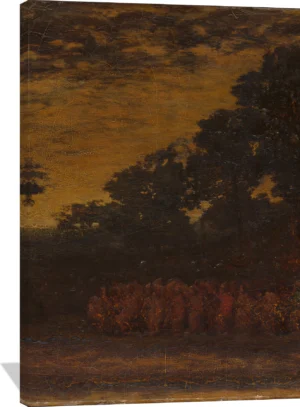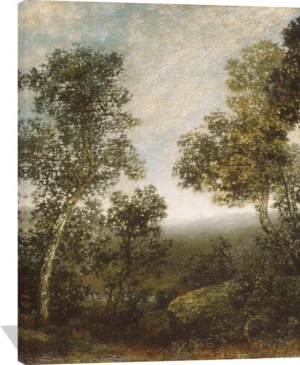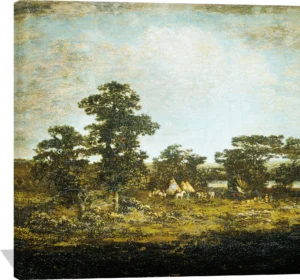
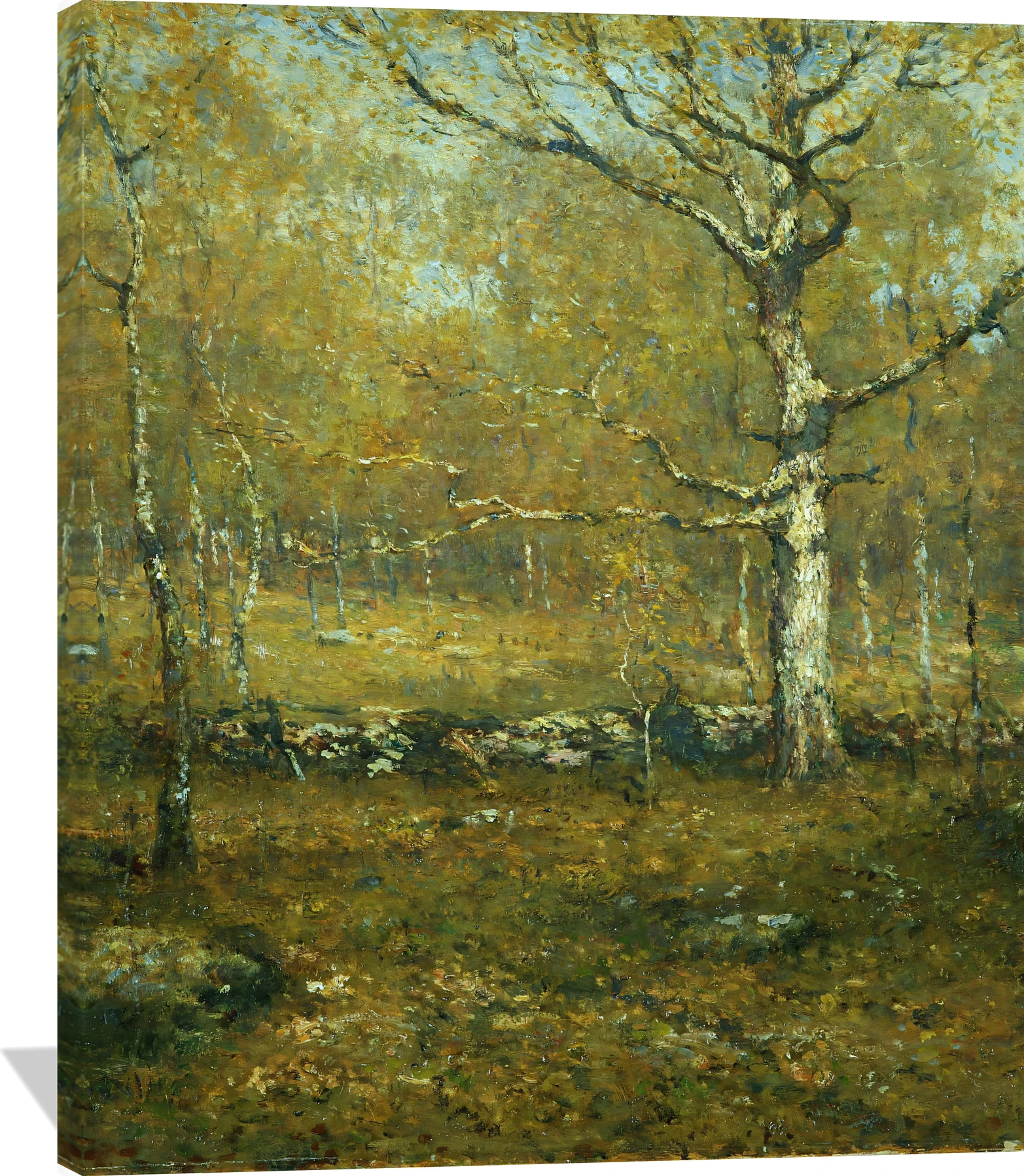
The Henry Ward Ranger Spring Woods canvas captures the quiet renewal of nature in early spring. Bathed in soft golden light, slender birch trees rise from a mossy forest floor, their pale trunks and delicate branches rendered with a masterful impressionist touch. Earthy greens, warm ambers, and hints of sky blue create a tranquil harmony that evokes the scent of fresh leaves and the hush of a woodland morning.
This timeless wall art brings a sense of calm and natural beauty to any space. Ideal for a living room, study, or entryway, this canvas print invites reflection and serenity through Ranger’s luminous vision of the American landscape.
Henry Ward Ranger (1858–1916) was an American painter born in Syracuse, New York, celebrated for his pivotal role in advancing Tonalism at the turn of the twentieth century. Working primarily in New York, he became a leading figure in shaping an American interpretation of the movement, drawing from European influences while grounding his work in the character of the northeastern landscape.
Artistic Style
Ranger is best known for his richly atmospheric Tonalist style, marked by muted palettes, softened forms, and a distinctive emphasis on mood over detail. His paintings often evoke a quiet, contemplative aura, created through layered glazes and subtle transitions of light. This approach positioned him as a key advocate for a more poetic and expressive direction in American landscape painting, in contrast to the sharper naturalism of his contemporaries.
Subjects and Themes
Ranger frequently depicted wooded scenes, marshlands, and pastoral settings, capturing the shifting effects of twilight, mist, and seasonal change. His works, such as the evocative Evening in the Marshes and Autumn Woods, reflect his deep appreciation for nature’s quieter expressions. Rather than focusing on grand vistas, he revealed the beauty of intimate and often overlooked environments.
Legacy and Significance
A founding member of the Old Lyme Art Colony in Connecticut, Ranger played a formative role in shaping American art communities. His guidance and artistic philosophy helped establish an environment where landscape painters could explore expressive, modern approaches. Though later overshadowed by Impressionism, Ranger’s work remains valued for its deep lyricism and for his influence in cultivating a uniquely American Tonalist tradition.
Today, Henry Ward Ranger is recognized for his enduring contributions to early modern American art, his commitment to atmosphere and emotion, and his ability to elevate everyday landscapes into scenes of profound resonance. His paintings stand as distinguished examples of the expressive potential of the natural world, marked by a quiet mastery and a strong, lasting artistic vision.