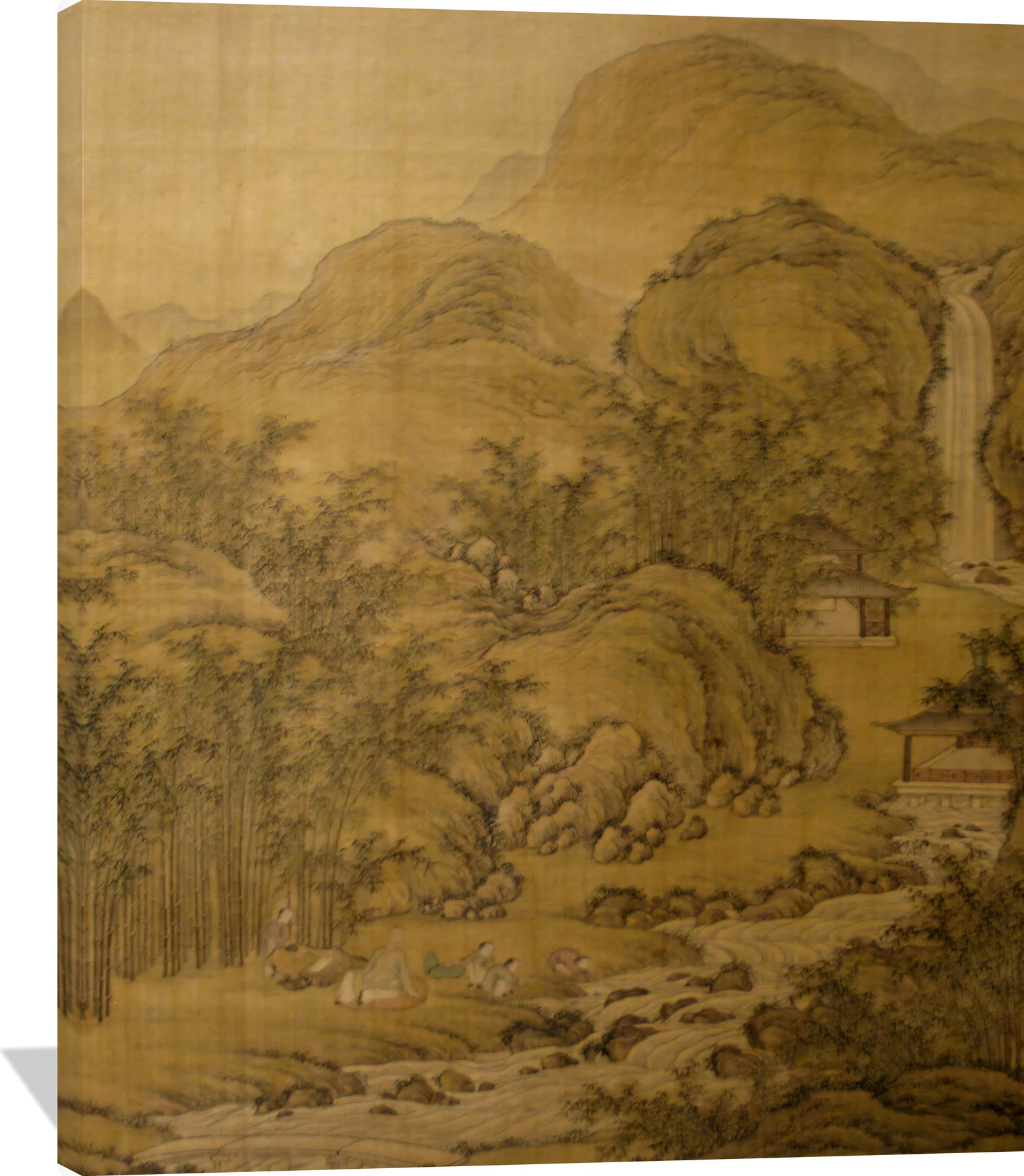
The Wang Wenzhi Spring Ablutions at the Orchid Pavilion canvas captures the serene harmony of nature and culture through delicate brushwork and soft, earthy tones. Flowing water, misty hills, and graceful pavilions unfold in gentle shades of ochre, moss green, and muted brown, evoking a tranquil spring retreat. This refined wall art embodies the poetic spirit of Qing dynasty landscape painting, inviting quiet reflection and balance.
Perfect for a living room, study, or entryway, this elegant canvas print brings timeless sophistication to any space. Let Wang Wenzhi’s masterful composition infuse your home with calm beauty and contemplative grace.
Wang Wenzhi (1730–1802) was a prominent Qing‑dynasty painter and calligrapher whose refined style and scholarly sensibility helped shape the visual culture of late imperial China. Celebrated for his mastery of brushwork and deep engagement with classical models, he remains an enduring figure in Chinese literati art.
Artistic Style
Wang Wenzhi is best known for his elegant landscape paintings and his accomplished calligraphy. His brushwork balances precision with expressive rhythm, reflecting the ideals of the literati tradition. In painting, he often favored misty mountains, quiet rivers, and cultivated retreats rendered with a gentle, contemplative touch. His calligraphy, especially in running and clerical scripts, demonstrates a disciplined yet fluid command of form, a hallmark of his artistic identity.
Notable Contributions
As a leading member of the Qing literary and artistic circles, Wang Wenzhi contributed significantly to the revival and reinterpretation of earlier classical styles. His works pay homage to Song and Yuan masters while introducing a heightened sense of atmosphere and personal expression. Through paintings as well as inscribed albums and scrolls, he helped preserve and transmit essential brush traditions. His role in shaping late‑Qing aesthetics has made him a respected figure among collectors and scholars, with his refined brushwork often cited as an example of exquisite literati cultivation.
Subjects and Themes
Wang Wenzhi’s art often centers on quiet natural settings and the poetic life of the scholar. Mountain paths, ancient trees, and distant pavilions appear frequently in his compositions, evoking tranquility and introspection. His inscriptions reinforce themes of harmony between nature and human spirit. When creating calligraphy, he drew from classical texts, allowing the energy of the written line to echo the meditative qualities found in his landscapes.
Cultural Significance
A respected representative of Qing cultural refinement, Wang Wenzhi remains admired for his ability to unite painting and calligraphy into a seamless artistic practice. His work embodies the values of the Chinese literati: intellectual depth, technical mastery, and sensitivity to tradition. Today, his paintings and calligraphic works continue to be appreciated for their subtle beauty, making him a compelling figure for collectors seeking art rooted in classical Chinese elegance and enduring cultural resonance.