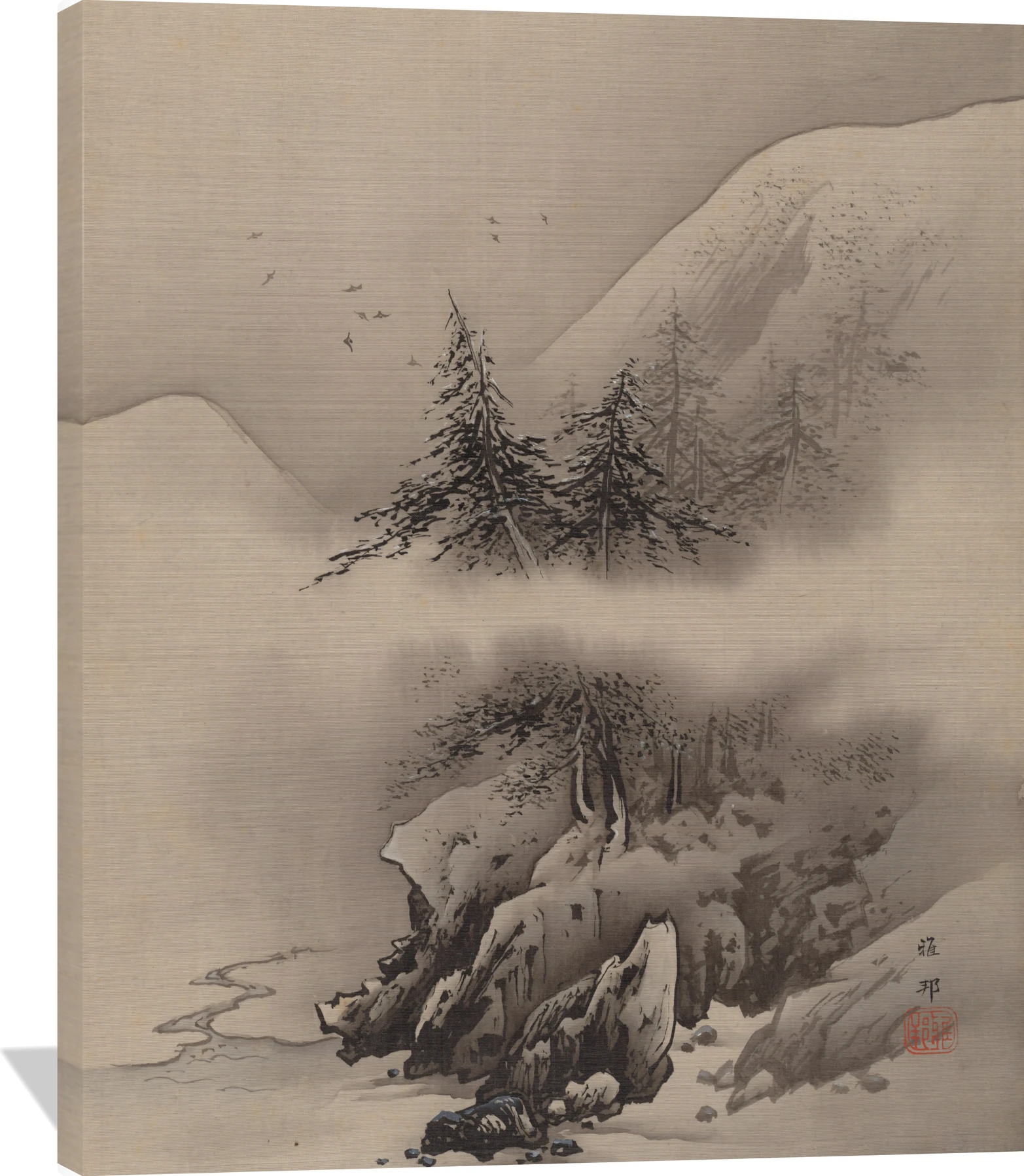
The Hashimoto Gahō Snow Landscape canvas captures the quiet majesty of a winter mountainside rendered in delicate ink tones. Subtle grays, soft whites, and muted browns evoke drifting mist and snow-laden pines, creating a serene, meditative atmosphere that invites calm reflection.
This timeless wall art embodies the refined elegance of Japanese painting, balancing simplicity and depth with masterful brushwork. A perfect canvas print for a living room, study, or entryway, it brings a sense of stillness and natural beauty to any modern or traditional space.
Hashimoto Gahō (1835–1908) was a pivotal figure in the transition of Japanese painting from the late Edo period into the modern Meiji era. Trained in the Kanō school, he became one of its final great masters, preserving its disciplined brushwork and courtly elegance while guiding it into a new cultural moment.
Artistic Style
Gahō’s work is defined by refined linework, restrained color, and a deep sensitivity to classical aesthetics. His paintings often blend traditional Kanō techniques with a subtle naturalism influenced by Japan’s increasing exposure to global art. This synthesis allowed him to uphold the heritage of the school while shaping a fresh direction for Japanese painting. His mastery of expressive brush control and atmospheric composition gives his works their enduring appeal.
Subjects and Themes
He frequently depicted serene landscapes, poetic seasonal scenes, and symbolic motifs drawn from classical literature. Figures from mythology and history also appear in his oeuvre, rendered with a dignified clarity that reflects both scholarly knowledge and artistic discipline. Whether portraying mist-filled mountains or contemplative sages, Gahō conveyed a quiet emotional depth rooted in centuries of artistic tradition.
Cultural Significance
During the Meiji period, Gahō played an influential role in redefining Japanese painting for a rapidly modernizing society. As a teacher and senior figure within the Kanō lineage, he helped sustain its legacy while encouraging innovation. His works remain celebrated for their balance of historical continuity and artistic evolution, offering a vivid window into a transformative moment in Japan’s cultural history.