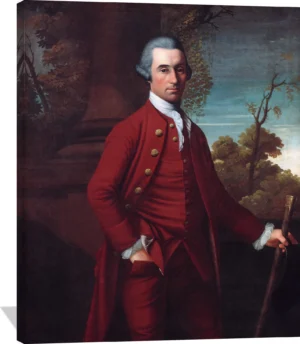
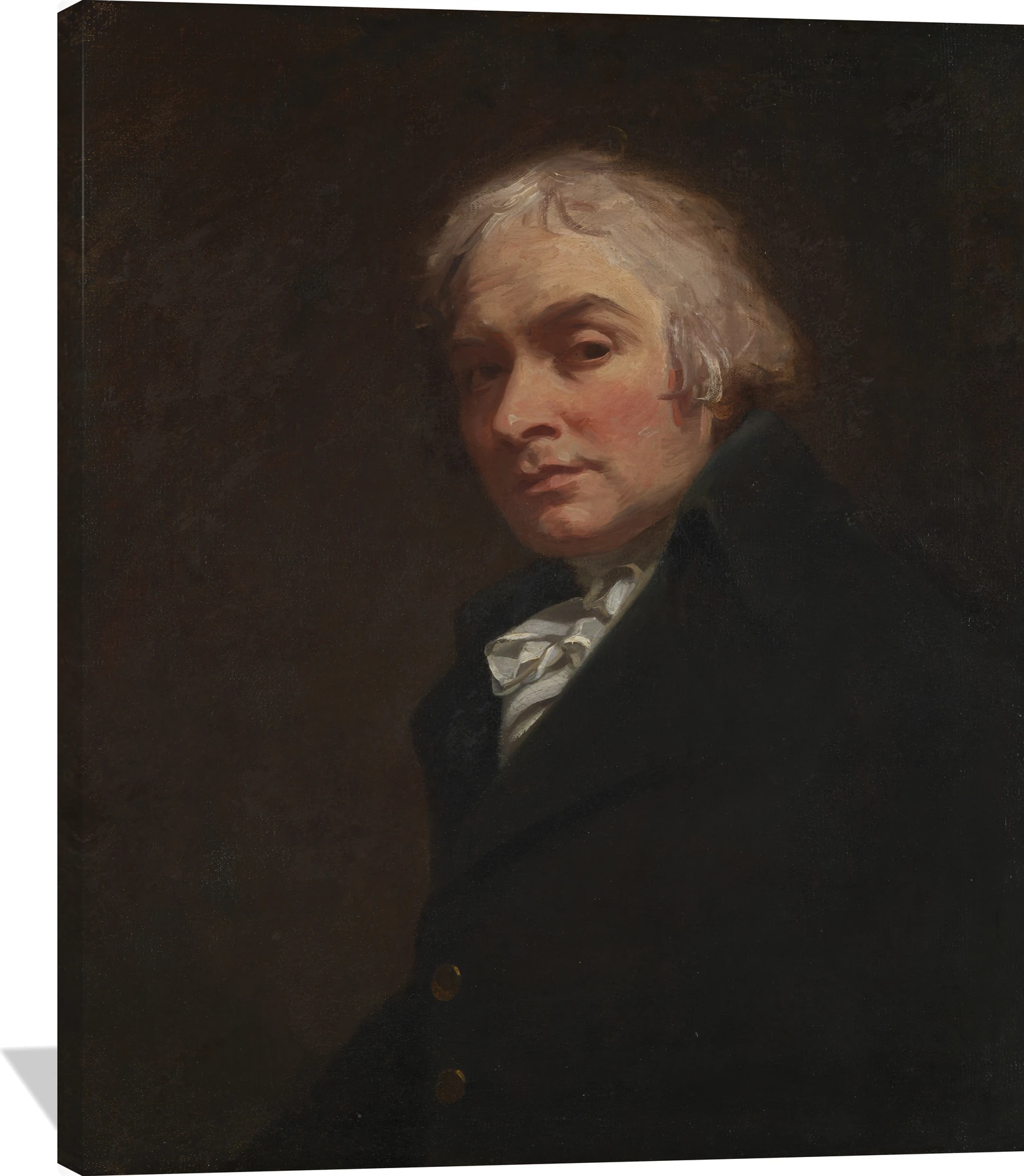
The George Romney Self-Portrait canvas captures the quiet confidence and introspective depth of one of Britain’s most celebrated portraitists. Rendered in rich tones of warm brown, soft ivory, and deep black, Romney’s gaze emerges from a shadowed background with striking realism and poise. The subtle play of light across his face and attire evokes timeless sophistication and artistic mastery.
This museum-quality canvas print brings a touch of classical refinement to any setting—perfect for a study, library, or elegant living space. The Self-Portrait wall art embodies both artistic heritage and understated luxury, making it an enduring centerpiece for collectors and admirers of fine portraiture.
George Romney (1734–1802) was a leading British portraitist of the late eighteenth century, celebrated for his refined sensibility and his ability to capture psychological nuance. Born in Beckside, Lancashire, and later active in Kendal and London, Romney rose to prominence during a flourishing era of British art, becoming one of the most sought-after painters of his generation.
Artistic Style
Romney’s work is distinguished by its elegant composition, fluid brushwork, and luminous color palette. His portraits often reveal an understated drama, blending naturalism with a graceful idealization. He favored subtle tonal transitions and atmospheric backgrounds that draw attention to the sitter’s presence, contributing to a style that remains both distinctive and deeply expressive.
Subjects and Notable Contributions
Best known for his portraits of fashionable society figures, Romney captured statesmen, intellectuals, actors, and especially women whose poise and inner life he portrayed with remarkable sensitivity. His extensive series of paintings featuring Emma Hart later Lady Hamilton such as the famed Emma as Circe and other allegorical roles, remain some of the most celebrated works of the period. These pieces helped redefine the eighteenth‑century portrait tradition by blending likeness with symbolic narrative.
Cultural Significance
Romney played a vital role in shaping British portraiture during a time of growing artistic ambition and cultural transformation. Although he famously avoided the Royal Academy, he maintained a prolific independent career and became a central figure in London’s artistic community. His ability to infuse portraiture with a sense of poetic introspection solidified his reputation as a master of character and mood.
Today, Romney is remembered as a pioneering portraitist whose refined craftsmanship and subtle emotional depth continue to resonate, securing his place as a key figure in eighteenth‑century British art.