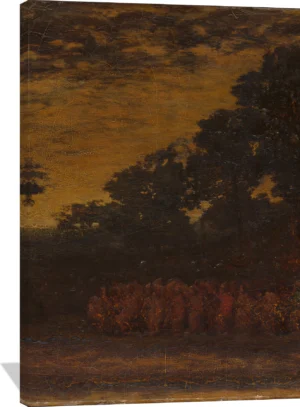
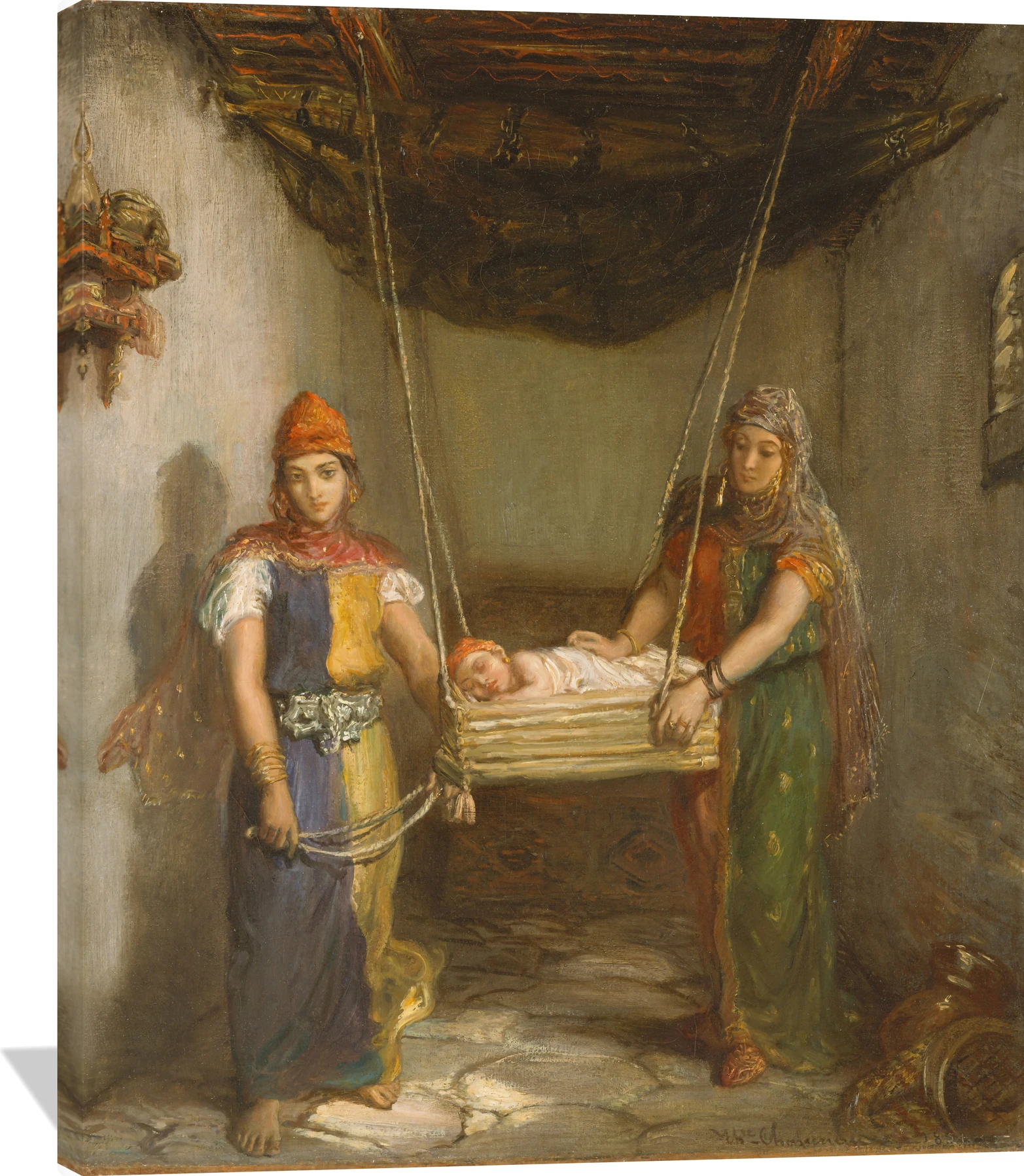
The Théodore Chassériau Scene in the Jewish Quarter of Constantine canvas captures a moment of quiet intimacy within a North African interior, where two women gently cradle a sleeping child. Rendered in warm earth tones, soft golds, and deep reds, this luminous composition evokes tenderness and cultural richness through Chassériau’s refined Romantic style. The play of light across textured fabrics and stone walls adds depth and serenity to the scene.
This exquisite canvas print brings timeless elegance and warmth to any living room, study, or entryway. A masterful blend of emotion and atmosphere, it invites reflection and conversation—an ideal choice for collectors of fine art and admirers of 19th-century French painting.
Théodore Chassériau (1819–1856) was a French painter born in Le Limon, Saint-Domingue, whose brief but influential career bridged the worlds of Neoclassicism and Romanticism. Trained in the studio of Ingres from a young age, Chassériau developed an early command of precise draftsmanship before embracing the expressive color, sensuality, and dramatic atmosphere associated with Delacroix. This fusion of clarity and emotion became the hallmark of his work.
Artistic Style
Chassériau’s paintings are distinguished by their refined contours paired with rich, luminous tones. His figures often possess a sculptural purity that reflects his classical training, yet their settings, gestures, and psychological intensity reveal a deeply Romantic sensibility. This balance of restraint and passion made him a singular voice in mid‑19th‑century French art.
Subjects and Themes
His repertoire included portraits, historical and literary scenes, religious compositions, and sensual interpretations of myth and the Orient. Works such as Venus Anadyomene and The Two Sisters highlight his interest in idealized beauty and intimate emotion, while his later Orientalist paintings capture the color and rhythm of North African life with both allure and empathy. Chassériau’s subjects are often characterized by their elegance, elongated forms, and contemplative mood.
Legacy and Significance
Although his life was short, Chassériau played a vital role in shaping the transition between academic classicism and the emotional depth that would later inspire Symbolist artists. His ability to merge the discipline of Ingres with the expressive freedom of Romanticism left a lasting impact on French painting. Today, his work is celebrated for its distinctive synthesis of precision and poetic intensity, marking him as a bridge between two major artistic movements and a painter of enduring allure.