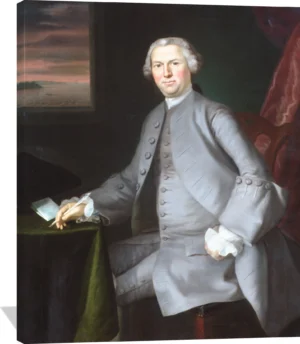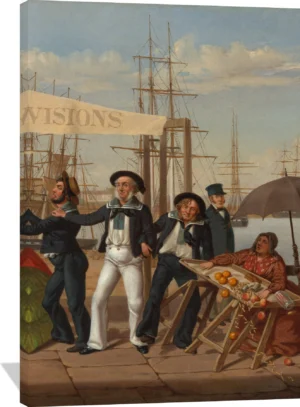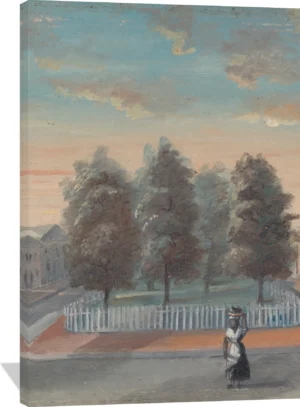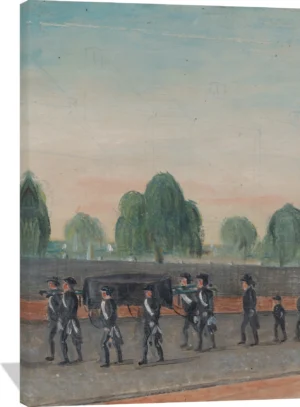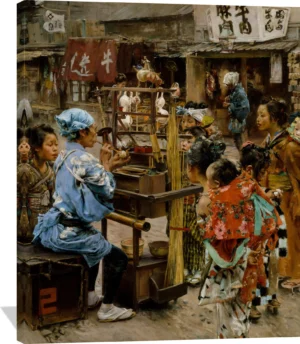
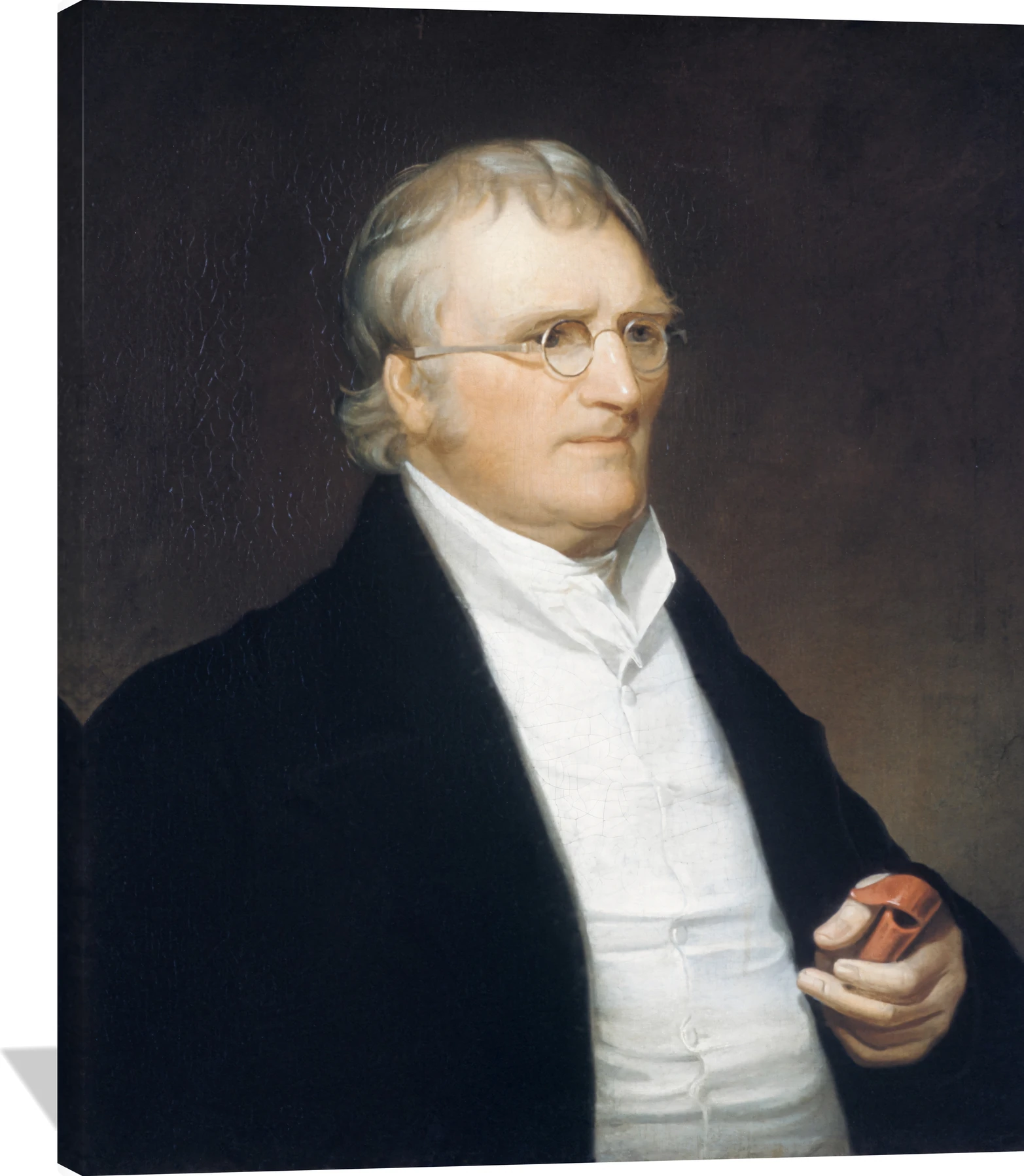
The Jacob Eichholtz Samuel Humes canvas captures the quiet dignity and refined presence of early American portraiture. Subtle tones of ivory, charcoal, and warm brown bring depth to the sitter’s composed expression, while the artist’s masterful use of light evokes both intellect and calm authority. This timeless wall art reflects Eichholtz’s Lancaster heritage and his gift for portraying character with understated grace.
Perfect for a study, library, or elegant entryway, this Samuel Humes canvas print adds a touch of historic sophistication to modern interiors. Its balanced composition and classic palette make it a versatile statement piece that complements both traditional and contemporary décor.
Jacob Eichholtz (1776–1842) was an American painter from Lancaster, Pennsylvania, recognized for his refined contributions to early nineteenth‑century portraiture. Self-trained and later influenced by leading painters of his era, he developed a compelling style that blended direct observation with an elegant, quietly expressive sensibility.
Artistic Style
Eichholtz’s portraits are distinguished by their clarity, warmth, and attention to character. He favored smooth surfaces, balanced compositions, and a gentle modeling of light that brought a naturalistic presence to his sitters. His restrained use of color and subtle highlights emphasized mood over ornament, giving his work a distinctive sense of sincerity and refinement.
Subjects and Themes
Working primarily in Pennsylvania, Eichholtz became a sought-after portraitist among professionals, merchants, and civic figures. His paintings often depict individuals posed with dignified simplicity, revealing both social stature and personal temperament. Though best known for portraiture, he occasionally produced still lifes and genre scenes that display the same measured sensitivity seen in his more formal works.
Legacy and Significance
Eichholtz holds an important place in early American art as one of the nation’s most capable regional portraitists. His body of work offers a vivid record of American life in the decades surrounding the nation’s formative years, capturing everyday citizens and community leaders with authenticity and quiet grace. Today, his paintings are appreciated for their historical value, artistic skill, and contribution to the visual identity of early America, demonstrating the rise of a distinctly American artistic voice during a formative period. His commitment to portraying the human presence with honesty and refined simplicity continues to define his enduring appeal.