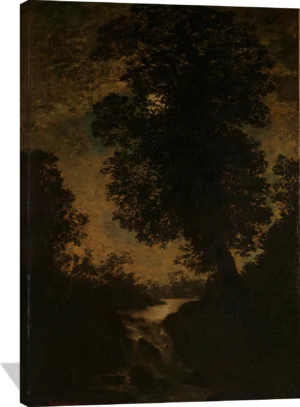
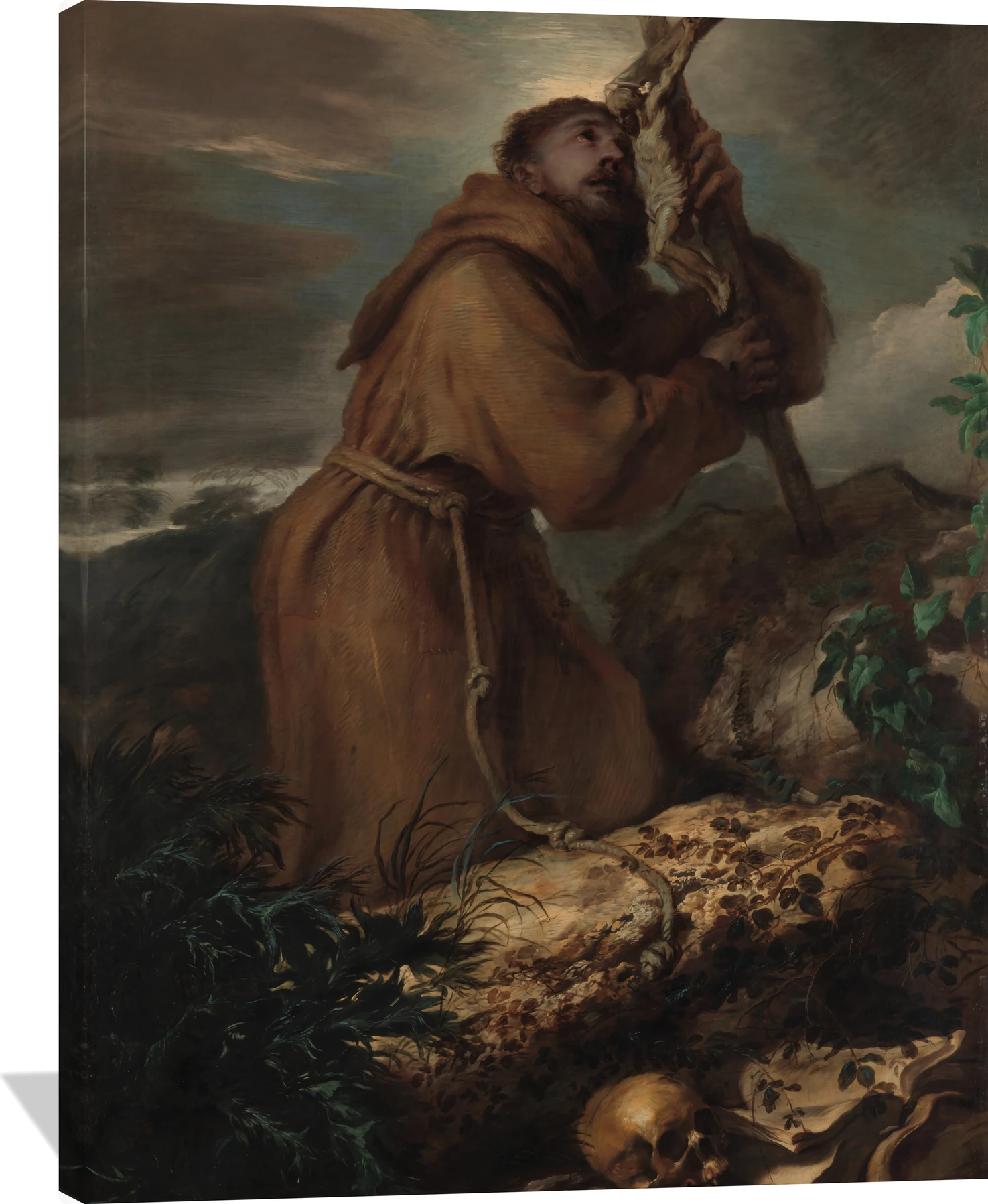
Giovanni Benedetto Castiglione’s Saint Francis in Ecstasy canvas captures a moment of profound spiritual devotion, rendered in rich earth tones of ochre, deep brown, and muted green. The saint’s humble figure, bathed in dramatic light against a stormy sky, evokes both solitude and transcendence—an atmosphere that brings timeless serenity to any space.
This museum-quality canvas print embodies the Baroque master’s emotional depth and painterly grace. Ideal for a living room, study, or entryway, Saint Francis in Ecstasy invites quiet reflection and adds a touch of classical elegance to modern interiors. A striking piece for collectors of sacred or historical wall art.
Giovanni Benedetto Castiglione, known as Il Grechetto, was an Italian Baroque master born in Genoa in 1609 and active until his death in Mantua in 1664. Celebrated for his inventive draftsmanship and dramatic handling of light, he forged a distinctive voice within seventeenth‑century Italian art.
Artistic Style and Techniques
Castiglione’s work is characterized by a dynamic fusion of painterly richness and expressive chiaroscuro. He became renowned for his pioneering use of the monotype technique, a method that set him apart as one of the most original printmakers of his era. His compositions often reveal swift, confident brushwork and an atmospheric depth that gives even the most modest subjects a sense of vitality.
Subjects and Themes
He frequently depicted pastoral scenes, biblical narratives, and mythological moments, weaving together animals, figures, and landscapes in strikingly dramatic arrangements. His fascination with characterful animals particularly goats, sheep, and exotic creatures became a hallmark of his imagery. Works such as The Immaculate Conception and The Nativity demonstrate his ability to merge spiritual intensity with naturalistic detail.
Legacy and Significance
Castiglione’s experiments with monotype left a lasting influence on the history of printmaking, earning him recognition as a trailblazer in graphic innovation. His ability to blend classical inspiration with a fresh, theatrical Baroque sensibility ensured his place among the most compelling artists of his generation. Today, Il Grechetto’s works are admired for their emotional resonance, technical daring, and the singular vision that continues to captivate collectors and art enthusiasts alike.