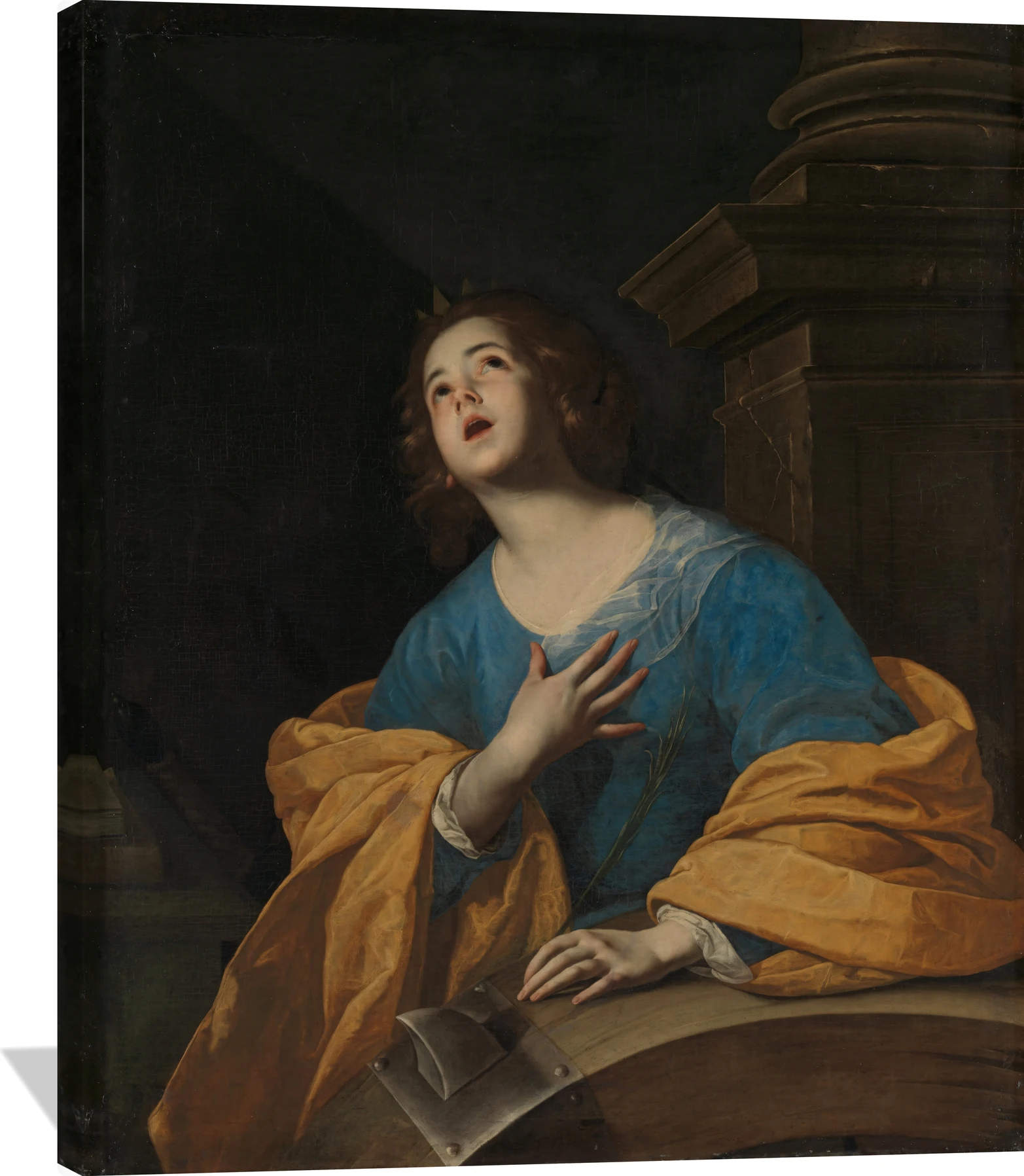
The Bernardo Cavallino Saint Catherine of Alexandria canvas captures the serene devotion and luminous grace of the saint in a masterful play of light and shadow. Draped in vivid blue and golden tones, she gazes upward in quiet reverence, her expression illuminated against a deep, dramatic background. The soft textures and warm highlights evoke the refined elegance of 17th-century Neapolitan art.
This exquisite wall art brings timeless spirituality and sophistication to any interior. Ideal for a living room, study, or entryway, this premium canvas print transforms sacred beauty into a statement of classic refinement and contemplative calm.
Bernardo Cavallino (1616–1656), a Neapolitan painter of the Italian Baroque, is celebrated for his intimate scale, lyrical sensibility, and poetic approach to sacred and mythological themes. Active entirely in Naples, he emerged during a period dominated by dramatic Caravaggism, yet developed a voice distinguished by refinement, emotional nuance, and a rare delicacy of touch.
Artistic Style
Cavallino’s paintings blend the chiaroscuro intensity of Caravaggio’s followers with a gentler, more contemplative mood. His figures often appear softly illuminated, their expressions rendered with graceful subtlety. This fusion of dramatic light and tender characterization contributes to the distinctive quiet power for which he is known. His palette, while rooted in Baroque naturalism, frequently demonstrates a muted elegance that sets him apart from his contemporaries in Naples.
Subjects and Themes
Specializing in religious scenes, devotional half-length figures, and select mythological subjects, Cavallino brought an introspective quality to narratives often treated with grandeur. Works such as The Ecstasy of Saint Cecilia reveal his talent for conveying spiritual depth without excess, while compositions like David and Abigail highlight his ability to pair dramatic tension with measured emotional restraint. His characters typically engage the viewer through quiet gestures and contemplative gazes, enhancing the intimate atmosphere that defines much of his oeuvre.
Legacy and Significance
Cavallino occupies a notable place within the Neapolitan Baroque tradition. Though his life was brief, his contributions helped broaden the expressive range of painting in seventeenth‑century Naples. His refined handling of light, sensitive human portrayal, and emphasis on emotional subtlety represent a counterpoint to the more forceful tendencies of the era. Today, collectors and scholars alike value his work for its rarity, its elegance, and its unique balance of dramatic intensity and poetic restraint. His legacy endures as a testament to the quieter yet profoundly resonant side of the Baroque, marking him as a distinctive voice within one of Italy’s most vibrant artistic centers.