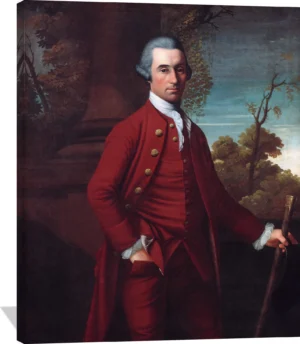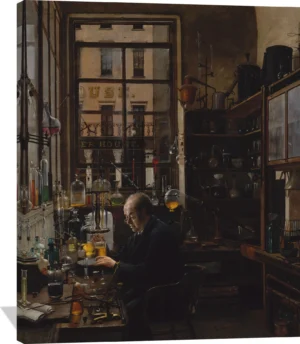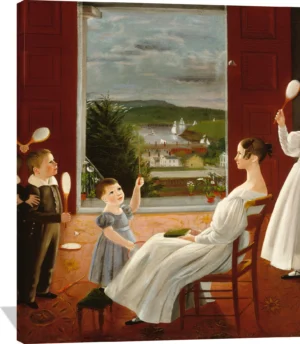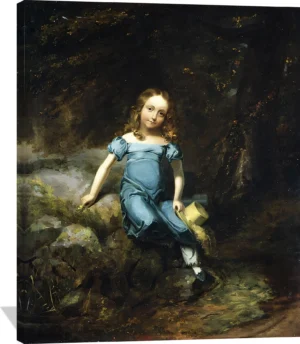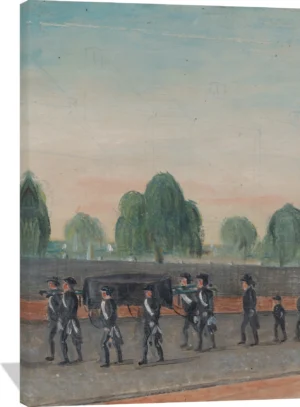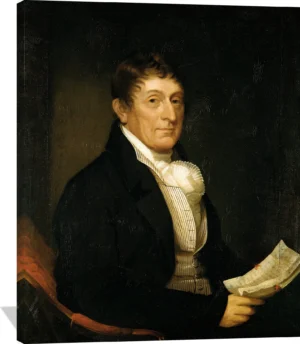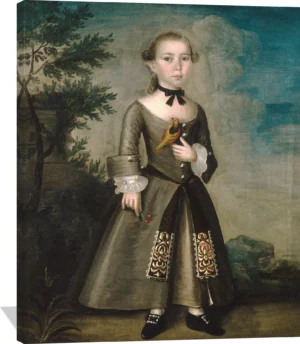
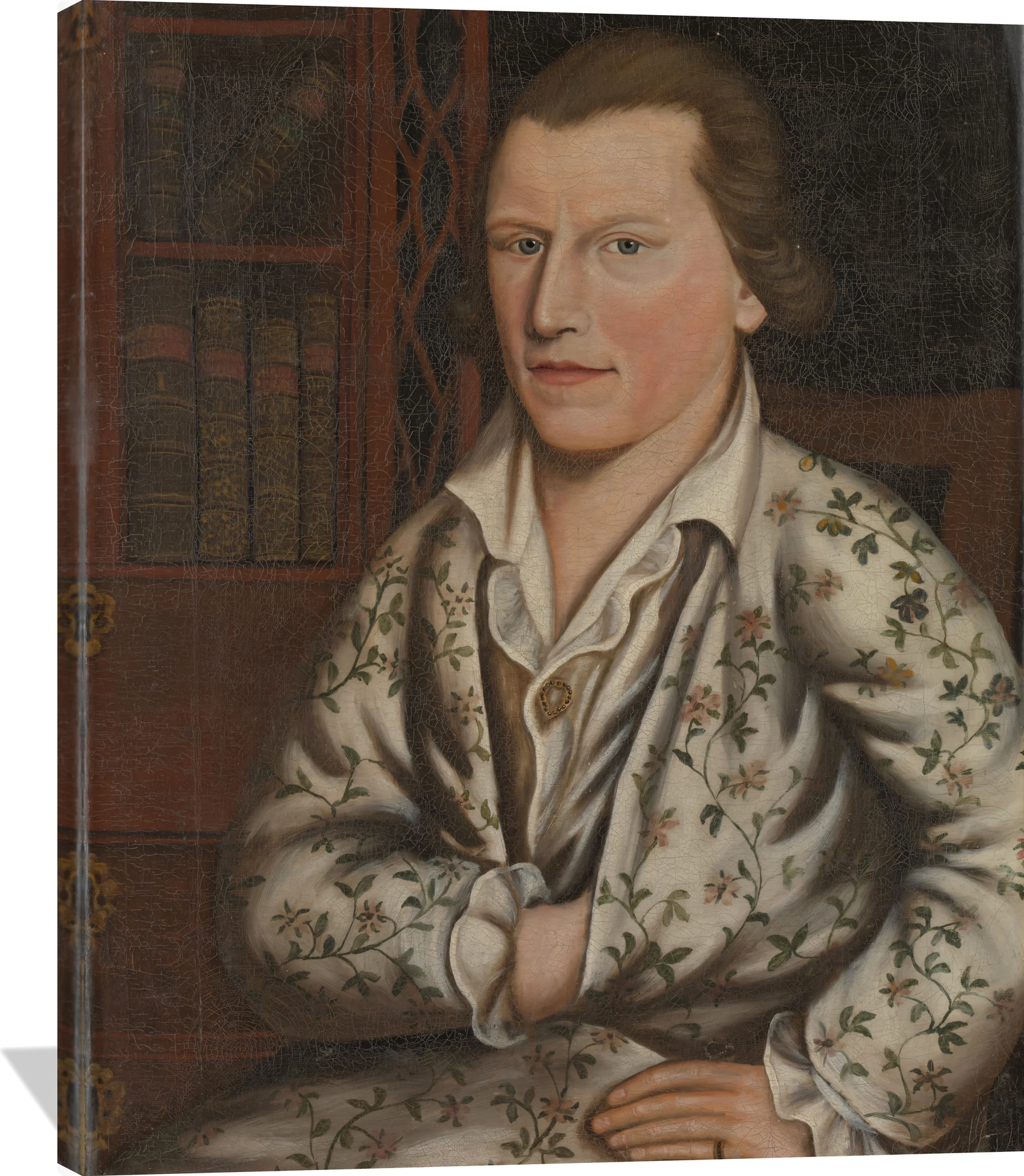
The Prince Demah Barnes Portrait of William Duguid canvas captures refined 18th-century elegance with a quiet, introspective mood. Soft earth tones, warm browns, and muted creams blend with delicate floral patterns, creating a timeless composition that draws the viewer into its poised serenity. The sitter’s calm expression and detailed attire evoke sophistication and depth, making this piece a striking focal point for any art lover.
This museum-quality canvas print brings historical artistry into modern interiors. Perfect for a study, library, or living room, it adds a touch of heritage and grace to your wall art collection while honoring the legacy of American artist Prince Demah Barnes (ca. 1745–1778).
Prince Demah Barnes (American, ca. 1745–1778) was an enslaved African American artist whose rare surviving works offer a compelling glimpse into the cultural and artistic landscape of colonial New England. Active in Boston in the 1770s, he is one of the few documented Black portraitists of the era, distinguished by both his technical refinement and his remarkable personal history.
Artistic Style and Subjects
Barnes’s paintings reflect the conventions of eighteenth‑century Anglo‑American portraiture, characterized by careful modeling of the face, subtle tonal transitions, and an emphasis on the sitter’s social presence. His known works, including the portrait of William Duguid and his evocative Self‑Portrait, reveal a precise handling of line and a nuanced sensitivity to human expression. Barnes favored direct, uncluttered compositions that highlighted the individuality of his subjects, demonstrating an emerging artistic voice grounded in observation and skill.
Notable Contributions
As one of the only identified African American painters working in the colonies before the Revolutionary War, Barnes occupies a singular place in early American art. In 1773 he received formal instruction from the English painter Robert Edge Pine, an unusual opportunity for any colonial artist and exceptionally rare for an enslaved man. His surviving works attest to a level of training and personal dedication that sets him apart from many of his contemporaries.
Cultural and Historical Significance
Barnes’s career unfolds against the backdrop of a society shaped by slavery and emerging revolutionary ideals. His ability to produce refined portraiture despite the constraints of enslavement speaks to both his resilience and his artistic ambition. During the Revolutionary War, he gained his freedom and enlisted in the Massachusetts militia, underscoring the complexity of his lived experience.
Today, Barnes is recognized as a pioneering early African American artist whose paintings offer rare insight into Black creative achievement in eighteenth‑century America. His work remains valued for its technical quality, historical importance, and the powerful narrative embodied in each brushstroke.