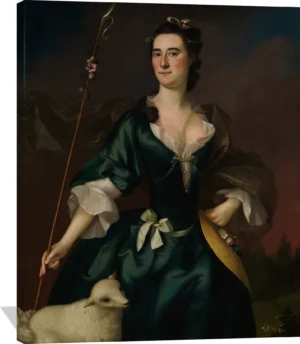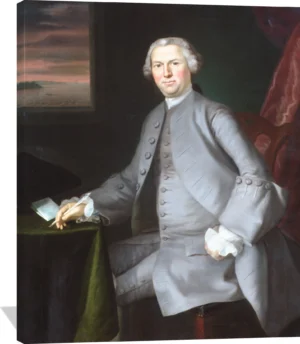
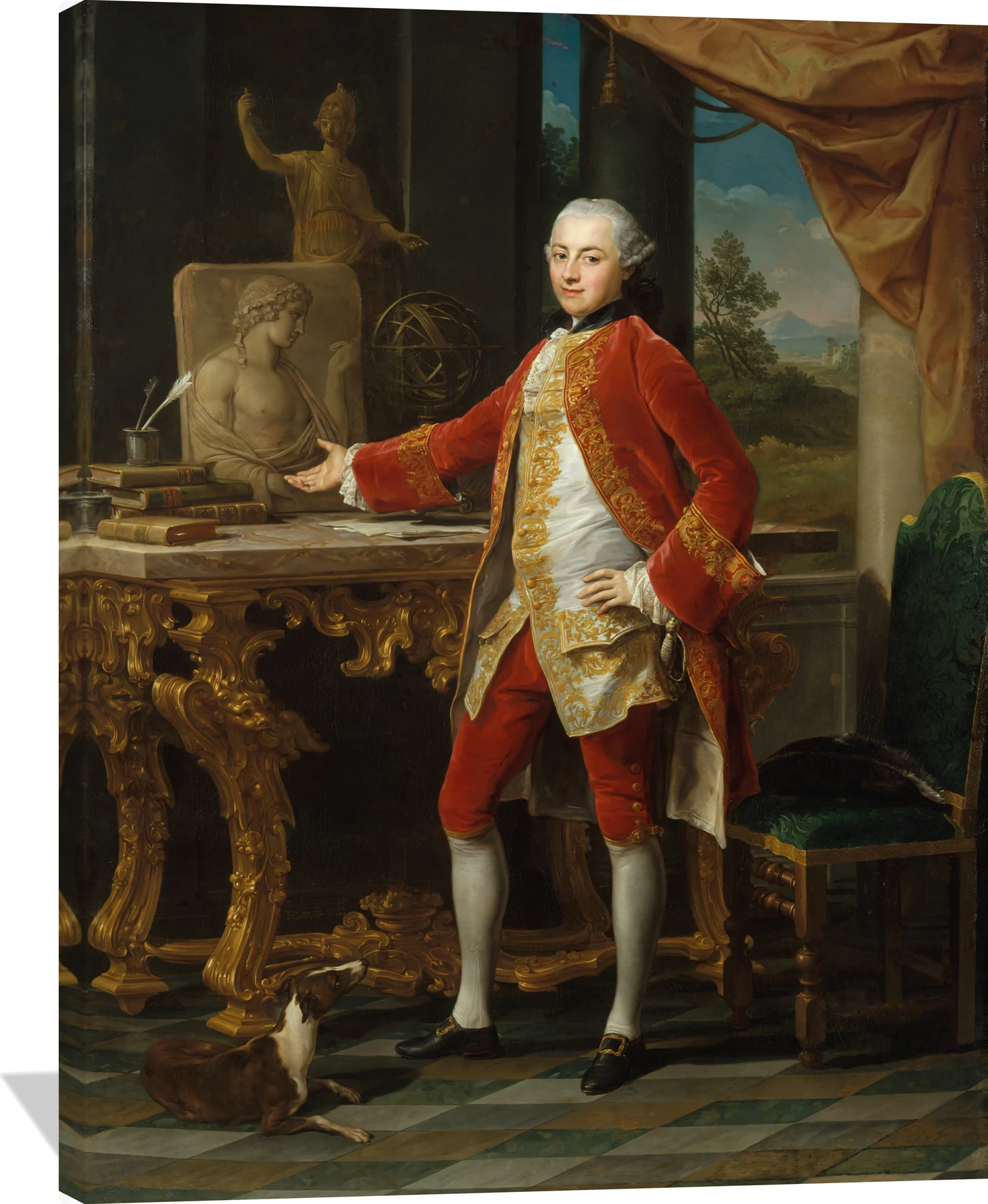
The Pompeo Batoni Portrait of a Young Man canvas captures the refined elegance of 18th-century Italian portraiture. Batoni’s masterful use of warm golds, deep reds, and soft greens creates a luminous scene of aristocratic poise, set against a backdrop of classical sculpture and sweeping landscape. Every detail—from the ornate furnishings to the sitter’s confident stance—reflects sophistication and intellect.
This premium canvas print brings timeless grandeur to any interior. Ideal for a study, living room, or entryway, the Portrait of a Young Man wall art adds a touch of cultured grace and historic charm to contemporary spaces.
Pompeo Batoni (Italian, Lucca 1708–1787 Rome) was one of the most sought-after painters of the eighteenth century, admired for his refined technique and the graceful clarity of his compositions. Active primarily in Rome, he became the preferred portraitist for European aristocrats undertaking the Grand Tour, capturing their likenesses with a balance of elegance, psychological insight, and polished detail.
Artistic Style
Batoni’s work blends late Baroque richness with the harmony and restraint of early Neoclassicism. His portraits are distinguished by their luminous color, immaculate draftsmanship, and a masterful rendering of fabrics, textures, and expressive features. He often placed sitters against classical architectural settings or near symbolic objects, giving his works both visual grandeur and intellectual depth.
Subjects and Contributions
Although best known for his portraits, Batoni also produced altarpieces and mythological compositions, showing his versatility across religious and secular themes. His Grand Tour portraits became a cultural phenomenon, setting a new standard for the genre and influencing generations of European portraiture. Many works feature subtle narrative elements, blending personal identity with classical heritage.
Cultural Significance
Regarded as the leading portrait painter in Rome during his lifetime, Batoni played a pivotal role in shaping the visual legacy of eighteenth-century European society. His ability to merge naturalistic representation with a refined classical sensibility made his paintings enduring symbols of sophistication and intellectual aspiration. Today, his works remain celebrated for their precision, elegance, and the unique window they offer into the cultural world of the Grand Tour.