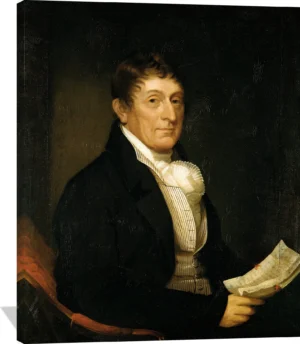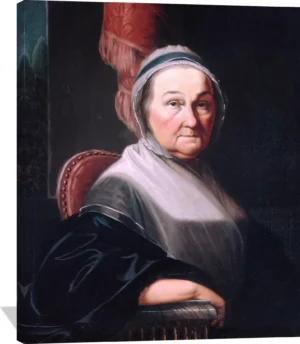
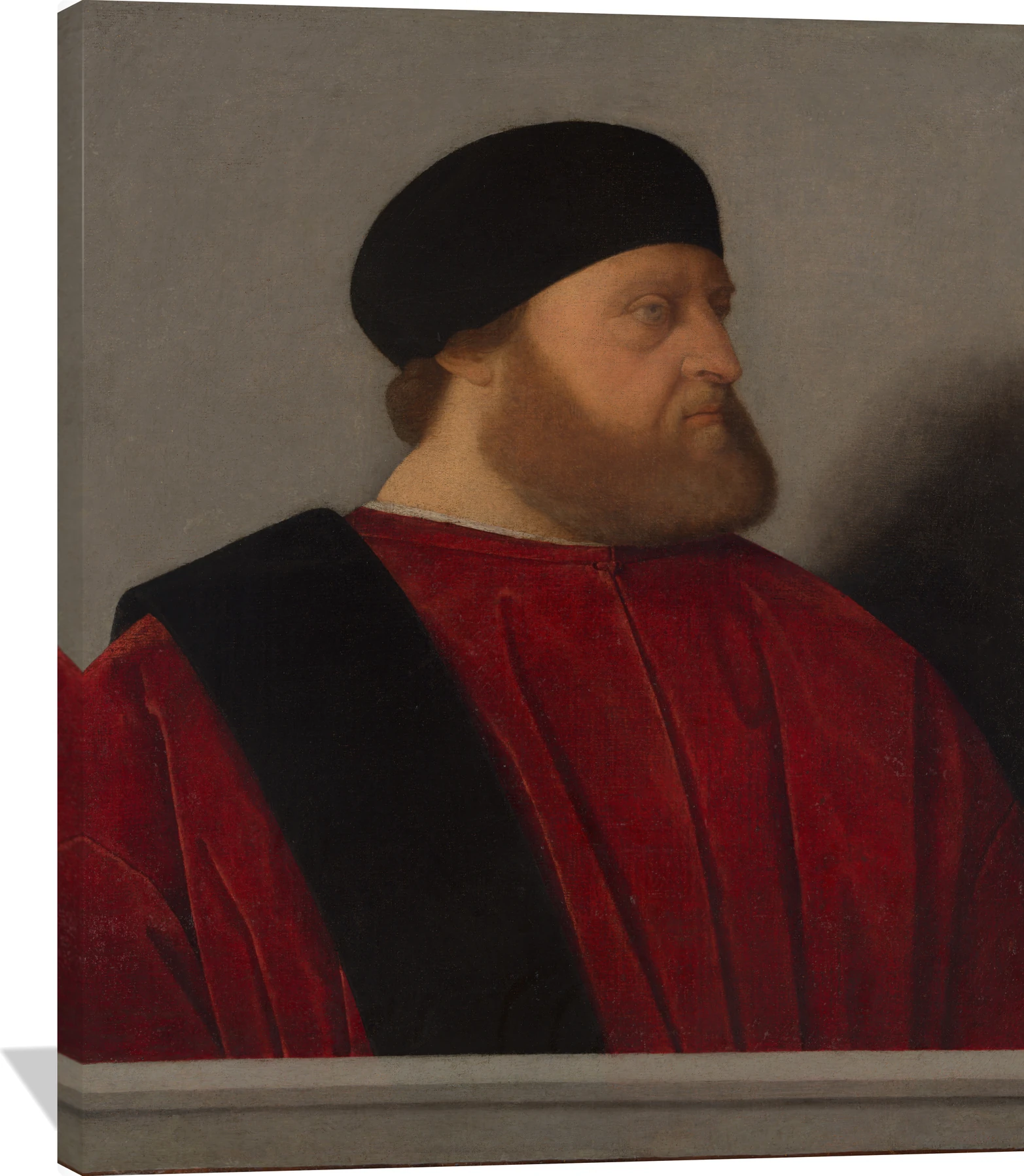
The Catena Portrait of a Venetian Senator canvas captures the quiet dignity and authority of Renaissance Venice. Rendered in deep crimson, warm flesh tones, and muted grays, this masterful profile study exudes balance and restraint. Catena’s refined brushwork and subtle lighting give the sitter a timeless presence that commands attention without ostentation.
This elegant wall art brings a sense of history and sophistication to any interior. Ideal for a study, library, or formal living room, this canvas print evokes the grandeur of Venetian portraiture while complementing modern and classic décor alike.
Vincenzo di Biagio, known as Catena, was an Italian painter active in Venice from the early sixteenth century until his death in 1531. Emerging in the orbit of Giovanni Bellini, he developed a refined visual language that bridged the lyrical classicism of the Venetian High Renaissance with the evolving colorism that would later define the region’s artistic identity.
Artistic Style
Catena is admired for his harmonious compositions, subtle chiaroscuro, and luminous handling of color. His paintings blend the serenity of Bellini’s devotional imagery with a growing attention to naturalistic detail and psychological presence. The result is a body of work marked by quiet elegance and a distinctive contemplative mood.
Subjects and Themes
His typical subjects include half-length Madonnas, richly characterized saints, and restrained narrative scenes. Whether depicting sacred figures or donor portraits, Catena focused on dignity, poise, and a balanced interplay between figure and landscape. Works such as his variations on the Madonna and Child and devotional portraits echo the Venetian tradition’s emphasis on humanity, light, and atmosphere.
Legacy and Significance
Although often working in the shadow of larger Venetian masters, Catena’s paintings hold an important place in the development of sixteenth-century Venetian art. His synthesis of Bellinian softness with emerging coloristic boldness helped shape a transitional moment in the city’s artistic evolution. Today, Catena is recognized for his steady craftsmanship, serene devotional works, and the understated sophistication that makes his paintings enduringly appealing for collectors and admirers of Renaissance art.