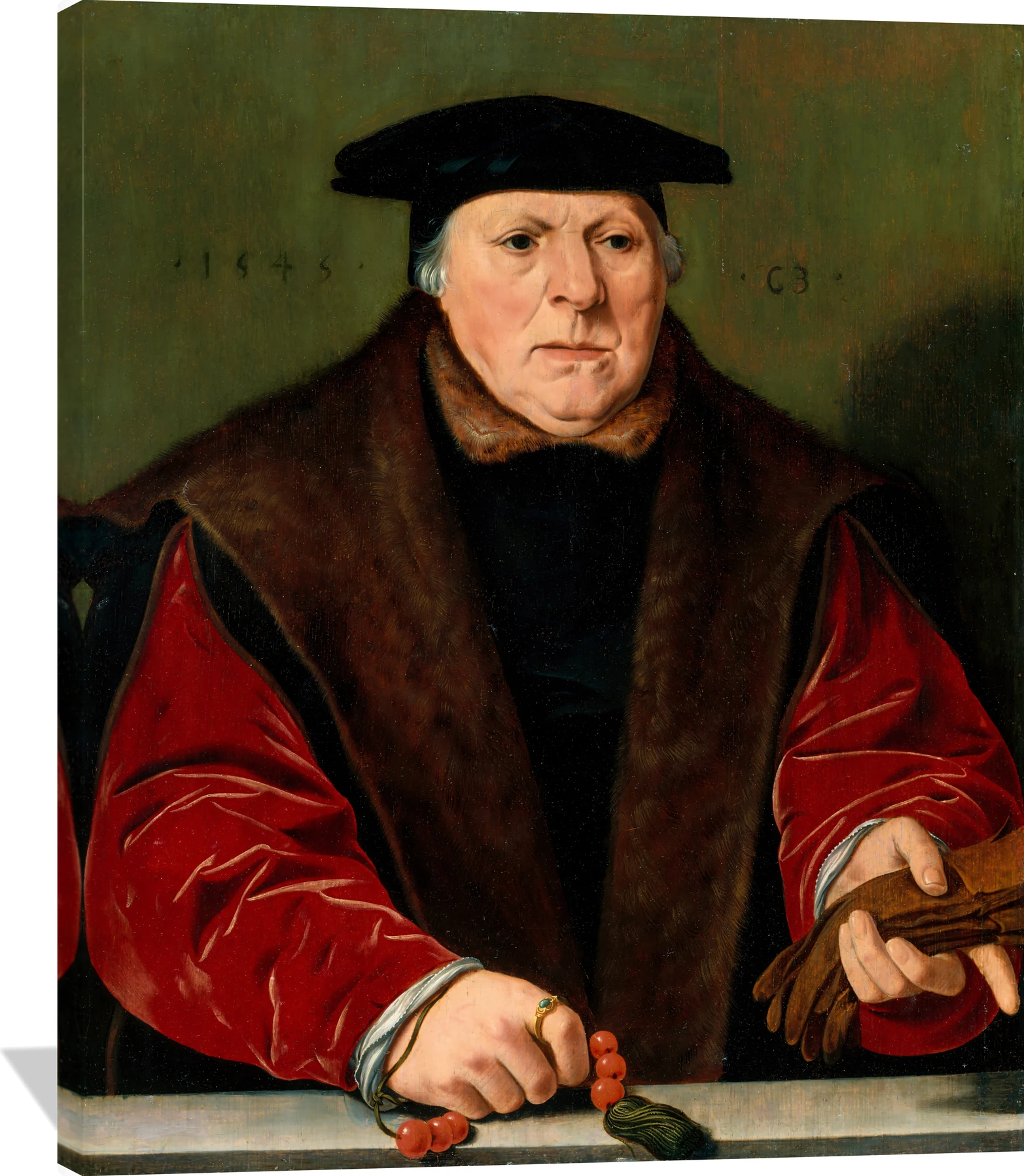
The Jan Cornelisz Vermeyen Portrait of a Man with a Rosary canvas captures quiet dignity and timeless devotion through refined Renaissance detail. Deep tones of crimson, chestnut, and olive green surround the sitter’s calm expression, while the delicate rosary adds a touch of spiritual reflection. The masterful play of light and texture evokes a sense of introspection and poise.
This elegant wall art brings a classic sophistication to any interior. Ideal for a study, library, or refined living space, this canvas print invites contemplation and adds historical depth to your décor, celebrating the artistry and grace of Vermeyen’s portraiture.
Jan Cornelisz Vermeyen (c. 1500–1559) was a distinguished Netherlandish painter and draftsman whose vivid realism and meticulous detail placed him among the leading artists of the Northern Renaissance. Active during a period of flourishing artistic innovation, he became known for portraits, devotional works, and documentary scenes that balance precise observation with a refined, courtly elegance.
Artistic Style
Vermeyen’s work is marked by a distinctive clarity of form, luminous color, and finely rendered textures. His portraits reveal a keen psychological acuity, capturing both the external likeness and the inner character of his subjects. He employed a crisp linear technique characteristic of Northern Renaissance draftsmanship, paired with a subtle handling of light that gives his figures a quiet yet commanding presence.
Notable Contributions
As a trusted court painter to Emperor Charles V, Vermeyen gained access to political and cultural circles that shaped the visual record of his time. His most significant contribution lies in the extensive designs he created for the celebrated tapestry series depicting the Habsburg campaign against Tunis. These compositions, later woven into monumental tapestries, combined documentary accuracy with artistic invention, offering one of the era’s richest visual chronicles of imperial power.
Subjects and Themes
Vermeyen’s oeuvre encompasses dignified portraits of nobility, serene religious scenes, and highly detailed studies made during his travels with the imperial court. Whether portraying a ruler, a sacred figure, or a landscape encountered on campaign, he approached each subject with a commitment to observational truth and a refined aesthetic restraint.
Cultural and Historical Significance
Vermeyen stands as an important artistic bridge between Northern and Southern Europe. His exposure to both Flemish precision and the expressive visual language of the Italian Renaissance enriched his approach, resulting in works that feel both rigorously detailed and quietly humanistic. His contributions to imperial imagery and his role in shaping how major historical events were visually documented underscore his lasting importance. Today, he is recognized as a master whose art offers a compelling window into the political, devotional, and cultural life of the 16th century, and a figure whose technical finesse and narrative clarity continue to influence the appreciation of Northern Renaissance art.