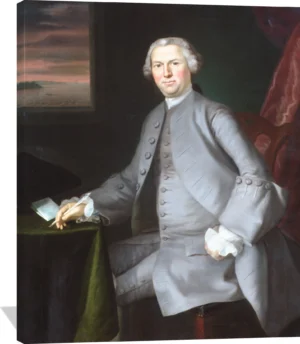
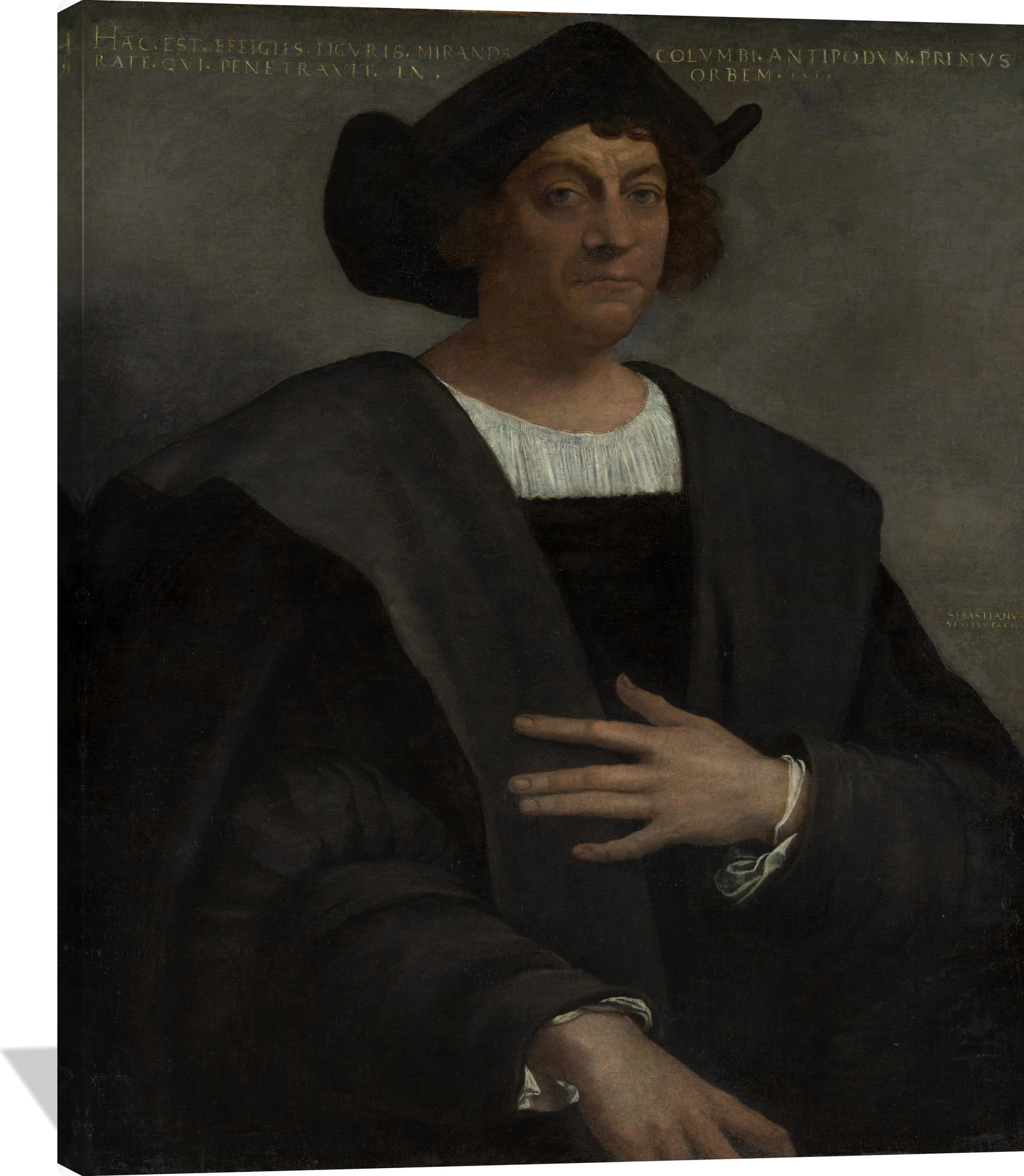
The Sebastiano del Piombo Portrait of a Man, Said to be Christopher Columbus canvas captures the quiet dignity and introspection of Renaissance portraiture. Rendered in deep browns, muted golds, and soft grays, the figure’s solemn gaze and refined hand gesture evoke a timeless sense of intellect and discovery. The subtle interplay of light and shadow enhances the sitter’s presence against a subdued background, creating a composition of poise and depth.
This museum-quality canvas print brings classical sophistication to any setting—ideal for a study, library, or elegant living space. A masterwork of Venetian artistry, it adds a touch of historical grandeur and contemplative beauty to modern interiors.
Sebastiano del Piombo, born Sebastiano Luciani in Venice around 1485/86 and active until his death in Rome in 1547, was a pivotal figure of the High Renaissance whose work harmonized Venetian colorism with the sculptural gravitas of the Roman school. Trained in the rich painterly traditions of Venice, he later became closely associated with Michelangelo in Rome, a partnership that profoundly shaped his artistic evolution.
Artistic Style
Sebastiano’s work is distinguished by its luminous Venetian palette combined with a powerful sense of volume and dramatic presence. His mastery of color and light, characteristic of the Venetian tradition, is paired with a monumental approach to the human form, resulting in paintings that feel both sensuous and architecturally solid. This blend of influences made him one of the few artists able to bridge the artistic worlds of Venice and Rome with exceptional fluency.
Subjects and Themes
Religious subjects dominate Sebastiano’s oeuvre, including altarpieces, devotional works, and portraits imbued with psychological depth. His figures often possess a contemplative stillness, heightened by subtle expressions and richly layered tonal transitions. Portraiture was another of his strengths, where his ability to capture individuality and emotional nuance distinguished him from many contemporaries.
Notable Contributions
Sebastiano’s collaboration with Michelangelo elevated his prominence in Rome, positioning him as a central competitor to Raphael during a peak moment in Renaissance art. His use of oil paint on monumental scales, including on wall surfaces traditionally reserved for fresco, was a technical innovation that expanded the possibilities of color and texture in large compositions. Works such as the monumental Raising of Lazarus demonstrate his command of drama, spatial complexity, and richly saturated color.
Cultural Significance
Sebastiano del Piombo occupies a unique place in art history for fusing two of the Renaissance’s greatest artistic traditions. His paintings capture the sensuality and atmosphere of the Venetian school while conveying the sculptural precision and intellectual ambition of Roman art. As the holder of the papal office of the Keeper of the Seals, he was also a key cultural figure in sixteenth-century Rome, influencing artistic currents during a transformative era.