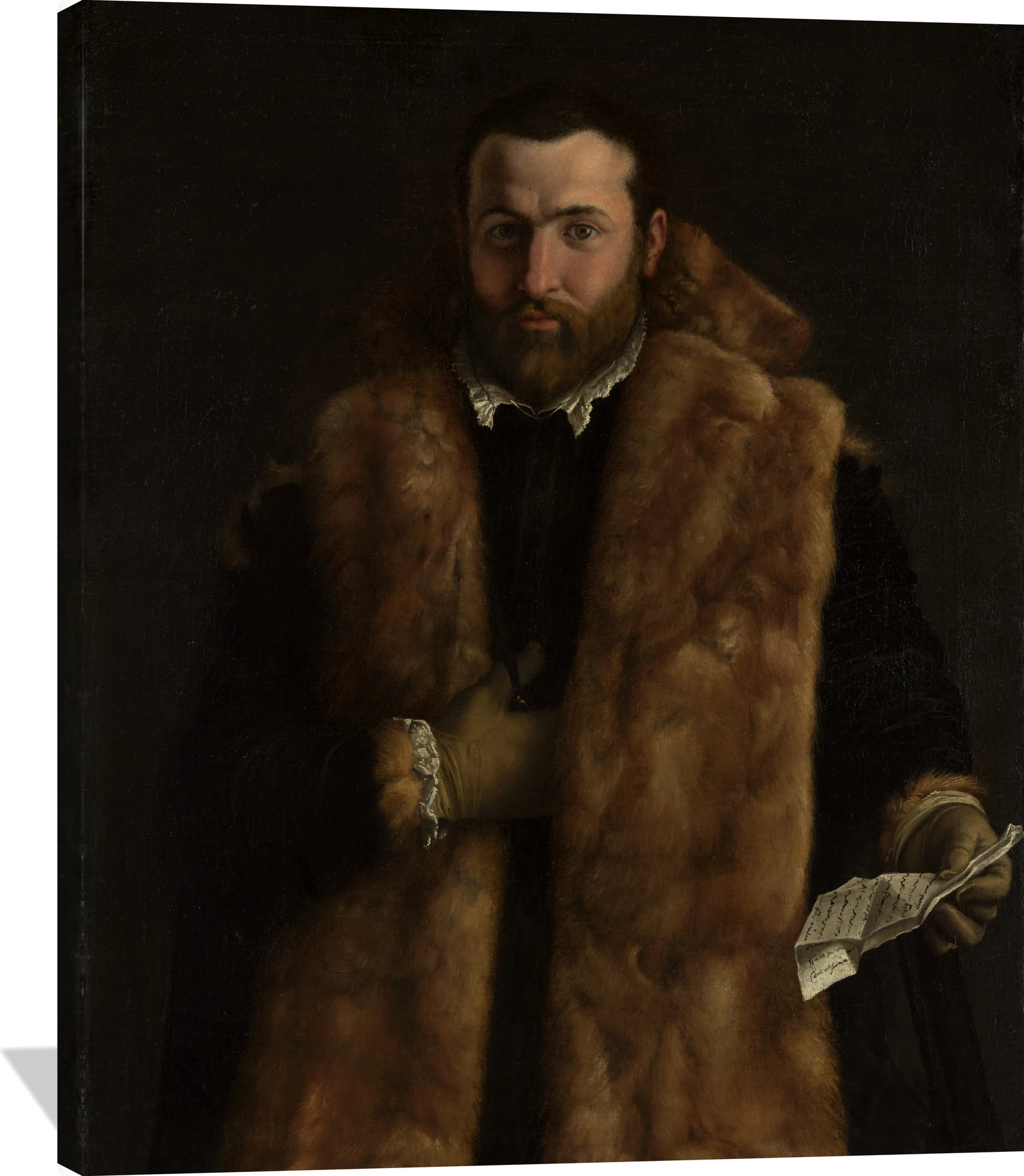
The Italian (Lombard) Painter Portrait of a Man in a Fur-Trimmed Coat canvas captures timeless elegance through its rich chiaroscuro and refined realism. Deep blacks, warm browns, and subtle gold tones highlight the sitter’s fur-lined coat and steady gaze, evoking the quiet dignity of Renaissance portraiture. Every detail, from the soft texture of the fur to the handwritten note, invites contemplation and admiration.
This exquisite canvas print brings classical sophistication to any interior. Perfect for a study, living room, or entryway, it adds a sense of history and depth that complements both modern and traditional décor. A striking piece of wall art that embodies poise, craftsmanship, and enduring style.
An Italian (Lombard) painter active around 1540, this artist emerged during a moment when the Lombardy region was shaped by the lingering influence of the High Renaissance and the growing elegance of Mannerism. Working within a cultural environment enriched by the legacies of Leonardo da Vinci and the rising prominence of local schools, the painter contributed to a refined visual language characterized by balanced composition, atmospheric depth, and expressive detail.
Artistic Style
The artist’s work reflects a transition from the clarity of Renaissance naturalism to the more stylized tendencies of mid‑sixteenth‑century Lombardy. Figures often display elongated proportions, graceful gestures, and subtle emotional nuance. A careful handling of light and shadow creates a soft yet commanding presence, heightening the overall sense of serenity and depth.
Subjects and Themes
Religious imagery formed the core of the artist’s output, featuring altarpieces and devotional scenes that blended spiritual intensity with gentle realism. Biblical subjects, saints, and sacred narratives are rendered with harmonized color palettes and thoughtfully arranged settings. Portraits and smaller private commissions also demonstrate the painter’s ability to capture individuality through delicate modeling and controlled luminosity.
Cultural Significance
As part of the broader Lombard tradition, this painter contributed to a regional aesthetic celebrated for its introspection and technical finesse. The work exemplifies the era’s shift toward more personal and expressive interpretations of established subjects. Through meticulous execution and a commitment to visual harmony, the painter helped shape the distinctive character of Lombard art during a pivotal period in Italian cultural history.