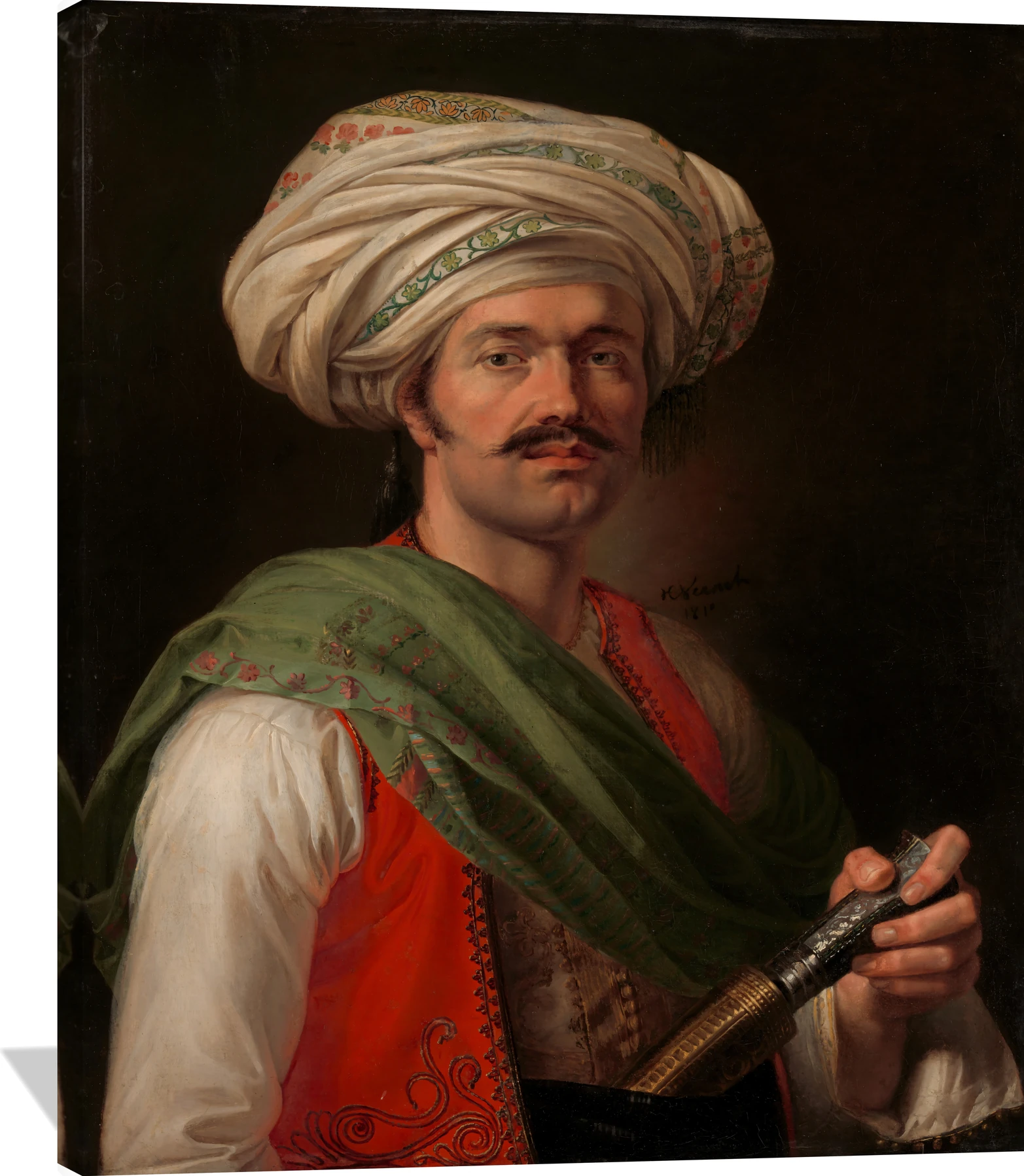
The Horace Vernet Portrait of a “Mamelouk” canvas captures the striking presence of an Ottoman warrior in vivid, lifelike detail. Rich hues of crimson, ivory, and deep green contrast against a dark background, highlighting Vernet’s masterful use of light and texture. The subject’s confident gaze and ornate attire evoke both strength and elegance, making this piece a timeless statement of character and history.
This refined wall art brings a touch of 19th-century French artistry to any interior. Ideal for a study, living room, or entryway, this premium canvas print adds warmth, sophistication, and a sense of worldly intrigue to your space.
Horace Vernet (French, Paris 1789–1863 Paris) was a celebrated painter whose dynamic scenes and acute sense of realism made him one of the most influential French artists of the 19th century.
Artistic Style
Vernet was renowned for his crisp, energetic brushwork and his ability to capture vivid movement. His style balanced clarity of form with dramatic composition, creating works that feel both immediate and meticulously crafted. He favored a naturalistic approach, avoiding excessive romantic embellishment in favor of authenticity and visual precision.
Notable Subjects
Best known for his military and historical paintings, Vernet portrayed battles, soldiers, and heroic narratives with compelling detail. His depictions of the Napoleonic era, Middle Eastern expeditions, and contemporary military life were grounded in keen observation and a deep respect for firsthand experience. He also produced equestrian scenes and portraits that highlight his remarkable control of anatomy and gesture.
Contributions and Significance
Vernet came from a distinguished artistic lineage, yet forged a path uniquely his own. His commitment to on-site study sometimes even traveling with military units lent his work an uncommon level of immediacy. This devotion to authenticity helped shape public perception of major historical events and contributed to the rise of modern documentary-style painting.
Celebrated in his time and embraced by patrons across Europe, Vernet became a pivotal figure in bridging classical academic traditions with the emerging demands of a rapidly changing world. His paintings remain valued for their clarity, narrative force, and their enduring ability to bring history vividly to life.