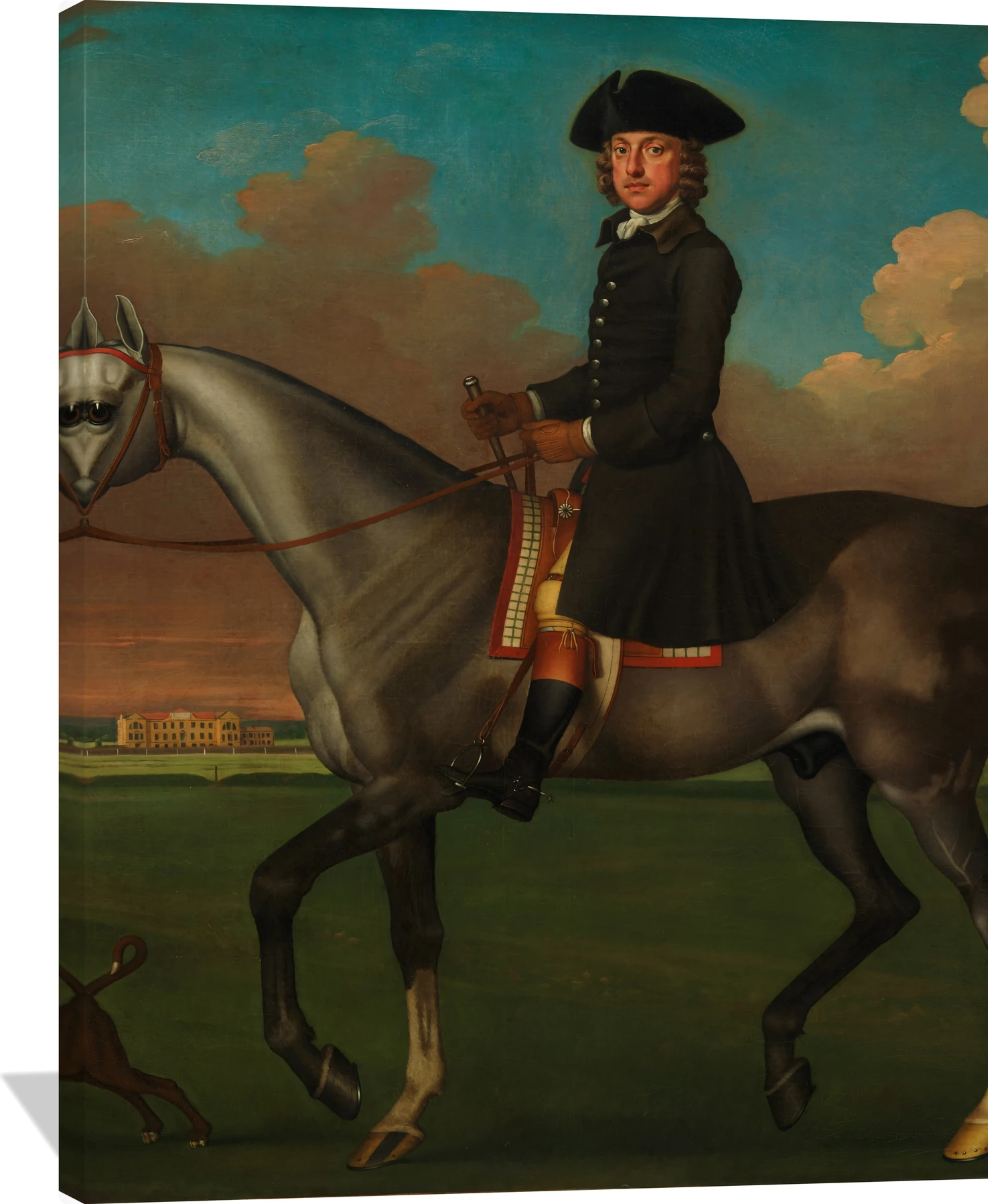
The James Seymour Portrait of a Horseman canvas captures the elegance and discipline of 18th-century equestrian life. A poised rider on a sleek gray horse commands the foreground, framed by a tranquil green landscape and a dramatic sky brushed in warm amber, soft blue, and muted gold tones. Seymour’s refined composition and crisp realism evoke both nobility and calm strength.
This distinguished canvas print brings timeless sophistication to any interior. Ideal for a study, living room, or entryway, the Portrait of a Horseman wall art adds a touch of British heritage and classic grace to contemporary spaces.
James Seymour (ca. 1702–1752) was a British painter renowned for his dynamic depictions of horses and the sporting culture that defined early eighteenth‑century England. Born in London and active throughout his life in the city’s artistic and equestrian circles, he became a leading figure in the development of the British sporting tradition in art.
Artistic Style and Subjects
Seymour’s work is distinguished by its keen observation, elegant draftsmanship, and spirited sense of motion. His paintings frequently center on racehorses, riders, hunting scenes, and the social world surrounding these pursuits. He brought an expressive lightness to equine anatomy, capturing the distinctive power and refinement of thoroughbreds with remarkable accuracy.
Notable Contributions
A pioneering presence in early sporting art, Seymour helped shape an emerging visual genre that celebrated Britain’s growing passion for horse racing. His ability to portray horses with both vitality and precision made him a sought‑after artist among patrons connected to Newmarket and other major racing venues. His works, such as portraits of famous horses and racing moments including Old Partner and Mother Western, contributed to a new cultural appreciation of equestrian subjects.
Cultural Significance
Seymour’s paintings offer valuable insight into eighteenth‑century British life, reflecting its evolving leisure culture and the rise of thoroughbred breeding. His art serves as a visual record of a society captivated by speed, sport, and the prestige of the racecourse. Today, he is recognized as one of the early masters who helped define Britain’s enduring tradition of sporting art.
Seymour’s legacy endures through his distinctive renderings of equine grace and motion, which remain admired for their clarity, elegance, and historical richness. His contributions continue to shape the understanding of both sporting imagery and the broader artistic landscape of his time.