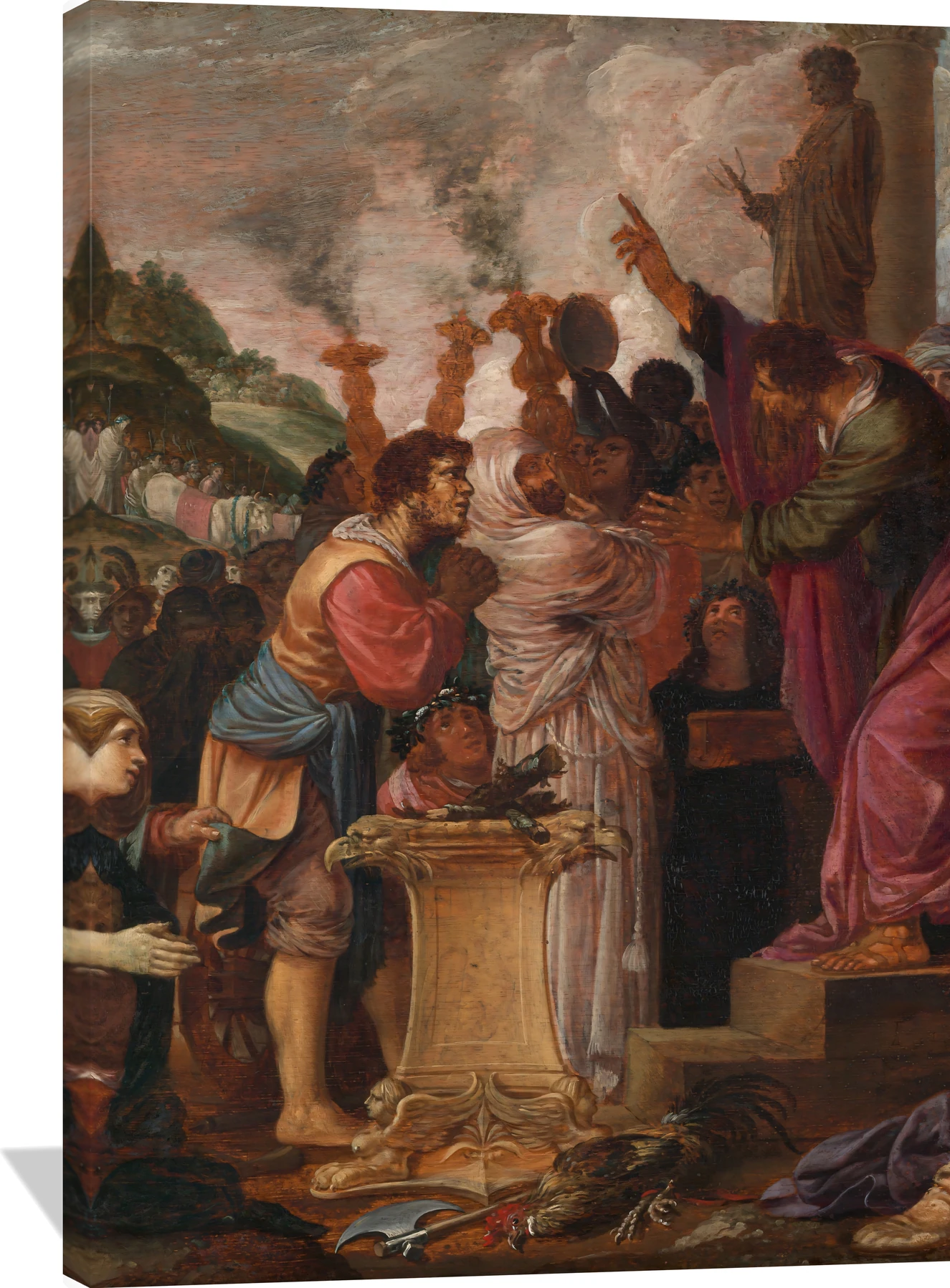
The Jacob Pynas Paul and Barnabas at Lystra canvas captures a dramatic biblical moment with masterful depth and color. Rich tones of crimson, ochre, and deep green animate the crowded scene, while soft golden light enhances the emotional intensity of the figures. Pynas’s refined brushwork and dynamic composition bring the story to life with Baroque grandeur and spiritual energy.
This museum-quality canvas print adds a sense of history and reverence to any space. Ideal for a living room, study, or entryway, it invites reflection and conversation through its timeless artistry and vivid storytelling.
Jacob Pynas (Amsterdam, 1592/93–after 1650) was a Dutch painter associated with the early Golden Age, admired for his luminous landscapes, refined handling of light, and evocative biblical and historical scenes. Often linked stylistically to his brother Jan Pynas and the emerging circle around the young Rembrandt, he developed a distinctive fusion of Northern precision and Italianate atmosphere.
Artistic Style
Pynas is known for his balanced compositions, warm tonalities, and delicate use of chiaroscuro. His paintings frequently display a subtle golden glow, reflecting early influences from Italian landscape painting and the works of Adam Elsheimer. This synthesis of northern detail with a southern sense of mood and drama marked him as a significant contributor to early 17th‑century Dutch painting.
Subjects and Themes
He specialized in biblical narratives, mythological episodes, and serene, structured landscapes. Works such as Tobias and the Angel or The Flight into Egypt highlight his interest in small-scale yet emotionally resonant storytelling, where figures are set within expansive, richly atmospheric environments. These subjects allowed him to explore spiritual depth and narrative clarity while exhibiting his masterful control of light and setting.
Legacy and Significance
Pynas played an important role in shaping early Dutch landscape and history painting. His poetic treatment of light and his careful architectural settings made him a respected figure among his contemporaries, leaving a quieter but enduring mark on the visual language that would flourish in the Golden Age. His work remains valued for its intimate scale, harmonious composition, and its blend of northern realism with a subtly elevated, almost meditative tone.