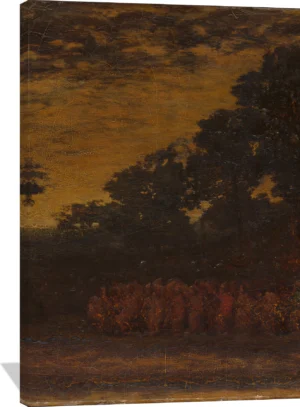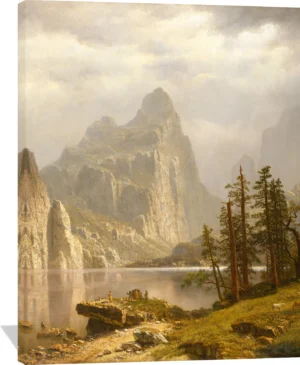
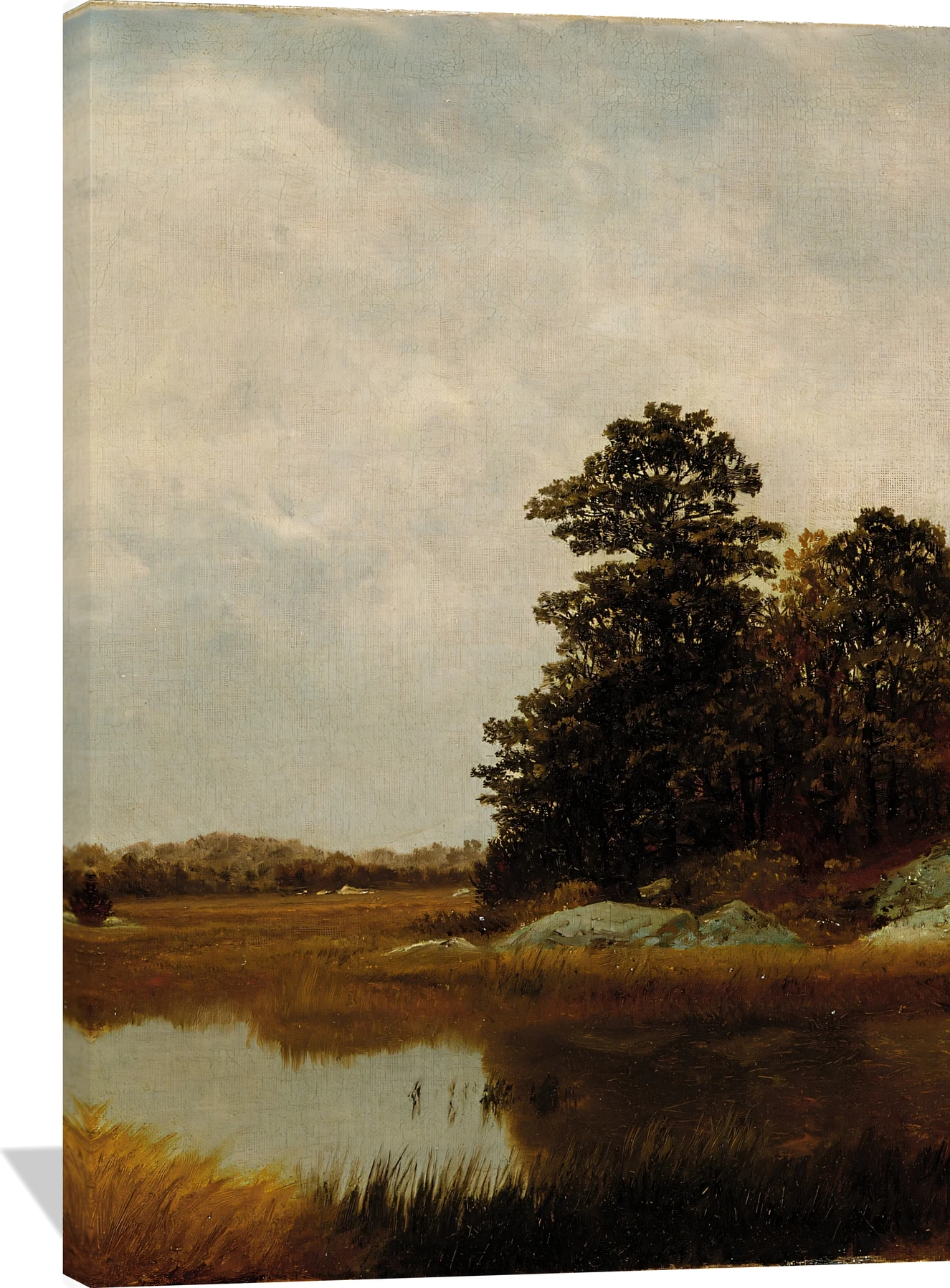
John Frederick Kensett’s October in the Marshes canvas captures the quiet poetry of autumn’s retreat. Soft golden grasses, russet trees, and gentle reflections in still water evoke a serene balance between earth and sky. The painter’s refined brushwork and luminous palette of ochre, moss green, slate gray, and pale blue create a timeless landscape that invites calm contemplation.
This museum-quality canvas print brings a touch of 19th-century American artistry to any space. Ideal for a living room, study, or entryway, it offers a moment of stillness and natural beauty—an elegant statement piece for those who appreciate classic landscape wall art.
John Frederick Kensett (1816–1872) was an American painter born in Cheshire, Connecticut, and later based in New York. Celebrated as a leading figure of the Hudson River School and an originator of the Luminist aesthetic, he is best known for serene, light-filled landscapes that reflect a deep reverence for the natural world.
Artistic Style
Kensett’s mature work is distinguished by its meticulous clarity, balanced compositions, and an extraordinary command of atmospheric light. His Luminist approach favored calm surfaces, gentle gradations, and a sense of contemplative stillness. Rather than dramatic wilderness scenes, Kensett focused on subtle harmonies of color and light, creating landscapes that evoke both precision and tranquility.
Subjects and Themes
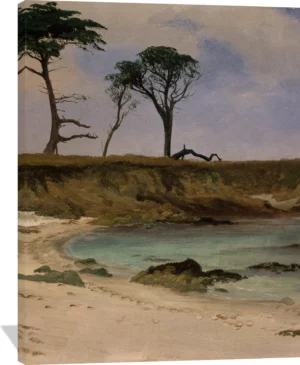
The artist frequently depicted the northeastern United States, including coastal New England, the Hudson River Valley, and the White Mountains. His images of shorelines, riverbanks, and expansive skies reveal a refined sensitivity to shifting light and seasonal nuance. Works such as his coastal studies and meditative views of Newport and Long Island exemplify the poised, introspective qualities that define his oeuvre.
Legacy and Significance
Kensett played a key role in shaping American landscape painting during the mid-nineteenth century. His contributions helped establish a distinctly American visual language rooted in clarity, restraint, and the quiet majesty of nature. Collectors and historians value his work for its poetic luminosity, its technical finesse, and its influential role in the evolution of the Hudson River School. Today, Kensett remains admired for his ability to transform ordinary vistas into scenes of enduring calm and radiant simplicity.