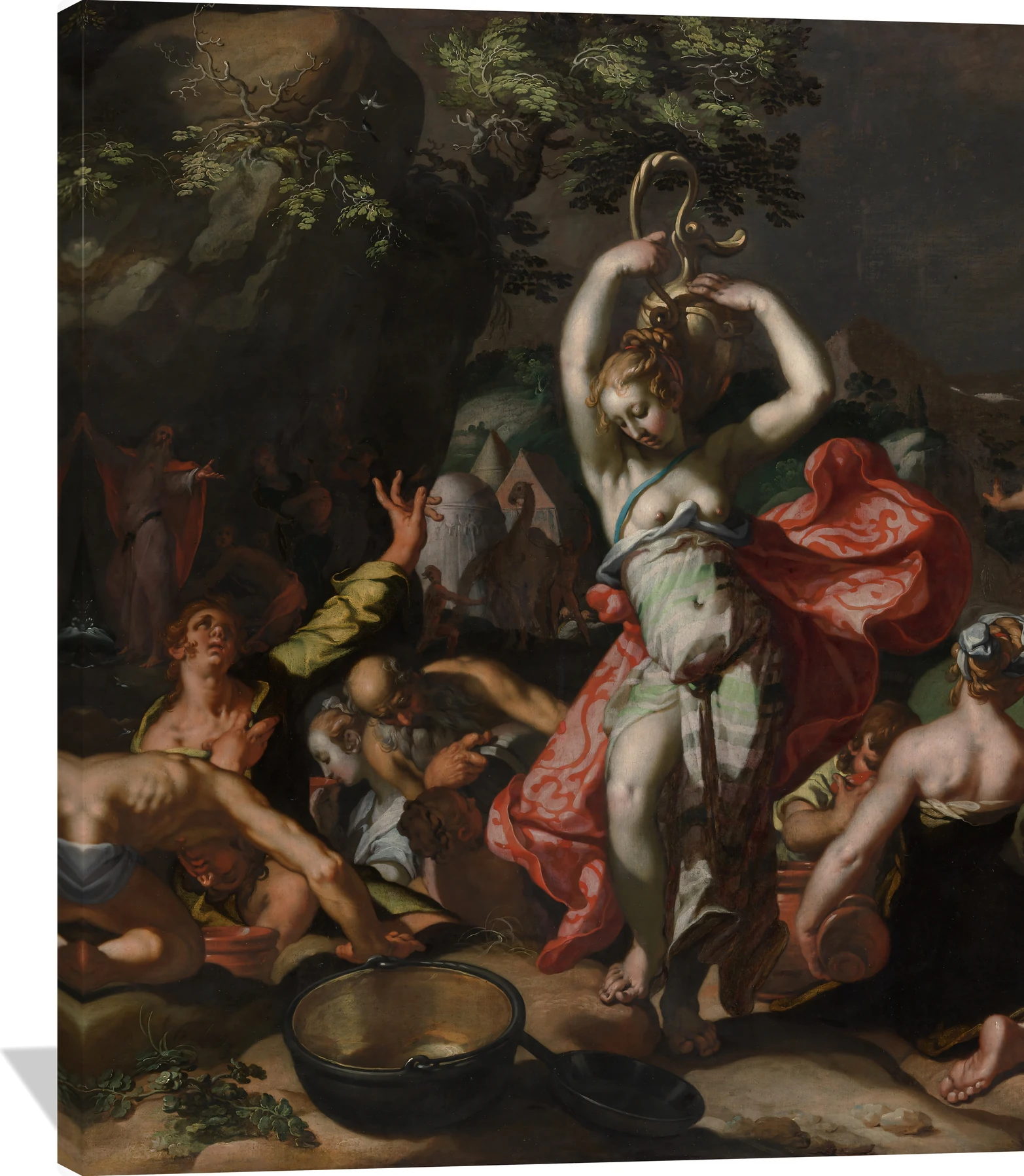
The Abraham Bloemaert Moses Striking the Rock canvas captures a dramatic biblical moment with masterful energy and movement. Rich earth tones, deep greens, and warm golds flow through a composition alive with figures and divine light, revealing Bloemaert’s signature Mannerist style. The vertical sweep of the scene draws the eye toward Moses as he brings forth water from the rock, surrounded by expressive faces and flowing drapery.
This museum-quality canvas print brings timeless storytelling and Baroque grandeur to your walls. Ideal for a living room, study, or entryway, it adds a sense of reverence and vitality to any refined interior.
Abraham Bloemaert (Netherlandish, Gorinchem 1566–1651 Utrecht) was a pivotal figure of the Dutch artistic transition from Mannerism to the early Baroque. Celebrated for his versatility and longevity, he shaped the visual culture of the Northern Netherlands during a period of profound stylistic evolution.
Artistic Style
Bloemaert’s early work reflects the elegance and elongated forms of late Mannerism, while his later paintings display a warmer naturalism characteristic of the Dutch Baroque. He was a master of dynamic compositions, expressive figures, and atmospheric light, creating works that feel both theatrical and deeply human. His drawings, prized in his own time and today, showcase his exceptional draftsmanship and fluid command of line.
Subjects and Themes
His output spanned biblical narratives, pastoral scenes, mythological subjects, and sensitive studies of everyday life. Bloemaert’s shepherds, saints, and allegorical figures are notable for their emotional immediacy, as well as for the rich textures and subtle realism he achieved. He also produced influential designs for prints, which helped circulate his ideas widely across Europe.
Legacy and Significance
As one of Utrecht’s most important teachers, Bloemaert trained a generation of artists who would shape Dutch Golden Age painting. His studio became a hub of innovation, and his impact extended through both his paintings and his widely used instructional drawings. Today, he is remembered as a foundational figure in Dutch art and a catalyst in the shift toward a more naturalistic, emotionally resonant visual language.