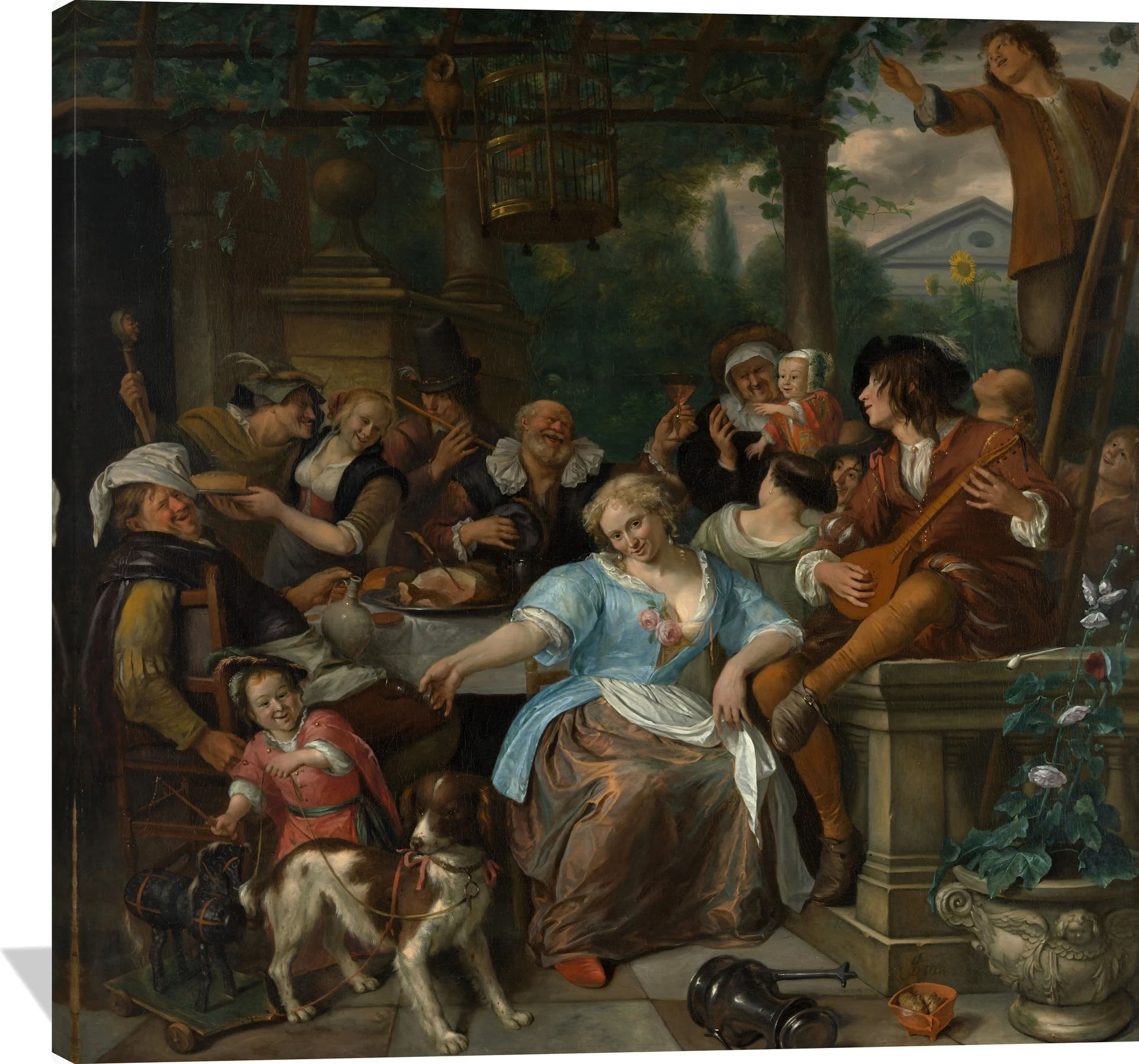
The Jan Steen Merry Company on a Terrace canvas captures a lively Dutch gathering filled with warmth, laughter, and music. Rich tones of amber, sage green, and soft blue bring to life the joyful energy of family and friends beneath a vine-covered terrace. Steen’s masterful storytelling and expressive brushwork make this piece a timeless celebration of conviviality and human connection.
This premium canvas print adds a touch of classic charm and spirited elegance to any living room, dining space, or study. A true conversation piece, the Merry Company on a Terrace wall art infuses your home with the lighthearted sophistication of the Dutch Golden Age.
Jan Steen (1626–1679) was a Dutch painter from Leiden, celebrated for his lively, humorous, and psychologically rich scenes of everyday life. A central figure of the Dutch Golden Age, he brought an unmatched sense of theatricality and human insight to genre painting.
Artistic Style
Steen’s work is instantly recognizable for its dynamic compositions, expressive characters, and vivid storytelling. His brushwork balances careful detail with spirited spontaneity, allowing each scene to feel both masterfully crafted and delightfully alive. Through a blend of realism and wit, he revealed the complexity of human behavior with warmth and sharp observation.
Subjects and Themes
Known for bustling domestic interiors, tavern gatherings, festive celebrations, and moralizing allegories, Steen captured the full spectrum of everyday Dutch life. His paintings often feature playful disorder sometimes referred to as a “Jan Steen household” in Dutch cultural idiom yet beneath the humor lies pointed commentary on folly, indulgence, and virtue. Works such as The Merry Family and The Feast of St. Nicholas exemplify his ability to weave narrative depth into seemingly lighthearted scenes.
Legacy and Significance
Steen’s unique combination of theatrical composition and human empathy left a lasting mark on genre painting. His mastery of expressive storytelling continues to resonate, offering modern audiences a vivid window into 17th‑century Dutch society. As both a keen observer of character and a creator of exuberant visual narratives, he remains one of the Dutch Golden Age’s most distinctive and influential voices, celebrated for his unparalleled narrative wit and emotional authenticity.