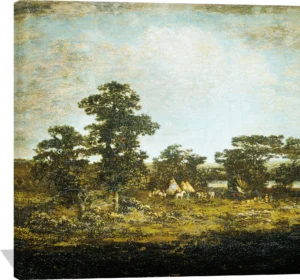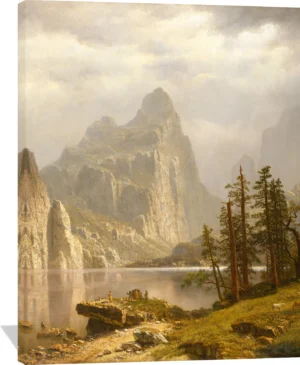
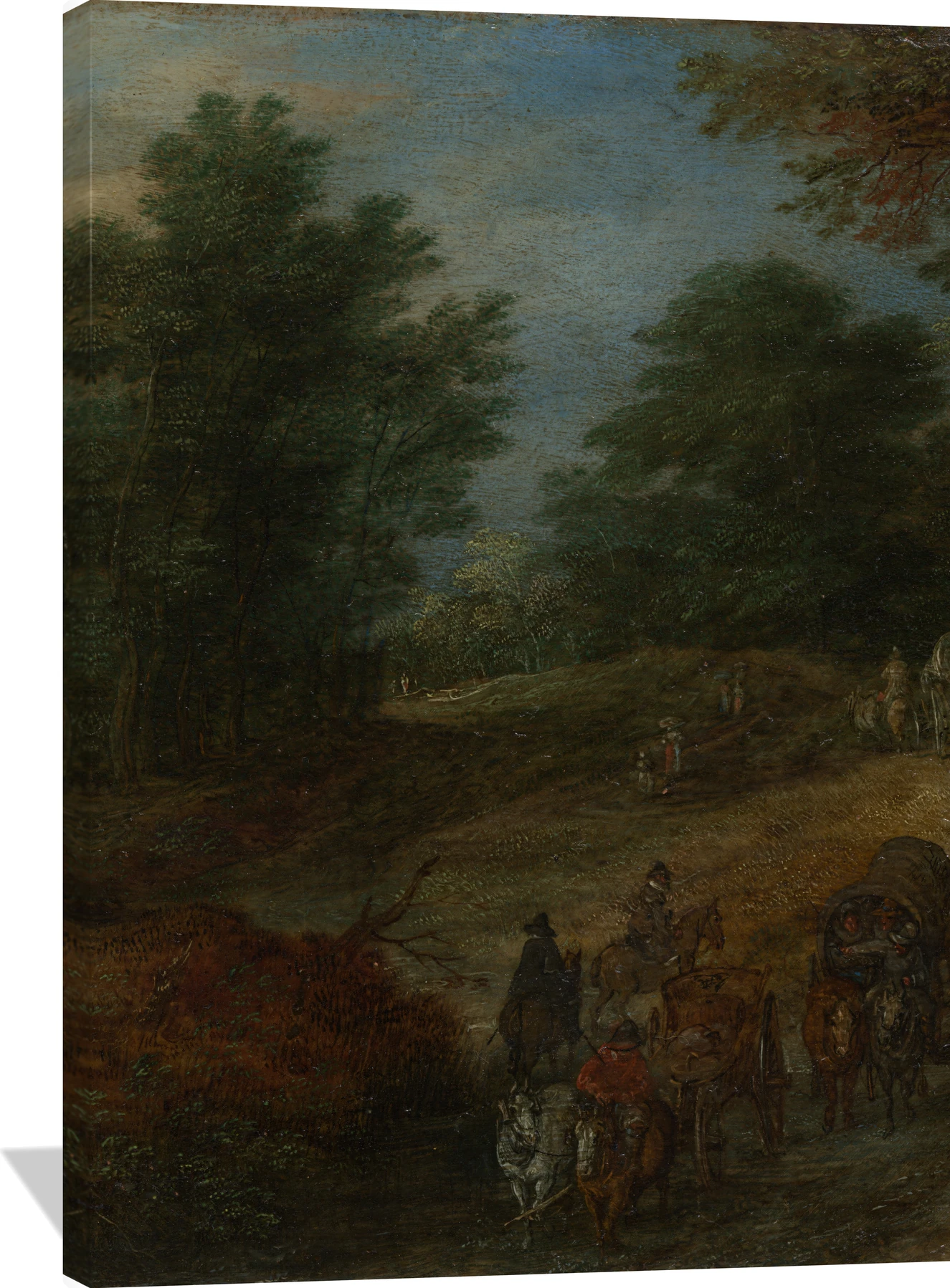
The Jan Brueghel the Elder Landscape with Travelers on a Woodland Path canvas captures a serene journey through a lush forest bathed in soft, earthy tones of green, brown, and gold. Figures and carriages wind along a sun-dappled path, inviting viewers into a tranquil world of rustic beauty and quiet motion. Brueghel’s masterful detail and atmospheric depth evoke the timeless harmony between nature and human life.
This exquisite wall art brings a sense of calm sophistication to any space. Perfect for a living room, study, or entryway, this fine art canvas print enriches interiors with the warmth and depth of a Netherlandish master’s vision.
Jan Brueghel the Elder (Netherlandish, Brussels 1568–1625 Antwerp) was one of the most celebrated painters of the Flemish Baroque, renowned for the precision, lyricism, and atmospheric richness that defined his work. A member of the illustrious Brueghel dynasty, he established a distinct artistic voice that set him apart from his contemporaries.
Artistic Style
Brueghel was admired for his meticulous technique and extraordinary command of detail. His delicate brushwork and vibrant, crystalline palette earned him the name “Velvet” Brueghel, a testament to the refined softness and subtle luminosity of his compositions. He excelled in genres that demanded exceptional control and clarity, producing landscapes, allegorical scenes, and floral still lifes with unmatched finesse.
Notable Subjects and Contributions
Among his most celebrated achievements are his lush botanical studies and elaborate bouquet paintings, which showcased his ability to render nature with scientific exactitude and poetic sensitivity. His landscapes often presented idyllic yet bustling scenes, rich with narrative detail. Brueghel also collaborated with leading artists of his time, including Peter Paul Rubens, contributing landscape and still-life elements to larger allegorical and devotional works such as The Garden of Eden and The Allegory of Sight. These collaborations highlight his mastery in creating immersive environments that complemented the dramatic figural work of his peers.
Historical and Cultural Significance
As a central figure in Antwerp’s artistic community, Brueghel played a pivotal role in shaping the visual culture of the early seventeenth century. His paintings reflect a moment when art, science, and a renewed fascination with the natural world converged. Through his exquisitely rendered compositions, he offered viewers a window into both the tangible beauty of creation and the imaginative possibilities of the Baroque era. Today, his work endures for its technical brilliance, its refined elegance, and its lasting influence on European art.